
Novo Nordisk's Profit Warning and the Deflation of the Obesity Drug Market: Assessing the Long-Term Viability of the GLP-1 Blockbuster Model
 Aime Summary
The obesity drug market, once a golden goose for investors, is showing cracks in its foundation. Novo Nordisk's profit warning in 2025—marking its first major earnings miss in decades—has sent shockwaves through the sector. The Danish pharmaceutical giant, whose Wegovy and Ozempic dominated headlines for years, now faces a reality check as demand softens, competition intensifies, and regulatory scrutiny tightens. This shift raises critical questions: Is the GLP-1 blockbuster model sustainable? And where can investors find value in a market that's losing its luster?
The Novo NordiskNVO-- Dilemma: A House on Fire
Novo Nordisk's revised 2025 forecasts—sales growth of 8–14% and operating profit growth of 10–16%—signal a stark departure from the 13–21% and 16–24% ranges it previously projected. The culprit? A perfect storm of factors:
1. Compounded GLP-1 drugs: Unapproved, cheaper alternatives have siphoned market share despite an FDA ban. These compounded versions, often produced by rogue pharmacies, undercut Novo's prices and erode trust in its brand.
2. Competition from Eli Lilly: Zepbound, Lilly's dual GIP/GLP-1 agonist, has captured over 100,000 weekly prescriptions in the U.S., directly challenging Wegovy's dominance.
3. U.S. market fatigue: The initial frenzy around GLP-1 drugs is waning as patients grapple with side effects and insurers tighten coverage.
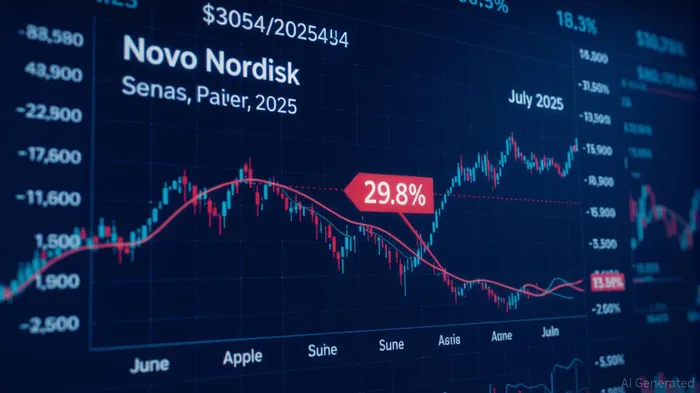
The stock's 29.8% single-day drop in June 2025 was a visceral reminder of the market's fragility. With its valuation plummeting from $615 billion in June 2024 to $350 billion by July 2025, Novo's decline has exposed the risks of overreliance on a single therapeutic class.
The GLP-1 Blockbuster Model: A Pyrrhic Victory?
GLP-1 drugs have transformed obesity and diabetes care, but their long-term sustainability hinges on three key risks:
1. Patent cliffs: Semaglutide (Wegovy/Ozempic) will face generic competition starting in 2026 as Indian manufacturers like Dr. Reddy's and Biocon scale up production. This could erode Novo's margins unless it innovates.
2. Regulatory shifts: The FDA's crackdown on compounded drugs (effective May 2025) is a short-term win but doesn't address deeper issues like pricing and accessibility.
3. Next-gen therapies: Dual/triple agonists (e.g., tirzepatide) and oral GLP-1 alternatives (e.g., Orforglipron) are poised to redefine the market. Oral formulations, in particular, could disrupt the injectable-centric model by improving patient adherence.
Undervalued Biotech Alternatives: The New Frontier
While Novo and Eli LillyLLY-- dominate headlines, smaller biotechs are carving out niches in the obesity drug space. Here are five compelling opportunities:
- Amgen (AMGN):
- MariTide (AMG 133): A GIP/GLP-1 agonist in Phase 3 trials, with a monthly dosing profile that could outcompete weekly injectables.
- Valuation: Traded at $314.54 vs. a fair value of $317, Amgen's stock is undervalued despite Phase 2 side effect concerns.
Investment thesis: Strong manufacturing expertise and a pipeline that could offset lagging performance in other areas.
Pfizer (PFE):
- Portfolio diversification: A $28.50 stock with a fair value of $42, Pfizer's pivot to obesity drugs could capitalize on its pandemic-era cash reserves.
Risks: Lower R&D focus compared to peers, but its scale offers stability in a volatile market.
Viking Therapeutics (VKTX):
- VK2735: A once-weekly injectable and oral GLP-1 in Phase 2 trials, with promising tolerability results.
Valuation: Pre-revenue and speculative, but the potential for first-mover oral GLP-1 approval is high.
Structure Therapeutics (GPCR):
- GSBR-1290: A tablet-based GLP-1 that showed 15% weight loss in Phase 2a trials.
Valuation: Extremely speculative, but the race for oral GLP-1 dominance could justify the risk.
Roche (RHHBY):
- Carmot acquisition: Three obesity drugs in development, with a $55 fair value vs. current $48.
- Investment thesis: A diversified pharma giant with a strong moat and growth potential in immunology and obesity.
The Road Ahead: Innovation or Extinction?
The GLP-1 blockbuster model is far from dead, but its survival depends on innovation. Novo Nordisk's new CEO, Maziar Mike Doustdar, faces a herculean task: navigating patent cliffs, outmaneuvering LillyLLY--, and winning back investor confidence. Meanwhile, the rise of oral GLP-1 drugs and next-gen agonists could democratize access to these therapies, but they also threaten to commoditize the market.
For investors, the key is to balance exposure between established players and nimble biotechs. Novo's dominance may wane, but its ecosystem of GLP-1 followers—Amgen, VikingVIK--, and Structure—offers a chance to ride the next wave of innovation. As the FDA tightens regulations and India's generics loom, the obesity drug market will test the resilience of both big pharma and small biotechs.
Final Takeaway
The obesity drug market is at an inflection pointIPCX--. Novo Nordisk's profit warning is a wake-up call: no company, no matter how dominant, is immune to market forces. For investors, the path forward lies in diversification—backing both the incumbents and the disruptors. The GLP-1 revolution isn't over, but its next chapter will be written by those who adapt.

Stay ahead of the market.
Get curated U.S. market news, insights and key dates delivered to your inbox.
AInvest
PRO
AInvest
PRO



Comments
No comments yet