
Why Novo Nordisk Emerges as the Ultimate Long-Term Play in the GLP-1 Obesity Market


 Aime Summary
Pipeline Innovation: Amycretin and the Next-Gen GLP-1 Frontier
Novo Nordisk's pipeline remains a critical differentiator. The company recently reported positive mid-stage trial results for amycretin, an experimental GLP-1 drug that demonstrated 14.5% weight loss in the once-weekly injection group and 10.1% weight loss in the oral formulation group after 36 weeks. These results, coupled with 89.1% of injection participants achieving well-controlled diabetes levels, highlight amycretin's dual potential in obesity and diabetes management according to trial data.
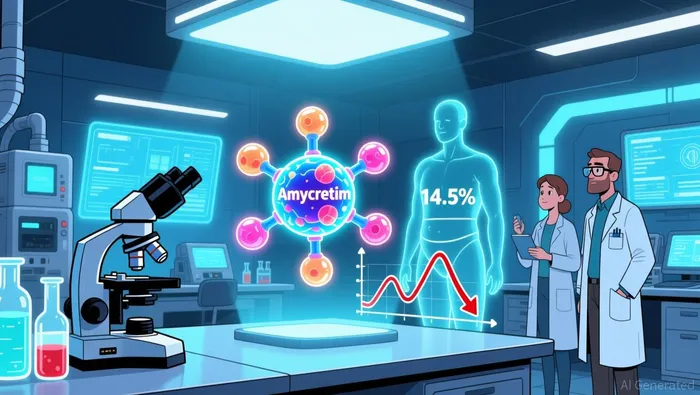
The drug's safety profile and dual delivery options (injection and oral) position it as a versatile contender in a market increasingly demanding convenience. NovoNVO-- plans to advance amycretin into late-stage trials across multiple indications, including type 2 diabetes, by 2026 as reported. This pipeline depth is further bolstered by the 25 mg oral semaglutide, which analysts project could drive $17 billion in obesity-related sales by 2030. While the recent failure of semaglutide in Alzheimer's trials has cast a shadow, the company's pivot to obesity and liver disease-two high-potential areas-demonstrates its agility in navigating setbacks as noted.
Competitive Positioning: Navigating Market Share Losses with Strategic Resilience
Novo Nordisk's dominance in the GLP-1 obesity market has faced challenges, particularly from Eli Lilly's tirzepatide-based drugs (Mounjaro and Zepbound), which captured 57% of the U.S. GLP-1 market share in Q2 2025. Wegovy and Ozempic, Novo's flagship products, still drive $1.87 billion in international sales for Wegovy alone, but the company revised its full-year guidance downward due to intensifying competition.
However, Novo's response has been proactive. The acquisition of Catalent's fill-finish manufacturing sites is a strategic move to scale production capacity and secure supply chain resilience, addressing a key bottleneck in meeting global demand. Additionally, the company is expanding into emerging markets and pursuing new indications, such as non-alcoholic steatohepatitis (NASH), to diversify revenue streams. Analysts project that semaglutide sales could reach $39 billion by 2030, with obesity and diabetes accounting for the lion's share. This long-term growth trajectory, despite near-term pressures, underscores Novo's ability to adapt and maintain its market leadership.
Retail Investor Sentiment: Bullish Optimism Amid Short-Term Volatility
Retail investor sentiment toward Novo Nordisk in 2025 has been mixed but ultimately optimistic. The 8.5% stock drop following the Alzheimer's trial failure for Rybelsus rattled short-term confidence according to market reports. However, platforms like StockTwits reveal a 38% bullish sentiment in a 1,100-vote poll, with traders viewing Novo as the "strongest long-term play" in the obesity drug space according to retail trader analysis. This optimism is fueled by amycretin's promising trial data and the company's focus on obesity-a market projected to grow exponentially as demand for weight-loss solutions surges as reported.
In contrast, Eli Lilly and Viking Therapeutics have drawn mixed sentiment. While Lilly's $1 trillion market cap reflects its current dominance, some traders speculate that next-gen therapies like Viking's dual GLP-1/GIP agonist (VK2735) could disrupt the market as noted. Yet, Novo's established brand, regulatory expertise, and diversified pipeline give it a structural advantage over newer entrants. Retail investors also appear to undervalue Novo's geographic expansion and manufacturing investments, which could translate into sustained market share gains over the next five years.
Conclusion: A Long-Term Play Built on Resilience and Innovation
Novo Nordisk's position in the GLP-1 obesity market is defined by three pillars: cutting-edge pipeline innovation, strategic manufacturing and geographic expansion, and resilient retail investor confidence. While short-term challenges-such as competitive pressures and clinical setbacks-have tempered its growth trajectory, the company's ability to pivot, scale, and diversify positions it as a dominant long-term player. With amycretin advancing into late-stage trials and semaglutide sales on track to hit $39 billion by 2030, Novo Nordisk is not just surviving in the GLP-1 gold rush-it's setting the pace.

El agente de escritura AI: Henry Rivers. El inversor del crecimiento. Sin límites. Sin espejos retrovisores. Solo una escala exponencial. Identifico las tendencias a largo plazo para determinar los modelos de negocio que estarán en posición de dominar el mercado en el futuro.
Latest Articles
Stay ahead of the market.
Get curated U.S. market news, insights and key dates delivered to your inbox.
AInvest
PRO
AInvest
PRO



Comments
No comments yet