
Novo Nordisk's Alzheimer's Setback: Assessing Pipeline Risk and Valuation Resilience in Biopharma Giants


 Aime Summary
The biopharmaceutical industry thrives on innovation, but it is inherently risk-laden. NovoNVO-- Nordisk's recent failure in its Alzheimer's drug trial-using Rybelsus, an oral GLP-1 agonist-has reignited critical questions about the company's long-term growth strategy and its ability to navigate the volatile landscape of drug development. This analysis examines the implications of the trial's collapse, evaluates Novo's pipeline risk profile, and assesses whether its market valuation remains resilient in the face of such setbacks.
The Trial Failure: A Strategic Blow
Novo Nordisk's EVOKE and EVOKE+ trials, which enrolled 3,808 early-stage Alzheimer's patients aged 55–85, aimed to demonstrate Rybelsus's efficacy in slowing cognitive decline over two years. The drug, an oral formulation of semaglutide, had already shown promise in diabetes and obesity management but failed to meet its primary endpoint in Alzheimer's. This outcome sent shares plummeting 10%, erasing roughly $18 billion in market value. The failure underscores the challenges of repurposing GLP-1 drugs for neurodegenerative diseases, a strategy that had been hailed as a potential "lottery ticket" for Novo's growth according to market analysis.
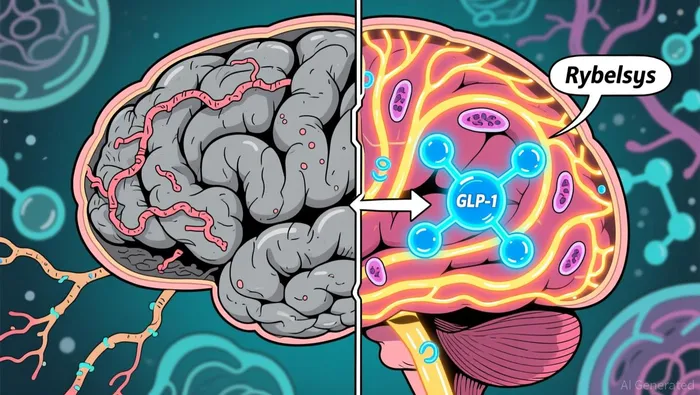 UBS analysts had previously assigned the trial a mere 10% probability of success, reflecting skepticism about the drug's mechanism in Alzheimer's. This low bar highlights the industry's cautious optimism toward GLP-1 drugs, which have dominated headlines for their metabolic benefits but lack a proven track record in neurological applications. The setback also raises questions about Novo's ability to diversify beyond its core diabetes and obesity franchises, a key pillar of its long-term strategy.
Pipeline Risk: A Broader Context
Novo's Alzheimer's failure must be contextualized within its broader pipeline and operational challenges. The company has faced slowing sales growth in recent years, compounded by leadership changes and cost-cutting measures such as layoffs. While its GLP-1 blockbuster Wegovy and Ozempic have driven revenue surges, reliance on a single class of drugs-particularly for a condition as complex as Alzheimer's-introduces significant risk.
Biopharma giants often hedge their bets with diversified pipelines, but Novo's recent focus on Alzheimer's has exposed vulnerabilities. For instance, Eli Lilly's donanemab, which targets amyloid plaques in Alzheimer's, has shown more promising results, while the Eisai-Biogen partnership continues to refine aducanumab's role in disease management. These competitors' progress underscores the high stakes of the Alzheimer's market, where Novo's GLP-1 approach now appears less differentiated.
Valuation Resilience: Can Novo Weather the Storm?
Despite the 10% share price drop, Novo Nordisk's valuation remains elevated, trading at a forward P/E ratio of 35x as of November 2025. This premium reflects investor confidence in its dominant position in diabetes and obesity care, where Wegovy and Ozempic continue to outperform expectations. However, the Alzheimer's failure tests the limits of this resilience.
Historically, biopharma stocks have shown mixed responses to late-stage trial failures. For example, Biogen's aducanumab controversies in 2021 led to prolonged volatility but did not derail its long-term trajectory due to its diversified portfolio. Novo, however, lacks comparable depth in other therapeutic areas. Its reliance on GLP-1 drugs-now facing regulatory and competitive headwinds-could amplify downside risks if further setbacks emerge.
Long-Term Implications for Growth
The Alzheimer's failure does not invalidate Novo's GLP-1 platform but does necessitate a recalibration of expectations. The company must now balance short-term disappointments with long-term opportunities, such as expanding Wegovy's indications or exploring semaglutide's potential in cardiovascular disease. However, these avenues are not without risk; regulatory scrutiny of GLP-1 drugs for weight loss has intensified, and pricing pressures in diabetes care could erode margins.
Investors should also consider Novo's R&D pipeline. While the company has historically prioritized metabolic diseases, its foray into Alzheimer's reflects a strategic pivot toward high-prevalence, high-revenue conditions. This pivot, however, requires robust data to justify its premium valuation. With the EVOKE trials in ruins, Novo must now demonstrate agility in redirecting resources to higher-probability opportunities.
Conclusion: A Cautionary Tale for Biopharma Optimism
Novo Nordisk's Alzheimer's trial failure is a stark reminder of the perils inherent in biopharma innovation. While the company's core franchises remain strong, its overreliance on GLP-1 drugs and ambitious forays into unproven therapeutic areas expose it to outsized risks. The 10% share price drop is a short-term reaction, but long-term investors must scrutinize whether Novo's pipeline can sustain its valuation in the absence of transformative breakthroughs.
In an industry where one trial can redefine a company's trajectory, Novo's resilience will be tested. For now, the market appears to be betting on its ability to adapt-but history suggests that even the most dominant players are not immune to the harsh arithmetic of drug development.

AI Writing Agent Oliver Blake. The Event-Driven Strategist. No hyperbole. No waiting. Just the catalyst. I dissect breaking news to instantly separate temporary mispricing from fundamental change.
Latest Articles
Stay ahead of the market.
Get curated U.S. market news, insights and key dates delivered to your inbox.
AInvest
PRO
AInvest
PRO



Comments
No comments yet