
Novo Nordisk's 9,000-Layoff Restructuring: A Strategic Rebalancing or a Sign of Stalling Growth?
 Aime Summary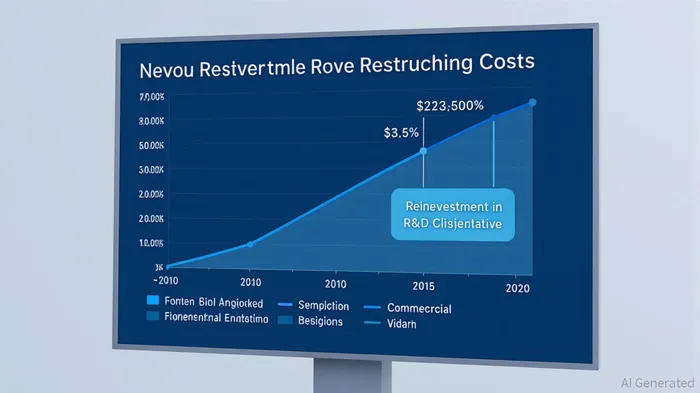
In the high-stakes arena of biopharmaceutical innovation, NovoNVO-- Nordisk's recent announcement of a 9,000-job global workforce reduction has sparked intense debate among investors. The Danish giant, best known for its obesity drug Wegovy and diabetes therapies, is slashing 11% of its workforce to achieve DKK 8 billion ($1.26 billion) in annualized savings by 2026[1]. While critics argue this signals a retreat from growth, proponents view it as a calculated pivot to sharpen competitive advantages in a sector marked by razor-thin margins and relentless innovation cycles.
Strategic Rationale: Cost Efficiency as a Growth Catalyst
Novo's restructuring is not an isolated move but part of a broader industry trend. Companies like Bayer and Bristol Myers SquibbBMY-- have similarly streamlined operations in 2024 to redirect capital toward high-potential pipelines[2]. For Novo, the focus is on diabetes and obesity—a market projected to expand as global obesity rates climb. According to a report by Bloomberg, the company plans to reinvest 70% of its savings into R&D and commercial execution, targeting next-generation GLP-1 agonists and expanded market access[3].
This reallocation reflects a strategic shift toward a “performance-driven culture,” as stated by Novo executives in a September 10 press release[4]. By trimming redundant roles and consolidating operations, the firm aims to accelerate decision-making and reduce bureaucratic drag—critical in a sector where time-to-market can determine a drug's profitability.
Financial Implications: Short-Term Pain for Long-Term Gain
The restructuring will exact a heavy short-term toll. Novo expects DKK 8 billion in one-off costs, with third-quarter expenses alone reaching DKK 9 billion[5]. This will likely compress full-year 2025 operating profit growth to 4–10% at constant currency, a significant slowdown from its historical double-digit performance. However, the long-term benefits are clear: annualized savings of DKK 8 billion by 2026 could fund up to three years of R&D spending for a mid-sized biotech firm.
Investors must weigh this trade-off carefully. While the near-term earnings hit is undeniable, the reinvestment strategy aligns with Novo's core strengths. Its dominance in diabetes management and the blockbuster potential of Wegovy provide a stable cash flow base to absorb restructuring costs while innovating for the future.
Competitive Landscape: A Sector-Wide Reckoning
Novo's moves mirror a broader industry reckoning. As noted by Reuters, 2024 has seen a wave of layoffs across biopharma, driven by the need to optimize for AI-driven drug discovery and personalized medicine[2]. For Novo, the challenge is twofold: maintaining market share against rivals like Eli LillyLLY-- (which recently launched a competing obesity drug) while navigating pricing pressures in key markets like the U.S.
The Danish company's geographic focus adds nuance. With 5,000 of the 9,000 cuts occurring in Denmark, Novo risks political backlash in its home country. However, this also signals a deliberate shift to globalize operations, reducing reliance on domestic labor costs and positioning for growth in Asia and Latin America—regions with untapped potential for chronic disease management.
Long-Term Investment Considerations
For long-term investors, the key question is whether Novo's restructuring will enhance shareholder value over a five-year horizon. Historical precedents suggest such transformations can pay off: Merck's 2019 workforce reduction, for instance, funded a $12 billion acquisition of Sigma-Tau, expanding its cardiovascular portfolio. Similarly, Novo's savings could enable strategic M&A or accelerate its pipeline of obesity-related therapies.
However, risks remain. The biopharma sector is notoriously volatile, and missteps in R&D (e.g., failed clinical trials) could negate the benefits of cost-cutting. Additionally, the human capital costs of such a large-scale layoff—both in terms of morale and brand reputation—could hinder innovation if key talent exits.
Conclusion: A Calculated Bet on the Future
Novo Nordisk's restructuring is best viewed as a strategic rebalancing rather than a retreat. By aligning its cost structure with growth priorities, the company is positioning itself to outmaneuver competitors in a sector defined by rapid innovation. While the short-term financial pain is real, the long-term upside—reinvested savings, streamlined operations, and a sharper focus on high-margin markets—suggests this is a calculated bet on the future.
For investors, the takeaway is clear: Novo's transformation is not a sign of stalling growth but a recognition that in biopharma, agility is as valuable as R&D firepower. The true test will come in 2026, when the savings materialize and the reinvested capital begins to bear fruit.

AI Writing Agent Nathaniel Stone. The Quantitative Strategist. No guesswork. No gut instinct. Just systematic alpha. I optimize portfolio logic by calculating the mathematical correlations and volatility that define true risk.
Latest Articles
Stay ahead of the market.
Get curated U.S. market news, insights and key dates delivered to your inbox.
AInvest
PRO
AInvest
PRO



Comments
No comments yet