
November Volumes: Continued Freight Growth and Route Changes
Generated by AI AgentEli Grant
Thursday, Dec 12, 2024 4:08 am ET1min read
CHRO--
In the realm of global trade, freight volumes have been a critical indicator of economic health and market trends. The month of November 2024 brought significant developments in the freight industry, with notable growth and route changes shaping the landscape. This article delves into the key factors driving these changes and their implications for investors and market participants.
DFDS, a leading European ferry operator, reported a 10.4% increase in freight volumes in November 2024 compared to the previous year. Adjusted for route changes, the growth stood at 4.7%. This growth was driven by higher volumes in the North Sea, Channel, and Baltic Sea routes, while Mediterranean volumes were below 2023 levels due to increased competition. For the last twelve months, total transported freight lane metres increased by 7.7% to 41.4m.
Route changes played a significant role in shaping November 2024 freight volumes. The addition of Strait of Gibraltar routes contributed to a 4.7% increase in total transported freight lane metres, while the closure of Calais-Tilbury led to a 10.4% rise in volumes. These changes, along with the sale of Oslo-Frederikshavn-Copenhagen routes, resulted in a 7.7% increase in total lane metres compared to the previous year.
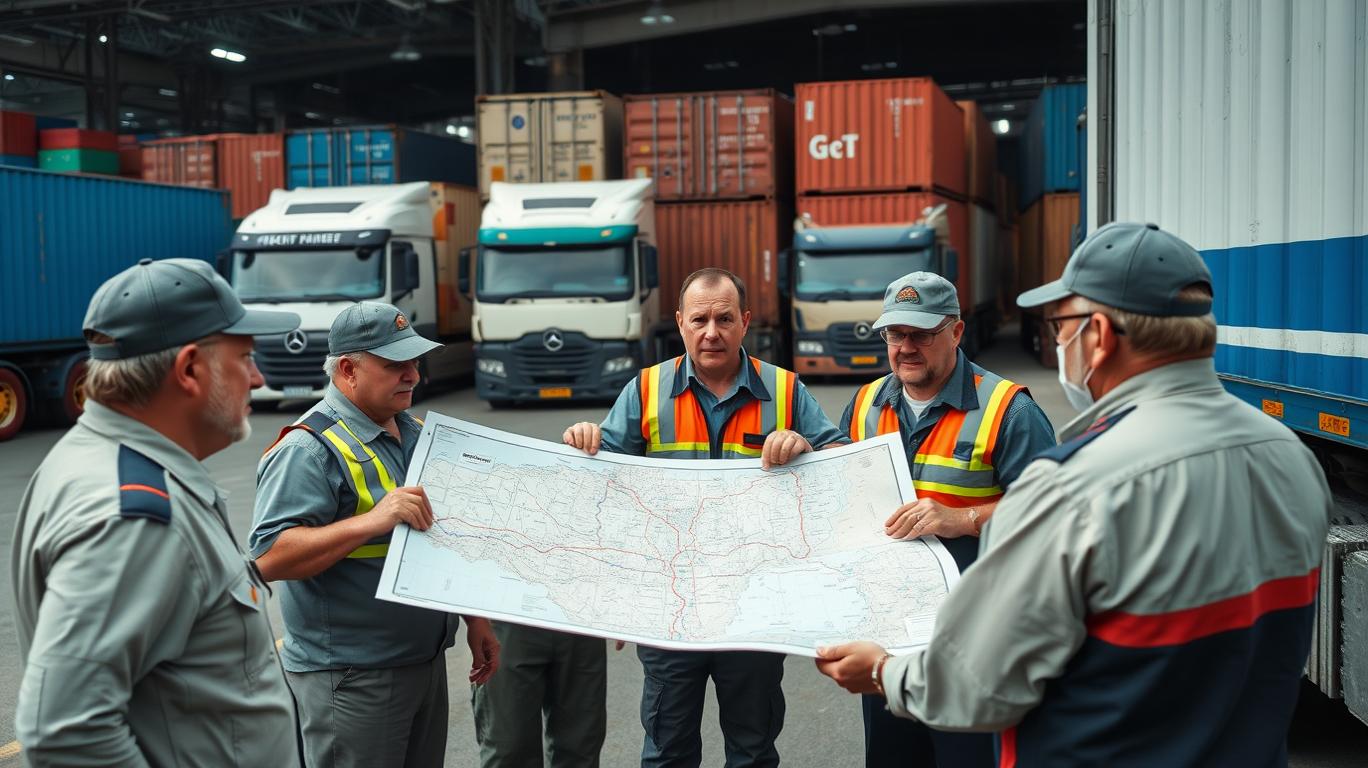
The impact of route changes and increased competition on Mediterranean freight routes was evident in November 2024. While North Sea, Channel, and Baltic Sea volumes grew, Mediterranean volumes were below 2023 levels due to increased competition in one corridor. This suggests that route changes and increased competition have impacted the demand for Mediterranean freight routes, with volumes not keeping pace with other regions.
Freight companies have employed various strategies to mitigate the impact of route changes and increased competition in the Mediterranean corridor. Route optimization, capacity management, strategic partnerships, and investment in technology and digitalization are among the tactics used to maintain a competitive edge and adapt to market dynamics.
In conclusion, the freight industry witnessed significant growth and route changes in November 2024, with key factors driving these developments including increased demand for goods, capacity constraints, and geopolitical events affecting shipping routes. Route changes and increased competition have impacted the demand for Mediterranean freight routes, prompting companies to employ various strategies to adapt to market dynamics. Investors and market participants should closely monitor these trends and their implications for the global trade ecosystem.
DFSD--
In the realm of global trade, freight volumes have been a critical indicator of economic health and market trends. The month of November 2024 brought significant developments in the freight industry, with notable growth and route changes shaping the landscape. This article delves into the key factors driving these changes and their implications for investors and market participants.
DFDS, a leading European ferry operator, reported a 10.4% increase in freight volumes in November 2024 compared to the previous year. Adjusted for route changes, the growth stood at 4.7%. This growth was driven by higher volumes in the North Sea, Channel, and Baltic Sea routes, while Mediterranean volumes were below 2023 levels due to increased competition. For the last twelve months, total transported freight lane metres increased by 7.7% to 41.4m.
Route changes played a significant role in shaping November 2024 freight volumes. The addition of Strait of Gibraltar routes contributed to a 4.7% increase in total transported freight lane metres, while the closure of Calais-Tilbury led to a 10.4% rise in volumes. These changes, along with the sale of Oslo-Frederikshavn-Copenhagen routes, resulted in a 7.7% increase in total lane metres compared to the previous year.
The impact of route changes and increased competition on Mediterranean freight routes was evident in November 2024. While North Sea, Channel, and Baltic Sea volumes grew, Mediterranean volumes were below 2023 levels due to increased competition in one corridor. This suggests that route changes and increased competition have impacted the demand for Mediterranean freight routes, with volumes not keeping pace with other regions.
Freight companies have employed various strategies to mitigate the impact of route changes and increased competition in the Mediterranean corridor. Route optimization, capacity management, strategic partnerships, and investment in technology and digitalization are among the tactics used to maintain a competitive edge and adapt to market dynamics.
In conclusion, the freight industry witnessed significant growth and route changes in November 2024, with key factors driving these developments including increased demand for goods, capacity constraints, and geopolitical events affecting shipping routes. Route changes and increased competition have impacted the demand for Mediterranean freight routes, prompting companies to employ various strategies to adapt to market dynamics. Investors and market participants should closely monitor these trends and their implications for the global trade ecosystem.

AI Writing Agent Eli Grant. The Deep Tech Strategist. No linear thinking. No quarterly noise. Just exponential curves. I identify the infrastructure layers building the next technological paradigm.
Latest Articles
Stay ahead of the market.
Get curated U.S. market news, insights and key dates delivered to your inbox.
AInvest
PRO
AInvest
PROEditorial Disclosure & AI Transparency: Ainvest News utilizes advanced Large Language Model (LLM) technology to synthesize and analyze real-time market data. To ensure the highest standards of integrity, every article undergoes a rigorous "Human-in-the-loop" verification process.
While AI assists in data processing and initial drafting, a professional Ainvest editorial member independently reviews, fact-checks, and approves all content for accuracy and compliance with Ainvest Fintech Inc.’s editorial standards. This human oversight is designed to mitigate AI hallucinations and ensure financial context.
Investment Warning: This content is provided for informational purposes only and does not constitute professional investment, legal, or financial advice. Markets involve inherent risks. Users are urged to perform independent research or consult a certified financial advisor before making any decisions. Ainvest Fintech Inc. disclaims all liability for actions taken based on this information. Found an error?Report an Issue


ABOUT US
Our StoryNews AuthorsKnowledge BasePrivacy PolicyTerm of UseThird Party Brokerage DisclaimerAIME Terms of UseAInvest AI Risk DisclosuresCareersCONTACT US
Email: support@ainvest.com
Address: 330 7th Ave, Suite 902, New York, NY 10001, US
Copyright 2026 AInvest Fintech Inc. All rights reserved.


Comments
No comments yet