
Novartis Expands R&D Footprint: Why This $23 Billion U.S. Investment Matters to Investors
 Aime Summary
- . R&D and manufacturing, including a new San Diego Biomedical Research center and a radioligand therapy facility in Florida. According to company announcements
- The San Diego center, expected to open in 2029, will support drug discovery in neuroscience, oncology, and regenerative medicine, and will house 1,000 employees. As detailed in reports
- The Florida facility, , will manufacture radioligand therapy for cancer treatment, a key innovation in oncology. According to local coverage
- Novartis is leveraging advanced AI and data platforms to speed drug discovery and integrate with its global R&D network, strengthening its position in next-generation therapies. As reported
- The investment aligns with growing demand for personalized and targeted therapies and reflects Novartis's long-term strategy to stay competitive in the evolving pharma landscape. According to analysis
Novartis is making a bold move to solidify its global drug discovery and manufacturing capabilities by expanding its U.S. footprint with two major new facilities. The San Diego Biomedical Research center and Winter Park radioligand therapy plant are part of a $23 billion investment plan that signals the company's long-term commitment to innovation in high-growth therapeutic areas like oncology and gene therapies. With these developments, NovartisNVS-- is positioning itself to maintain scientific leadership in the face of rising R&D costs and intense industry competition.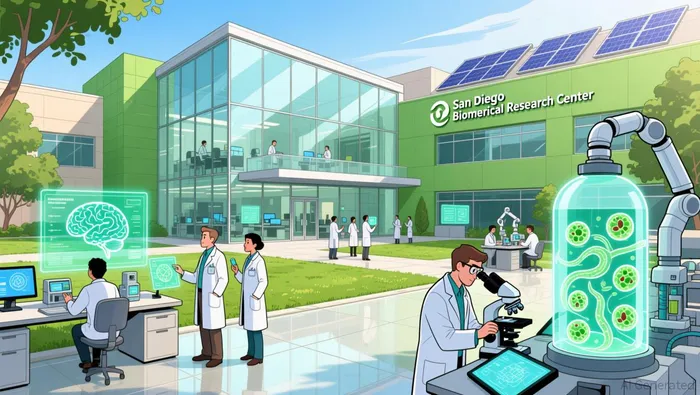
What Are the Implications of Novartis's $23 Billion U.S. Investment for Long-Term Growth?
The $23 billion investment in U.S. R&D and manufacturing is more than just a capital expenditure—it's a strategic bet on the future of healthcare. The San Diego facility, which will open in 2029, is designed to house about 1,000 employees and integrate with existing research centers in Basel and Cambridge. It will focus on key disease areas such as neuroscience, oncology, and regenerative medicine, while also advancing cutting-edge technologies like RNA-based therapies and gene editing. With embedded AI and data infrastructure, the center aims to accelerate the drug pipeline from discovery to commercialization. Meanwhile, the Florida radioligand therapy plant will play a critical role in the treatment of certain cancers, an area where targeted therapies are rapidly evolving. These projects are not just about scaling capacity—they're about future-proofing the company's portfolio in a sector where innovation is the primary growth driver.
This investment comes at a time when pharmaceutical giants are under pressure to balance high R&D costs with the need to bring transformative therapies to market faster. By building out its U.S. infrastructure, Novartis is reducing reliance on overseas manufacturing and ensuring greater flexibility to meet demand. It also signals a commitment to maintaining strong partnerships with academic and biotech institutions—key collaborators in the drug development process. For investors, the question is whether these investments will yield a meaningful return in the form of new blockbuster drugs and sustained revenue growth.
How Is Novartis's R&D Strategy Aligned with Market Trends in Advanced Therapies?
The pharma industry is shifting toward more complex, high-impact therapies, and Novartis is moving quickly to stay ahead of the curve. The San Diego research center is specifically designed to support the development of next-generation treatments like RNA-based and cell and gene therapies, which are increasingly seen as the future of medicine. These modalities require significant R&D investment and specialized manufacturing, but they also offer the potential for high-margin, differentiated products that can command premium pricing. , for example, has emerged as a game-changer in the treatment of certain cancers and is expected to grow substantially in the coming years.
The integration of AI and data analytics into the research process is another key differentiator for Novartis. These tools are helping to streamline drug discovery, reduce trial failure rates, and identify novel therapeutic targets. This not only speeds up development timelines but also enhances the company's ability to compete in a crowded market. The Florida plant, which will begin operations by 2029, is a direct response to the need for timely access to these advanced therapies—especially in the Southeast, a growing life sciences hub.
Still, these investments come with risks. The cost and complexity of developing these advanced therapies are high, and regulatory hurdles remain a challenge. Novartis will need to demonstrate not just scientific progress, but also commercial viability. That means generating strong clinical data and convincing payers and regulators of the value of these therapies. For investors, it's a high-stakes game that could pay off big if executed well.
What Should Investors Watch as Novartis's U.S. Expansion Progresses?
As Novartis moves forward with its U.S. expansion, there are a few key milestones that investors should keep an eye on. First, the timeline for the San Diego research center to become fully operational by 2029 will be a critical indicator of the company's ability to deliver on its vision. Delays or cost overruns could impact investor confidence. Second, the success of the radioligand therapy plant in Florida will depend on how quickly Novartis can bring new products to market and gain regulatory approval. The company has a history of innovation in oncology, but this new facility will need to prove it can scale production and maintain high-quality standards.
Another important factor is the performance of Novartis's existing R&D pipeline. The new facilities are only as valuable as the therapies they help bring to market. If the company can hit key clinical trial milestones and secure FDA approvals, the investment will start to look more justifiable. On the other hand, if development timelines slip or if the market for certain therapies becomes saturated, the financial return on this massive investment could be less clear.
Finally, Novartis will need to navigate the broader industry shift toward value-based care and cost containment. As healthcare systems around the world push for more cost-effective treatments, Novartis will have to demonstrate that its next-generation therapies provide measurable clinical benefits. This is not just a regulatory challenge—it's a business imperative. If Novartis can align its R&D strategy with these market forces, it could emerge as a leader in the new era of precision medicine.
Overall, the U.S. expansion represents a significant step forward for Novartis. Whether it translates into sustained growth for shareholders will depend on how well the company executes its R&D and commercialization strategies in the years to come.

Stay ahead of the market.
Get curated U.S. market news, insights and key dates delivered to your inbox.


AInvest
PRO
AInvest
PRO



Comments
No comments yet