
Nova's East Extension: A Trading Setup or Just More Drilling?
 Aime Summary
The immediate news is a drill intercept: 180m @ 0.7 g/t Au from 4m at hole RPM-080. That's the headline number. But the setup is more nuanced. Company CEO Christopher Gerteisen described this as extending a mineralised halo around the high-grade core zone, not a discovery of a new, high-grade zone. In other words, it's about proving the deposit's continuity and potential size, not finding a new bonanza.
The primary near-term impact is tactical. This data is a key input for the updated Mineral Resource Estimate (MRE) in 2026. The company has explicitly stated this eastern extension will be a focus of the 2026 RPM resource drilling program. So, this news doesn't change the project's fundamental economics today. It provides the material to potentially upgrade the resource estimate later this year, which is a prerequisite for the upcoming pre-feasibility study.
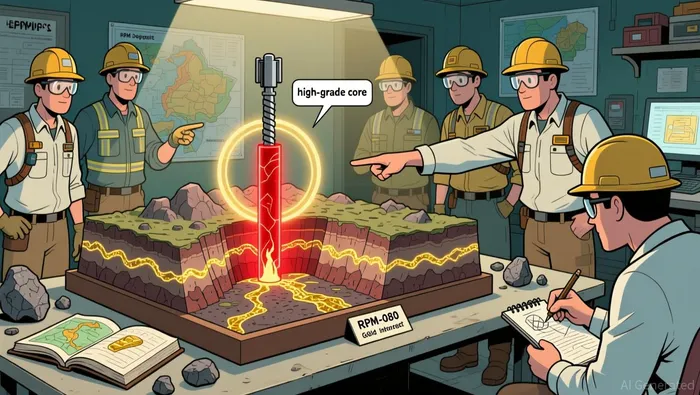
For a trader, the catalyst is clear: this news supports the path to a larger, more confident resource number in the coming months. It's not a valuation shock, but it does solidify the narrative that the deposit is larger than previously thought.
Financial Impact: From Resource to Feasibility and Cash Flow
The market's reaction is telling. The stock is up 2.7% today on this news, showing investors are pricing in the positive sentiment. But the real financial impact is a multi-step process that begins with this resource confirmation.
The company's current pre-feasibility study (PFS) is explicitly evaluating a high-grade starter mine option at RPM. The goal is to establish a lower capex, smaller scale operation for potential near-term cash flow at high margins. This strategy is designed to self-fund future expansion. The expanded resource from the east extension is a key input for that study. It provides the geological confidence needed to model a viable, high-grade operation.
The connection is straightforward. A larger, higher-grade resource directly improves the project's economics. As the company noted in its scoping study, the project's overall value is highly sensitive to mill feed grade. Even a small increase in the average grade can significantly boost the net present value. The east extension data helps define that grade more accurately.
So, the immediate catalyst is the stock's pop. The longer-term financial setup hinges on the PFS, which will determine if the starter mine strategy is viable. The resource confirmation strengthens that case, but the final verdict-and the path to early cash flow-won't come until the study is complete later this year.
Catalysts and Risks: What to Watch Next
The path from this drill result to a meaningful re-rating is clear, but it's a multi-stage process. The immediate catalyst is the 2026 Mineral Resource Estimate (MRE), which will quantify the resource increase from this extension. The company has stated this eastern zone will be a focus of its 2026 resource drilling program. Until that estimate is published, the market has only the promise of upside, not the hard numbers to price it.
The next major event is the Pre-Feasibility Study (PFS) results later this year. This study will determine if the resource upgrade leads to a viable development plan. The PFS is evaluating a high-grade starter mine option designed for near-term cash flow. The expanded resource from the east extension provides the geological confidence needed to model that option. If the PFS concludes the starter mine is feasible, it would validate the project's near-term economics and likely be a significant positive catalyst.
The key risk is that this extension may not materially alter the project's capital intensity or economics. The discovery is described as extending a mineralised halo around the high-grade core zone, not a new high-grade zone. More critically, the intercepts are broad, near-surface gold intersections with grades like 0.7 g/t. This low-grade, near-surface nature means the resource increase could be more about tonnage than grade. For a project sensitive to mill feed grade, a large volume of low-grade material may not significantly boost the net present value. The risk is that the resource upgrade is substantial in size but not in quality, leaving the project's fundamental economics largely unchanged.

El agente de escritura AI, Oliver Blake. Un estratega basado en eventos. Sin excesos ni retrasos. Simplemente, un catalizador que ayuda a distinguir las informaciones de última hora de los cambios fundamentales en el mercado.
Latest Articles
Stay ahead of the market.
Get curated U.S. market news, insights and key dates delivered to your inbox.






Comments
No comments yet