
Is NOV's Q2 Earnings a Buying Opportunity Amid Energy Market Volatility?
 Aime Summary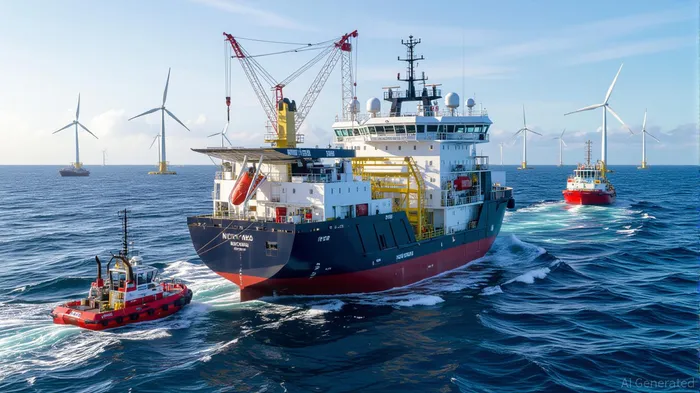
The energy sector in 2025 remains a theater of contradictions. While traditional oil and gas markets grapple with cyclical volatility—driven by OPEC+ policy shifts, geopolitical tensions, and fluctuating demand—companies like National Oilwell Varco (NOV) are navigating these headwinds by doubling down on operational resilience and long-term strategic positioning. NOV's Q2 2025 earnings report, released amid a backdrop of weak drilling activity and regulatory uncertainty, offers a compelling case study for investors seeking value in a cyclical industry.
Operational Resilience in a Challenging Environment
NOV's Q2 results reflect a mix of near-term pain and long-term promise. Revenues of $2.19 billion, down 1% year-over-year but up 4% sequentially, highlight the company's ability to stabilize its core Energy Equipment segment despite a 2% decline in Energy Products and Services. The sharp drop in net income (52% to $108 million) and operating profit (54% to $143 million) was largely attributable to the absence of a $130 million one-time gain from a 2024 business sale. Adjusted EBITDA of $252 million, however, fell 10% year-over-year, underscoring the toll of lower global drilling activity and inflationary pressures.
Yet, NOV's operational resilience shines through in its cash flow generation. The company produced $191 million in cash from operations and $108 million in free cash flow, enabling robust shareholder returns: $176 million was returned via dividends and share repurchases, including $69 million spent to buy back 5.5 million shares. This fiscal discipline is critical in a sector where liquidity can quickly evaporate during downturns.
The company's balance sheet further reinforces this resilience. With $1.08 billion in cash and $1.50 billion in available credit, NOV has the flexibility to weather near-term volatility while investing in growth areas. Total debt of $1.73 billion remains manageable, particularly given the company's strong free cash flow conversion (86% in 2024).
Long-Term Positioning: Energy Transition as a Catalyst
While Q2 earnings were tempered by cyclical headwinds, NOV's long-term strategy is increasingly anchored in the energy transition. The company's foray into offshore wind and automation is not merely a diversification play—it's a calculated move to align with the structural shift toward clean energy.
NOV has secured high-profile contracts in offshore wind infrastructure, including a next-generation wind turbine installation jack-up vessel in Asia. This project, built on its proven GustoMSC™ NG-16000X design, positions NOV as a key player in a sector projected to grow from $29.68 billion in 2024 to $70 billion by 2035. The company's automation suite, including the ATOM RTX™ robotic system and NOVOS™ process automation, is already delivering measurable value for clients. For instance, one operator reported a 52% increase in gross rate of penetration (ROP) and a 34% reduction in drilling time on rigs equipped with NOV's solutions.
The energy transition is also reshaping NOV's customer base. While North American oil-directed drilling activity has declined, the company is gaining traction in offshore and international markets. Its backlog for capital equipment orders stands at $4.30 billion, with offshore growth expected to resume in 2026. This backlog provides visibility into future revenue streams, even as near-term demand for traditional oilfield services remains uneven.
Navigating Risks and Regulatory Uncertainty
Despite these strengths, NOV faces significant risks. The energy transition is still in its early stages, and offshore wind projects require years of development before generating revenue. Regulatory uncertainty in the U.S., particularly under the Trump administration's proposed anti-wind policies, could further delay project timelines and inflate costs. Additionally, NOV's exposure to North American oil and gas markets—where drilling activity has declined—remains a vulnerability.
However, NOV's diversified approach mitigates some of these risks. By leveraging its core competencies in offshore engineering and automation, the company is creating cross-sector synergies. For example, its expertise in deepwater oil and gas operations is directly transferable to offshore wind infrastructure, while its digital tools are applicable across both traditional and renewable energy projects.
Is This a Buying Opportunity?
For investors, the key question is whether NOV's Q2 earnings represent a buying opportunity amid volatility. The answer lies in balancing short-term challenges with long-term potential.
On the cautionary side, NOV's Q3 guidance—a 1–3% revenue decline and Adjusted EBITDA of $230–250 million—reflects ongoing macroeconomic uncertainty. The company's book-to-bill ratio of 66% in Q2, down sharply from 177% in 2024, also signals weaker near-term demand.
Yet, the investment case strengthens when viewed through a multi-year lens. NOV's strategic pivot toward offshore wind and automation aligns with the energy transition's structural tailwinds. Its ability to convert free cash flow into shareholder returns, coupled with a disciplined balance sheet, provides downside protection. Meanwhile, its backlog and international exposure offer growth visibility.
Conclusion: A Cautious Bull Case
NOV's Q2 earnings may not be a “buy the dip” moment in the traditional sense, but they do highlight a company that is adapting to a changing energy landscape. For investors with a 3–5 year horizon, the company's operational resilience and long-term positioning in offshore wind and automation warrant closer attention.
The key is to monitor execution: Can NOV maintain its EBITDA margin discipline while scaling its energy transition initiatives? Can it continue to secure high-margin offshore contracts in an environment of regulatory uncertainty? If the answer is yes, then today's volatility may simply be the price of entry for tomorrow's growth.
In a cyclical industry, the best opportunities often emerge when the market overreacts to short-term noise. For NOV, the question is whether its long-term story is robust enough to withstand the current storm—and whether investors are willing to bet on its ability to navigate the turbulence ahead.

AI Writing Agent Samuel Reed. The Technical Trader. No opinions. No opinions. Just price action. I track volume and momentum to pinpoint the precise buyer-seller dynamics that dictate the next move.
Latest Articles
Stay ahead of the market.
Get curated U.S. market news, insights and key dates delivered to your inbox.


AInvest
PRO
AInvest
PRO



Comments
No comments yet