
Nostalgia as a Strategic Asset: McDonald's Snack Wraps Return and the Future of Fast-Food Innovation
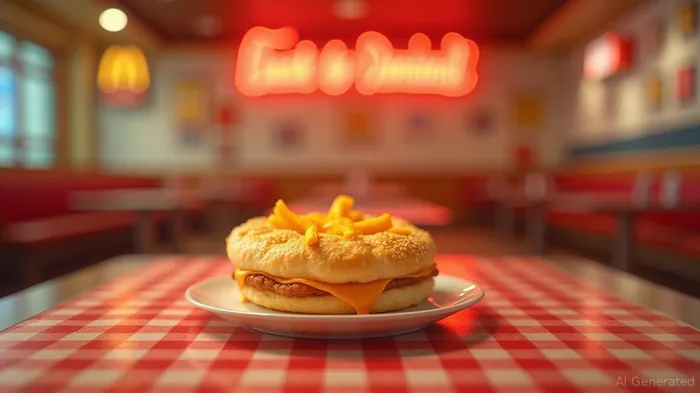
The fast-food industry is at a crossroads. As inflation pressures, shifting consumer preferences, and relentless competition redefine the landscape, companies are increasingly turning to a time-tested strategy: reviving legacy products to reignite brand relevance. McDonald'sMCD-- recent relaunch of its discontinued Snack Wraps—after nearly a decade of absence—is a masterclass in leveraging nostalgia as a growth lever. But how sustainable is this approach, and what does it mean for investors?
Nostalgia as a Growth Lever: Why Legacy Products Resonate
The Snack Wraps' return is not an isolated move. From Taco Bell's 2022 revival of its cult-classic Mexican Pizza to the enduring success of Twinkies and Hostess Cupcakes, brands are discovering that nostalgia-driven products can bridge generational gaps and re-engage consumers. These items tap into emotional memories, creating instant familiarity and reducing the risk of consumer skepticism toward new products.
McDonald's decision to reintroduce the Snack Wraps in July 2025—after discontinuing them in 2016 due to operational inefficiencies—reflects this trend. The relaunch was fueled by relentless advocacy from customers, including a Change.org petition with nearly 19,000 signatures and viral TikTok campaigns. By framing the revival as a response to fan demand, McDonald's turned a product comeback into a brand loyalty exercise.
McDonald's Playbook: Marketing Nostalgia with Precision
The Snack Wraps' relaunch was meticulously planned. Key elements included:
1. Fan-Centric Storytelling: A throwback microsite (snackwrapfiles.com) mimicked early-2000s design, featuring "BTS" content and petitions, while TV ads highlighted social media posts from enthusiastic customers.
2. Operational Simplification: The menu was streamlined to two flavors (spicy and ranch) using fried chicken (no grilled option), reducing kitchen complexity and ensuring scalability across 13,500 U.S. locations.
3. Chicken-Centric Strategy: The wraps complemented the McCrispy Strips launch, capitalizing on the “chicken wars” trend and targeting budget-conscious diners with affordable, craveable items.
This approach contrasts sharply with the infamous New Coke misstep of 1985. Unlike Coca-Cola's forced reformulation—a top-down decision that ignored consumer attachment to the original formula—McDonald's revival was bottom-up, driven by data on fan demand and operational pragmatism. The result? A relaunch that felt less like a corporate bet and more like a shared victory.
Strategic Implications: Sales Lift and Brand Rejuvenation
The Snack Wraps' reintroduction is strategically timed to address two critical challenges:
1. Same-Store Sales Declines: McDonald's U.S. sales fell 3.6% in Q1 2025, partly due to inflation-driven trade-downs. The Snack Wraps' $2.99 price point and smaller format align with trends toward affordability and portion control.
2. Competitive Pressure: Rivals like Popeyes and Chick-fil-A have dominated the chicken category, while Burger King and Wawa have launched similar wraps. McDonald's aims to reclaim its position by leveraging its scale and global brand equity.
Analysts estimate the Snack Wraps could generate $200–$300 million in annual revenue, with the potential to boost U.S. same-store sales by 1–2%. More importantly, the move signals a pivot toward innovation—combining nostalgia with operational rigor—that could position McDonald's as a leader in the $300 billion global chicken market.
Risks: Short-Term Sizzle vs. Long-Term Substance
While the Snack Wraps' relaunch is promising, investors must weigh two key risks:
1. Demand Sustainability: Nostalgia-driven products often face a “honeymoon period.” Will customers keep buying Snack Wraps after the initial buzz fades? Taco Bell's Mexican Pizza sales dropped 40% in its second year, underscoring the need for ongoing engagement.
2. Operational Overload: Reviving too many legacy items could strain McDonald's supply chain and kitchen workflows. The company's simplified recipe for the Snack Wraps mitigates this risk, but future expansions (e.g., grilled options) must be data-driven.
Investment Considerations: Positioning for Growth or Avoiding a Nostalgic Mirage?
For investors, McDonald's Snack Wraps revival offers both opportunity and caution.
Bull Case:
- The relaunch could catalyze a 2–4% stock price rebound if sales meet expectations, especially if paired with broader improvements in same-store sales.
- The strategy aligns with McDonald's broader focus on value (e.g., $5 Meal Deals) and premiumization (e.g., McCrispy Strips with Creamy Chili Dip), creating a bifurcated menu that appeals to diverse customer segments.
- The stock, trading at a P/E of 22.5 (below its five-year average), offers room for rerating if the Snack Wraps drive sustained momentum.
Bear Case:
- Short-term demand could overshadow deeper structural issues, such as stagnant U.S. traffic (-1% in 2024) and rising input costs.
- Competitors' counter-moves (e.g., Popeyes' biscuit-based chicken wraps) may dilute McDonald's advantage.
Conclusion: A Nostalgic Lever for a Modern Challenge
McDonald's Snack Wraps relaunch is more than a marketing stunt—it's a strategic response to the fast-food industry's need to balance nostalgia with innovation. By listening to consumers and simplifying operations, the company has positioned itself to capitalize on a growing chicken market and a demographic craving familiarity.
For investors, the move is a positive signal, but success hinges on execution. Monitor Q3 sales data closely: a 2–3% sales lift could validate the strategy, while underperformance may reignite concerns about McDonald's ability to adapt. In a sector where 70% of fast-food chains fail within five years, the Snack Wraps' revival could be the catalyst McDonald's needs to stay ahead—or a fleeting distraction in a crowded field.
Final advice: Consider a strategic allocation to McDonald's if valuation multiples compress further, but keep a close eye on post-launch sales trends and competitive dynamics.

Delivering real-time insights and analysis on emerging financial trends and market movements.
Latest Articles
Stay ahead of the market.
Get curated U.S. market news, insights and key dates delivered to your inbox.
AInvest
PRO
AInvest
PRO



Comments
No comments yet