
Norway Retail Sales Plunge -1.1% as Rates Rise
 Aime Summary
- Norway's Core Retail861183-- Sales fell -1.1% MoM in March, reversing a 1.1% gain from the previous month.
- The contraction arrives as Norges Bank signals potential rate hikes to combat inflation driven by Middle East conflicts.
- Rising energy costs near $100 per barrel are dampening consumer sentiment and pressuring risk assets globally.
- The data suggests a complex macro environment where consumption weakness clashes with inflationary policy pressures.
Norway's latest retail sales data presents a paradox for economists and investors: a sharp decline in consumer spending coinciding with a central bank that is signaling tighter monetary policy rather than easing. The Core Retail Sales figure printed at -1.1% for March, a stark reversal from the 1.1% growth recorded in the prior month. This contraction occurs against a backdrop of elevated energy prices and geopolitical uncertainty, creating a challenging environment for Norges Bank as it navigates the delicate balance between cooling inflation and supporting economic growth. The divergence between falling consumption and rising inflationary pressures underscores the complexity of the current macroeconomic landscape.
What Does The -1.1% Retail Sales Contraction Signal For Norway?
The -1.1% month-over-month decline in Core Retail Sales suggests a significant cooling in Norwegian consumer demand. While the previous month's 1.1% gain had indicated a recovering consumer base, the sudden reversal points to immediate headwinds affecting household spending power. In the context of Norway's economy, which is heavily influenced by energy revenues and global trade, such a drop often signals that households are tightening belts in response to rising costs. Core retail sales, which exclude volatile categories like automobiles861023-- and fuel, provide a clearer picture of underlying consumer sentiment. The fact that this core metric is contracting indicates that the pullback in spending is broad-based rather than limited to a specific sector.
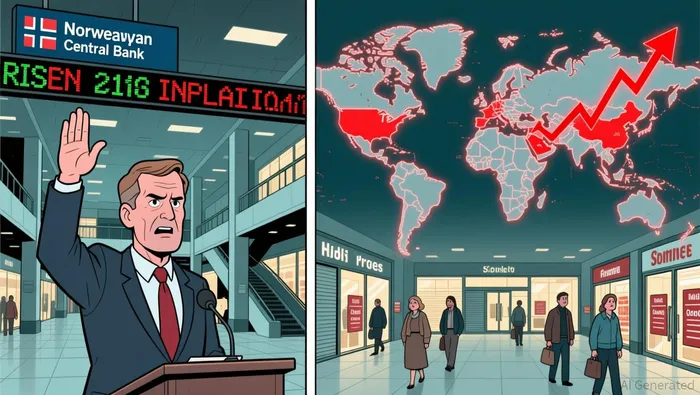
This data point is particularly notable because it arrives as inflation remains above Norges Bank's 2% target for an extended period. Historically, weak retail sales can serve as a leading indicator for broader economic slowdown, but in the current environment, the data must be weighed against the central bank's aggressive stance on inflation. If consumers are cutting back significantly due to high energy prices, it could eventually help cool inflation through reduced demand. However, if the drop is driven by a lack of confidence rather than affordability alone, it could signal a deeper stagnation risk. The -1.1% figure forces analysts to reconsider the trajectory of the Norwegian krone and the potential for a more dovish economic outlook despite the hawkish policy signals.
Why Is Norges Bank Signaling Rate Hikes Amid Weak Consumption?
The decision by Norges Bank to signal potential rate hikes despite weak retail sales data highlights the primacy of inflation control in the current policy framework. Governor Ida Wolden Bache and the committee have shifted their bias from anticipated rate cuts to a likely increase, driven by persistent inflationary pressures linked to the conflict in the Middle East. The central bank views the recent geopolitical developments as a threat to the inflation target, necessitating a preemptive tightening of monetary policy. Even as retail sales contract, the risk of a second-round effect from rising energy prices remains a primary concern for policymakers.
The central bank's minutes reveal that the committee had considered raising rates as early as March but opted to wait for more data. However, the persistence of inflation above target, combined with the threat of further energy price shocks from the Gulf, has tipped the scales toward a hawkish stance. This creates a unique scenario where the economy may be showing signs of slowing (via retail sales) while the central bank prepares to apply the brakes even harder (via rate hikes). The logic is that if inflation expectations become unanchored due to energy costs, the long-term damage to the economy will outweigh the short-term pain of higher rates. This policy divergence is a key driver for the Norwegian krone and the broader Nordic macroeconomic outlook.
How Do Geopolitical Risks And Energy Costs Impact The Macro Picture?
The intersection of falling retail sales and rising inflation is largely driven by the geopolitical turmoil in the Middle East. Oil prices have climbed above $100 per barrel as tensions escalate, creating a direct cost-of-living shock for consumers. This energy shock has two competing effects: it fuels inflation, prompting rate hikes, while simultaneously eroding real disposable income, which drives the drop in retail sales. The result is a stagflationary pressure that complicates the economic outlook for Norway and other developed markets.
Furthermore, the market reaction to these conditions has been evident in asset classes beyond equities. Gold861123-- prices, traditionally a safe haven, have fallen to yearly lows as the prospect of higher interest rates outweighs safe-haven demand. This phenomenon underscores the market's focus on monetary policy tightening as the dominant force. The structural shift in market participation, with increased retail investor involvement, has also altered how price signals are transmitted, potentially dampening traditional reactions to geopolitical crises. For Norway, the combination of a -1.1% retail sales drop and a hawkish central bank signal suggests that the path forward will be volatile, with investors closely watching for signs of whether the consumption slowdown is sufficient to curb inflation or if further policy tightening is inevitable.

Stay ahead of the market.
Get curated U.S. market news, insights and key dates delivered to your inbox.


AInvest
PRO
AInvest
PRO



Comments
No comments yet