
Norway's Northern Lights CCS Project Begins Injecting CO2 Volumes
ByAinvest
Monday, Aug 25, 2025 9:10 pm ET2min read
EQNR--
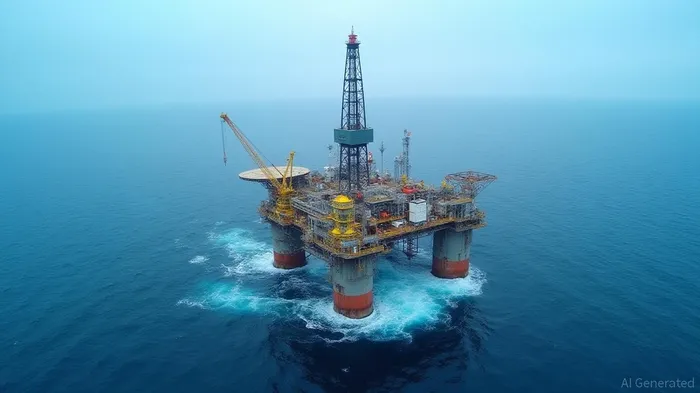
The Northern Lights project aims to store CO2 from various European industries in the depleted gas field, Sleipner. The initial phase of the project, which has a total capacity of 1.5 million tonnes of CO2 per year, is now fully booked by customers from Norway and Continental Europe [2].
The CO2 is transported via ships from Heidelberg Materials’ cement factory in Brevik, Norway. It is then offloaded and transported through a 100-kilometer pipeline and injected into the Aurora reservoir under the seabed of the North Sea [1].
The commencement of CO2 injection completes the phase 1 of the development. Equinor, as the Technical Service Provider (TSP), has been responsible for the construction of the Øygarden facility and the offshore facilities on behalf of the Northern Lights JV, and will also have operational responsibility of the CO2 plant [1].
The Northern Lights Joint Venture is equally owned by Equinor, Shell, and TotalEnergies. CEO of Equinor, Anders Opedal, stated, “With CO2 safely stored below the seabed, we mark a major milestone. This demonstrates the viability of carbon capture, transport and storage as a scalable industry” [1].
The project is part of a broader effort to reduce greenhouse gas emissions in Europe. The commenced injection of CO2 completes the phase 1 of the development, which has a total capacity of 1.5 million tonnes of CO2 per year (mtpa). The capacity of this phase is fully booked [1].
In March, the owners of Northern Lights made the final investment decision for the phase 2 of the development, which will increase transport and storage capacity to a minimum of 5 million tonnes of CO2 per year. This decision was made possible after signing an agreement to transport and store up to 900,000 tonnes of CO2 annually from Stockholm Exergi. The expansion is enabled by a grant from the Connecting Europe Facility for Energy (CEF Energy) funding scheme [1].
The expansion of Northern Lights builds on existing infrastructure and includes additional onshore storage tanks, a new jetty, and additional injection wells. The development of phase 2 with Equinor as TSP is well underway, with the delivery of nine new CO2 storage tanks at the Øygarden site this summer [1].
Equinor is already one of the largest CCS developers worldwide and has an ambition of having 30-50 million tonnes per annum of CO2 transport and storage capacity by 2035. To achieve this, Equinor is working on several CCS projects in Europe and the US. These projects require a conducive policy framework and collaboration between governments, industry, customers, and regulators [1].
References:
[1] https://www.equinor.com/news/20250825-first-co2-volumes-stored-at-northern-lights
[2] https://oilprice.com/Latest-Energy-News/World-News/Northern-Lights-Project-Achieves-Major-Carbon-Storage-Milestone.html
SHEL--
TTE--
Equinor, Shell, and TotalEnergies have started operations at their Northern Lights joint venture carbon capture and storage project in the Norwegian North Sea. The project, which is a landmark CCS project, began injecting first volumes of carbon dioxide into its offshore storage site. The Northern Lights project aims to store CO2 from various European industries in the depleted gas field, Sleipner.
Equinor, Shell, and TotalEnergies have marked a significant milestone in the fight against climate change by commencing operations at their Northern Lights joint venture carbon capture and storage (CCS) project in the Norwegian North Sea. The project, which is a landmark in the CCS industry, began injecting its first volumes of carbon dioxide into its offshore storage site.The Northern Lights project aims to store CO2 from various European industries in the depleted gas field, Sleipner. The initial phase of the project, which has a total capacity of 1.5 million tonnes of CO2 per year, is now fully booked by customers from Norway and Continental Europe [2].
The CO2 is transported via ships from Heidelberg Materials’ cement factory in Brevik, Norway. It is then offloaded and transported through a 100-kilometer pipeline and injected into the Aurora reservoir under the seabed of the North Sea [1].
The commencement of CO2 injection completes the phase 1 of the development. Equinor, as the Technical Service Provider (TSP), has been responsible for the construction of the Øygarden facility and the offshore facilities on behalf of the Northern Lights JV, and will also have operational responsibility of the CO2 plant [1].
The Northern Lights Joint Venture is equally owned by Equinor, Shell, and TotalEnergies. CEO of Equinor, Anders Opedal, stated, “With CO2 safely stored below the seabed, we mark a major milestone. This demonstrates the viability of carbon capture, transport and storage as a scalable industry” [1].
The project is part of a broader effort to reduce greenhouse gas emissions in Europe. The commenced injection of CO2 completes the phase 1 of the development, which has a total capacity of 1.5 million tonnes of CO2 per year (mtpa). The capacity of this phase is fully booked [1].
In March, the owners of Northern Lights made the final investment decision for the phase 2 of the development, which will increase transport and storage capacity to a minimum of 5 million tonnes of CO2 per year. This decision was made possible after signing an agreement to transport and store up to 900,000 tonnes of CO2 annually from Stockholm Exergi. The expansion is enabled by a grant from the Connecting Europe Facility for Energy (CEF Energy) funding scheme [1].
The expansion of Northern Lights builds on existing infrastructure and includes additional onshore storage tanks, a new jetty, and additional injection wells. The development of phase 2 with Equinor as TSP is well underway, with the delivery of nine new CO2 storage tanks at the Øygarden site this summer [1].
Equinor is already one of the largest CCS developers worldwide and has an ambition of having 30-50 million tonnes per annum of CO2 transport and storage capacity by 2035. To achieve this, Equinor is working on several CCS projects in Europe and the US. These projects require a conducive policy framework and collaboration between governments, industry, customers, and regulators [1].
References:
[1] https://www.equinor.com/news/20250825-first-co2-volumes-stored-at-northern-lights
[2] https://oilprice.com/Latest-Energy-News/World-News/Northern-Lights-Project-Achieves-Major-Carbon-Storage-Milestone.html
Stay ahead of the market.
Get curated U.S. market news, insights and key dates delivered to your inbox.
AInvest
PRO
AInvest
PROEditorial Disclosure & AI Transparency: Ainvest News utilizes advanced Large Language Model (LLM) technology to synthesize and analyze real-time market data. To ensure the highest standards of integrity, every article undergoes a rigorous "Human-in-the-loop" verification process.
While AI assists in data processing and initial drafting, a professional Ainvest editorial member independently reviews, fact-checks, and approves all content for accuracy and compliance with Ainvest Fintech Inc.’s editorial standards. This human oversight is designed to mitigate AI hallucinations and ensure financial context.
Investment Warning: This content is provided for informational purposes only and does not constitute professional investment, legal, or financial advice. Markets involve inherent risks. Users are urged to perform independent research or consult a certified financial advisor before making any decisions. Ainvest Fintech Inc. disclaims all liability for actions taken based on this information. Found an error?Report an Issue


ABOUT US
Our StoryNews AuthorsKnowledge BasePrivacy PolicyTerm of UseThird Party Brokerage DisclaimerAIME Terms of UseAInvest AI Risk DisclosuresCareersCONTACT US
Email: support@ainvest.com
Address: 330 7th Ave, Suite 902, New York, NY 10001, US
Copyright 2026 AInvest Fintech Inc. All rights reserved.


Comments
No comments yet