
Norway Makes Major North Sea Oil Discovery Amid UK's Decline in Fossil Fuel Exploration
ByAinvest
Saturday, Aug 23, 2025 5:03 am ET1min read
EQNR--
The discovery, which includes five exploration targets – Omega, Alfa, Alfa South, Sigma NE, and Pi – is among the largest commercial discoveries in Norway in a decade. It builds on the momentum from the oil discovery at East Frigg in 2023 and marks a significant step towards Aker BP's ambition of producing more than one billion barrels from the Yggdrasil area [2].
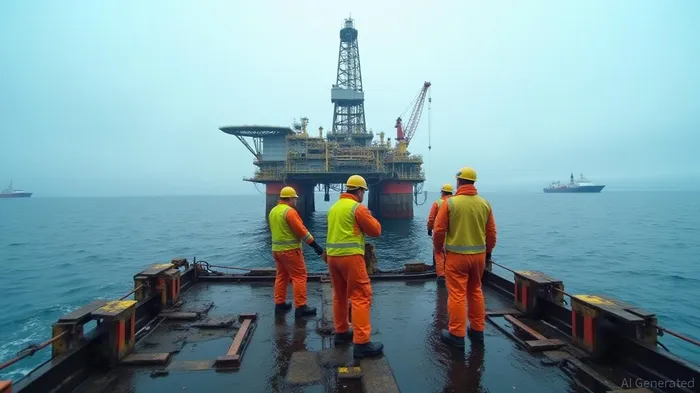
The Omega Alfa campaign was conducted using the Deepsea Stavanger rig over a three-month period, drilling a total of 45,000 metres, including 40,000 metres in reservoir sections. This included the three longest well branches ever drilled on the Norwegian continental shelf, with the longest branch reaching 10,666 metres [1].
The horizontal drilling method enabled the collection of an unprecedented amount of high-quality reservoir data, significantly reducing subsurface uncertainty and allowing Aker BP to rapidly advance into concept studies to determine the optimal tie-back solution to Yggdrasil [2].
The Yggdrasil field Plan for Development and Operation (PDO) was approved by Norwegian authorities in 2023, and first oil is expected in 2027. The proven resource base is approximately 700 mmboe, with an ambition to grow this to more than one billion barrels through further exploration [1].
The Omega Alfa campaign was conducted across production licences 873, 873 B, and 1249, all operated by Aker BP. In licences 873 and 873 B, the partnership consists of Aker BP (47.7 percent), Equinor (40 percent), and Orlen Upstream Norway (12.3 percent). In licence 1249, the partners are Aker BP (38.16 percent), Equinor (32 percent), Petoro (20 percent), and Orlen Upstream Norway (9.84 percent) [1].
This discovery contrasts with the UK's approach to oil and gas, where the government has banned new licences and imposed high taxes on profits, leading to a predicted 70% fall in output over the next five years. Norway's success is attributed to a supportive government and fiscal regime that incentivizes exploration and development activity [3].
References:
[1] https://akerbp.com/en/borsmelding/significant-oil-discovery-in-the-yggdrasil-area-2/
[2] https://www.ogj.com/exploration-development/discoveries/news/55311383/aker-bp-aker-bp-makes-oil-discovery-in-norwegian-north-sea-increases-yggdrasil-volume-estimates
Norway has made its biggest North Sea oil discovery in a decade, finding 134 million barrels of oil in the Yggdrasil field. This contrasts with the UK's approach to oil and gas, where the government has banned new licences and imposed high taxes on profits, leading to a predicted 70% fall in output over the next five years. Norway's success is attributed to a supportive government and fiscal regime that incentivizes exploration and development activity.
Norway has made its biggest North Sea oil discovery in a decade, with Aker BP successfully completing the Omega Alfa exploration campaign in the Yggdrasil area. The recoverable volume is estimated at 96–134 million barrels of oil equivalent (mmboe) [1].The discovery, which includes five exploration targets – Omega, Alfa, Alfa South, Sigma NE, and Pi – is among the largest commercial discoveries in Norway in a decade. It builds on the momentum from the oil discovery at East Frigg in 2023 and marks a significant step towards Aker BP's ambition of producing more than one billion barrels from the Yggdrasil area [2].
The Omega Alfa campaign was conducted using the Deepsea Stavanger rig over a three-month period, drilling a total of 45,000 metres, including 40,000 metres in reservoir sections. This included the three longest well branches ever drilled on the Norwegian continental shelf, with the longest branch reaching 10,666 metres [1].
The horizontal drilling method enabled the collection of an unprecedented amount of high-quality reservoir data, significantly reducing subsurface uncertainty and allowing Aker BP to rapidly advance into concept studies to determine the optimal tie-back solution to Yggdrasil [2].
The Yggdrasil field Plan for Development and Operation (PDO) was approved by Norwegian authorities in 2023, and first oil is expected in 2027. The proven resource base is approximately 700 mmboe, with an ambition to grow this to more than one billion barrels through further exploration [1].
The Omega Alfa campaign was conducted across production licences 873, 873 B, and 1249, all operated by Aker BP. In licences 873 and 873 B, the partnership consists of Aker BP (47.7 percent), Equinor (40 percent), and Orlen Upstream Norway (12.3 percent). In licence 1249, the partners are Aker BP (38.16 percent), Equinor (32 percent), Petoro (20 percent), and Orlen Upstream Norway (9.84 percent) [1].
This discovery contrasts with the UK's approach to oil and gas, where the government has banned new licences and imposed high taxes on profits, leading to a predicted 70% fall in output over the next five years. Norway's success is attributed to a supportive government and fiscal regime that incentivizes exploration and development activity [3].
References:
[1] https://akerbp.com/en/borsmelding/significant-oil-discovery-in-the-yggdrasil-area-2/
[2] https://www.ogj.com/exploration-development/discoveries/news/55311383/aker-bp-aker-bp-makes-oil-discovery-in-norwegian-north-sea-increases-yggdrasil-volume-estimates
Stay ahead of the market.
Get curated U.S. market news, insights and key dates delivered to your inbox.
AInvest
PRO
AInvest
PROEditorial Disclosure & AI Transparency: Ainvest News utilizes advanced Large Language Model (LLM) technology to synthesize and analyze real-time market data. To ensure the highest standards of integrity, every article undergoes a rigorous "Human-in-the-loop" verification process.
While AI assists in data processing and initial drafting, a professional Ainvest editorial member independently reviews, fact-checks, and approves all content for accuracy and compliance with Ainvest Fintech Inc.’s editorial standards. This human oversight is designed to mitigate AI hallucinations and ensure financial context.
Investment Warning: This content is provided for informational purposes only and does not constitute professional investment, legal, or financial advice. Markets involve inherent risks. Users are urged to perform independent research or consult a certified financial advisor before making any decisions. Ainvest Fintech Inc. disclaims all liability for actions taken based on this information. Found an error?Report an Issue


ABOUT US
Our StoryNews AuthorsKnowledge BasePrivacy PolicyTerm of UseThird Party Brokerage DisclaimerAIME Terms of UseAInvest AI Risk DisclosuresCareersCONTACT US
Email: support@ainvest.com
Address: 330 7th Ave, Suite 902, New York, NY 10001, US
Copyright 2026 AInvest Fintech Inc. All rights reserved.


Comments
No comments yet