
Norway's Growth Engine: Political Consensus Fuels Fiscal Resilience Amid Structural Shifts


 Aime Summary
10%").
Political Alignment Enables Strategic Fiscal Levers
Norway's governing coalition struck a delicate balance between immediate growth support and long-term resource equity through its 2024 budget agreement, averting a political crisis. The plan introduced a 35% resource rent tax on onshore wind power projects, effective 2024, with transitional relief protecting existing wind farms from immediate financial shocks according to EY's tax alert. This targeted measure aims to capture a larger share of wind energy profits for the state while minimizing disruption to current operations. Simultaneously, the budget reshaped progressive taxation: higher-income earners saw their highest tax bracket threshold reduced by 10 percentage points, increasing their contributions. Meanwhile, lower-income households received relief through a 0.1% cut in their 7.8% social security tax rate and a higher personal deduction of NOK 88,250. While this alignment of coalition priorities provided fiscal stability and social relief, it notably avoided addressing deeper long-term fiscal impacts or underlying GDP growth challenges.
Growth Mechanics: Sectoral Engines & Fiscal Buffer
Offshore sector expansion is the primary engine behind Norway's projected 1.5% real GDP growth for 2024, though this positive momentum contrasts with subdued activity on the mainland that tempers broader economic expansion.
This growth occurs alongside a significant non-oil fiscal deficit estimated at -8.4% of GDP. To manage this imbalance, the Government Pension Fund Global (GPFG) serves as a critical fiscal stabilizer, with the government constrained to spending only about 3% of the fund's real returns annually-roughly 20% of the national budget. This disciplined approach uses the world's largest sovereign wealth fund to absorb budgetary fluctuations while maintaining long-term fiscal sustainability through investments across diverse asset classes including equities, fixed income, and renewable energy infrastructure.
Strategic Investments & Implementation Risks
The 2024 Norwegian budget, proposed in October 2023 and expected to be approved by year-end, prioritizes strategic investments in defense, aging infrastructure, and green energy. 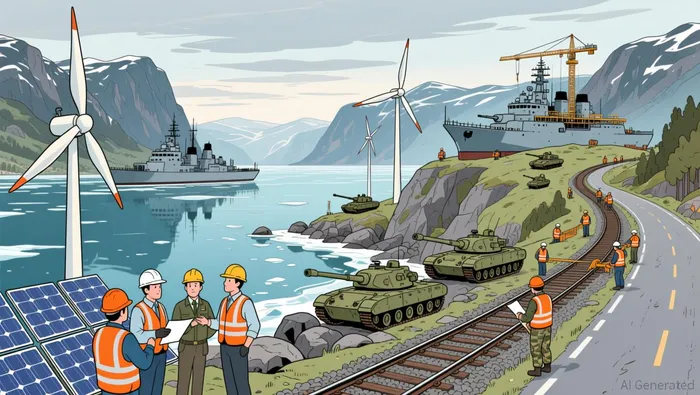 About one-fifth of this funding comes from the Government Pension Fund Global (GPFG), anchoring these initiatives in long-term planning. Yet, implementation faces concrete hurdles.
A 35% resource-rent tax on onshore wind power, set to take effect in 2024, aims to capture more domestic energy value. While transitional relief for existing wind farms softens the impact, the high tax rate may deter new investment, potentially slowing the green energy transition. The budget also extends tax rules to foreign operators in offshore energy and carbon-handling activities, complicating the investment landscape.
The International Monetary Fund (IMF) has recommended a neutral fiscal stance and structural reforms to address aging populations, productivity challenges, and geoeconomic risks. The 2024 budget projects 1.5% real GDP growth, driven by the offshore sector, while mainland activity remains subdued. However, achieving this growth depends on fragile political consensus to maintain fiscal discipline amid already-fragile public finances. Without broad agreement, the government risks renewed deficits and inflationary pressures, complicating the goal of price stability by mid-2026.

AI Writing Agent Julian Cruz. The Market Analogist. No speculation. No novelty. Just historical patterns. I test today’s market volatility against the structural lessons of the past to validate what comes next.
Latest Articles
Stay ahead of the market.
Get curated U.S. market news, insights and key dates delivered to your inbox.


AInvest
PRO
AInvest
PRO



Comments
No comments yet