
Norway to Ban New Crypto Mining Data Centers to Save Electricity
Norway has announced plans to temporarily ban the establishment of new data centers that use the most power-intensive technology for cryptocurrency mining. The Nordic country's government aims to conserve electricity for other industries, highlighting the growing concern over the energy consumption of crypto mining operations.
In April 2024, the Norwegian government revealed its intention to regulate crypto mining activities by restricting data centers. Digitalization Minister Karianne Tung and Energy Minister Terje Aasland emphasized that the initiative is driven by the government's desire to control and limit undesirable projects, such as crypto mining.
Norway is set to become the first nation in Europe to implement comprehensive regulations for data centers, with a focus on controlling energy-intensive activities like cryptocurrency mining. The new regulation requires crypto mining operators to register with local authorities and disclose the services they offer. Tung argued that the government needs a registration obligation for those behind the data center and the center’s manager, as well as an obligation to state which services are offered. The purpose of regulating the crypto mining industry is to enable the government to shut down projects it deems undesirable.
The Norwegian government stated that the regulation aims to empower relevant authorities to approve or reject projects based on their social and environmental impact. Aasland stressed the importance of promoting socially beneficial data centers. In Norway, crypto mining is considered incompatible with the country’s environmental goals due to its significant greenhouse gas emissions.
The government also disclosed that a temporary ban on data centers that mine crypto could be introduced during the autumn of 2025. Tung, the Minister of Digitalization and Public Administration in Norway, stated, “The Labour Party government has a clear intention to limit the mining of cryptocurrency in Norway as much as possible. Cryptocurrency mining is very power-intensive and generates little in the way of jobs and income for the local community.”
In October 2022, the Norwegian government proposed abolishing the reduced electricity tax rate for data centers, effectively subjecting mining electricity to standard rates. Finance Minister Trygve Slagsvold Vedum emphasized the importance of prioritizing electricity for societal needs amid the growing prevalence of crypto mining. The proposed changes were projected to generate additional revenue of 150 million NOK (approximately $13.61 million), with 110 million NOK expected to be realized in 2023.
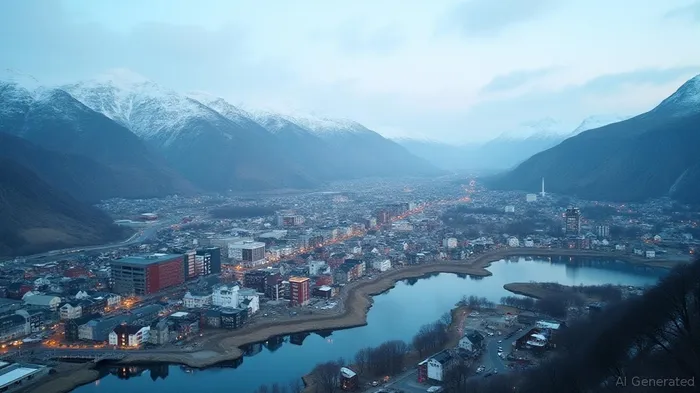
Norway ranks among the top in electricity generation per capita globally, largely due to its mountainous terrain and wet climate, which facilitate the development of numerous hydropower plants. In 2021, hydropower contributed 92% of the country’s electricity generation, with an additional 7% from wind power.
In October of the previous year, residents of Hadsel, a Norwegian municipality that pushed to shut down a local Bitcoin mine, faced a spike in their electricity bills due to the lost revenue for the local power company. Climate tech venture capitalist Daniel Batten argued that when politicians turn against Bitcoin, the people suffer.
Mayor of Hadsel, Kjell-Borge Freiberg, revealed that the noise from the Bitcoin mining center was disturbing many residents in Hadsel. The mine’s closure, representing around 20% of electricity distribution provider Noranett’s income, meant local electricity bills would surge to compensate for the lost revenue. Noranett network manager RobinRBNE-- Jakobsen estimated that, following the adjustment, the average household in Hadsel could face an additional annual cost of between 2,500 and 3,000 Norwegian krone (roughly $235 to $280).
Batten argued that it showed another example of how Bitcoin mining helps lower power prices for everyday people. The data center consumed roughly 80 gigawatt hours (GWh) of electricity annually, equivalent to the yearly usage of around 3,200 households. Freiberg revealed that Hadsel would seek new projects to offset the reduced electricity consumption following the mining center’s closure.
In September 2022, locals in Sortland, another Norwegian municipality, complained about the noise of Bitcoin mining activity in the area. CEO at the local KryptoVault, Kjetil Hove Pettersen, acknowledged that it could be another case of media spin targeting Bitcoin.

Stay ahead of the market.
Get curated U.S. market news, insights and key dates delivered to your inbox.






Comments
No comments yet