
Northwestern University Shuttles Boost Evanston Revenue
 Aime Summary
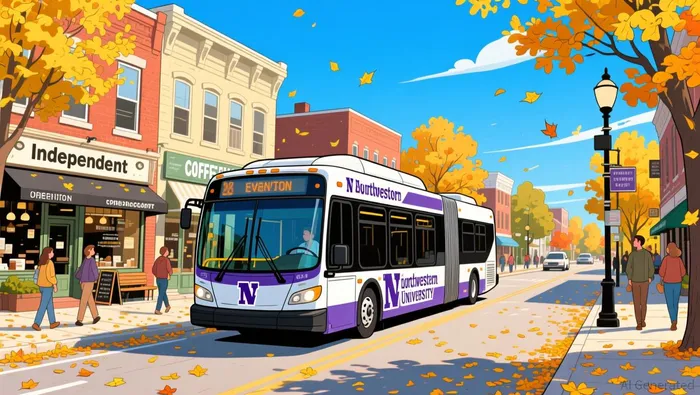
Northwestern University launched the 'Hop Around Evanston' free shuttle pilot to directly increase foot traffic and revenue for local small businesses by removing parking and cost barriers.
The initiative leverages the university's hybrid electric fleet to connect campus to key commercial districts, addressing both logistical pain points and environmental goals.
Broader regional transit trends show a similar focus on modernization and security, with Metra testing new fare tech and commuters prioritizing safety upgrades for the upcoming Northern Illinois Transit Authority.
This move positions Northwestern as a critical economic anchor, demonstrating how educational entities can actively influence local market dynamics and mitigate disinvestment risks.
Investors should view this pilot as a case study in how universities can drive sustainable growth in adjacent retail and hospitality sectors while navigating complex local zoning and environmental histories.
Northwestern University is not just an educational institution; it is a major economic engine for the Chicago area, and its latest strategic moves are reshaping how investors view the relationship between campuses and host cities. By introducing a free shuttle service, the university is taking direct action to solve a persistent local problem: the disconnect between a massive student population and the struggling independent businesses that surround it. This initiative, known as 'Hop Around Evanston,' is more than a convenience for students; it is a targeted economic stimulus designed to funnel campus spending into the local economy.
The program represents a significant shift in how major universities approach their civic responsibilities, moving from passive presence to active economic participation. By utilizing a fleet of hybrid electric buses, Northwestern is tackling two issues at once: the logistical nightmare of parking scarcity that often keeps residents away from downtown Evanston, and the growing pressure for sustainable, low-carbon transportation options. The shuttle loop connects the campus to Central Street, Howard Street, Chicago Avenue, and Dodge Avenue, creating a seamless corridor for weekend commerce. This approach effectively removes the friction that usually prevents a large demographic of potential customers from visiting local pubs, restaurants, and galleries. The collaboration with the Evanston Chamber of Commerce further cements this partnership, signaling a formal commitment to mutual prosperity rather than just temporary goodwill.
Why Is Northwestern University's Free Shuttle Service A Game Changer For Local Retail?
The core investor question here is whether this pilot can genuinely translate into sustained revenue growth for the local ecosystem. The answer lies in the specific pain points the shuttle addresses. Evanston has long struggled with the paradox of being a vibrant city with limited parking and congested roads, which often discourages casual visits from the very demographic with the highest disposable income for local dining and entertainment. By providing free transit, Northwestern is essentially subsidizing the customer acquisition cost for local businesses, effectively lowering the barrier to entry for students and faculty who might otherwise drive to more distant shopping centers. This strategy aligns with a broader trend where educational institutions act as economic anchors, stabilizing local markets against the volatility of broader retail trends. The data from the pilot will be crucial for determining if this model can be replicated or scaled, potentially offering a blueprint for other university towns facing similar economic challenges.
Furthermore, the initiative serves as a hedge against the environmental and social risks that often plague urban development. Historical zoning policies in Evanston have concentrated environmental burdens in specific neighborhoods, such as the Fifth Ward, leading to long-term health disparities and economic disinvestment. By focusing on sustainable transit and supporting independent businesses, Northwestern is helping to balance the economic equation and promote a more equitable distribution of prosperity. This is not just about charity; it is about risk mitigation. A vibrant, diverse local economy is less susceptible to the shocks that affect single-industry towns, making the region a more stable environment for long-term investment. The university's move to prioritize sustainability and community engagement also enhances its own brand reputation, which can have indirect financial benefits in terms of alumni donations and student enrollment.
How Does Northwestern's Strategy Align With Broader Regional Transit Modernization?
To understand the full implications of this move, one must look at the broader context of transit and infrastructure in the Chicago area. Northwestern's shuttle is not operating in a vacuum; it is part of a larger wave of modernization and security-focused initiatives across the region. For instance, Metra has recently launched a pilot program to test new fare collection technology, a move designed to gather data on modernizing payment systems and optimizing revenue collection efficiency. This reflects a regional trend toward digitizing payment infrastructures to reduce friction and increase data accuracy in fare management, which is essential for the long-term viability of any transit system. Similarly, a recent survey indicates that Chicago-area commuters prioritize security improvements and enhanced bus and rail service for the incoming Northern Illinois Transit Authority, signaling potential operational shifts and investment demands.
These parallel developments suggest that the market is shifting toward a model of integrated, secure, and user-friendly transit networks. Northwestern's decision to invest in a dedicated shuttle service, particularly one that utilizes a hybrid electric fleet, positions it as a forward-thinking partner in this ecosystem. The university is effectively testing a micro-version of the larger transit reforms that are sweeping the region. If successful, this pilot could provide valuable data on how to optimize local transit loops, reduce congestion, and improve the rider experience. For investors, this is a signal that the region is moving toward a more sophisticated, data-driven approach to transportation, which is likely to attract further capital expenditure and public-private partnerships. The synergy between university initiatives and regional transit goals creates a resilient infrastructure network that can support future economic growth.
What Are The Key Risks And Limitations To This Economic Pilot?
While the potential for positive impact is significant, investors must also consider the limitations and risks inherent in such initiatives. The pilot is currently focused on weekends, which limits its scope and may not fully capture the weekday economic dynamics that drive the bulk of commercial activity. Additionally, the success of the program depends heavily on the continued alignment between the university and the local community, which can be fragile given the complex history of zoning and environmental issues in Evanston. Historical segregation practices have concentrated environmental burdens in specific areas, creating long-term health disparities that have not been fully resolved. While the city has taken steps to address these disparities, activists argue that progress can be slow, and any failure to address these underlying issues could undermine the broader goals of the shuttle program.
Moreover, the reliance on university funding for the shuttle service raises questions about long-term sustainability. If the university's financial priorities shift or if the pilot fails to generate the expected economic returns, the program could be scaled back or discontinued. This volatility is a key risk for any business that relies on a single customer or partner for its revenue stream. However, if the program demonstrates clear, measurable benefits for local businesses, it could pave the way for broader public funding or private investment, creating a more sustainable model. The key for investors will be to monitor the pilot's performance metrics closely, looking for signs of sustained foot traffic growth and increased business revenue. The bottom line is that while the initiative is promising, its long-term success will depend on execution, community buy-in, and the ability to adapt to the complex economic and social landscape of Evanston.
The 'Hop Around Evanston' initiative is a bold step that highlights the evolving role of universities in the modern economy. By addressing logistical barriers and promoting sustainability, Northwestern is not only supporting local businesses but also setting a precedent for how educational institutions can drive regional economic growth. As the pilot unfolds, it will offer valuable insights into the future of campus-community partnerships and the potential for transit-led economic development. For investors, this is a case study in how strategic, targeted interventions can create lasting value in a complex urban environment.
According to a recent analysis, Northwestern University's free shuttle service represents a significant shift in how universities approach their civic responsibilities, with the potential to create lasting value for the local economy.

Stay ahead of the market.
Get curated U.S. market news, insights and key dates delivered to your inbox.


AInvest
PRO
AInvest
PRO



Comments
No comments yet