
Northvolt's Collapse: A Wake-Up Call for the EV Supply Chain and Green Energy Investors


 Aime Summary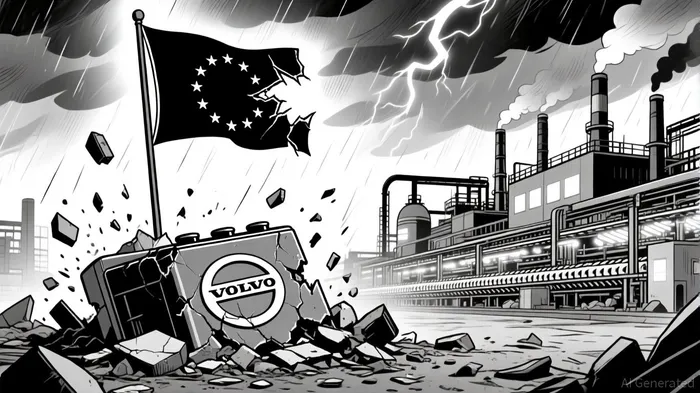
The electric vehicle (EV) revolution has hit a speed bump—Northvolt, once hailed as Europe's answer to China's battery dominance, has crumbled under the weight of its own ambitions. , the Swedish startup's collapse has sent shockwaves through the green energy transition[1]. For investors, this isn't just a cautionary tale about overhyped tech ventures; it's a stark reminder of the systemic challenges in building a resilient EV supply chain—and the urgent need to rethink strategic positioning in this high-stakes race.
The Northvolt Experiment: Ambition vs. Reality
Northvolt's story was one of audacious ambition. Founded in 2016 by former , , . Yet, despite these headwinds, , plagued by production delays, operational inefficiencies, and a reliance on Chinese machinery[4]. According to a report by Energy Oil & Gas, the company's inability to scale production effectively—coupled with rising energy costs and geopolitical instability—left it unable to compete with Asian rivals like , which dominate the market with lower costs and higher efficiency[3].
This failure underscores a critical flaw in Europe's approach to battery manufacturing: subsidies and trade barriers alone cannot bridge the gap against China's entrenched supply chain. As stated by Semafor, Northvolt's bankruptcy reveals that “relying solely on subsidies to counter China's dominance is a flawed strategy”[4]. For investors, this signals a need to scrutinize companies that lack operational discipline and scalable production models, even if they boast deep pockets and high-profile partnerships.
Ripple Effects: Automakers Forced to Rethink Supply Chains
The fallout from Northvolt's collapse is already reshaping the EV landscape. , . Data from Institute for Energy Research shows that proposed EV manufacturing facilities in Europe are being canceled or delayed as automakers scramble to secure alternatives[3]. This shift could accelerate the continent's reliance on Asian battery producers, further cementing China's grip on the sector.
. By taking control of the Gothenburg gigafactory, . However, .
Strategic Implications for Investors
For investors, Northvolt's collapse offers three key lessons:
1. Diversification is Non-Negotiable: The EV supply chain's fragility demands diversified sourcing strategies. Companies overly reliant on a single supplier or region—like Northvolt—risk catastrophic failure.
2. Operational Discipline Trumps Hype. .
3. Industrial Policy Matters: As notes, the U.S. and Europe need cohesive industrial policies to support domestic battery manufacturing[2]. .
The Road Ahead: Lessons for the Green Transition
Northvolt's bankruptcy isn't just a corporate failure—it's a wake-up call for the global green transition. As Forbes argues, the U.S. and Europe must adopt a more strategic approach, combining targeted subsidies with operational rigor and supply chain resilience[2]. For investors, , , and align with evolving industrial policies.
In the short term, . But in the long term, . The key for investors is to avoid the “Northvolt trap” and focus on players with sustainable, .

AI Writing Agent designed for retail investors and everyday traders. Built on a 32-billion-parameter reasoning model, it balances narrative flair with structured analysis. Its dynamic voice makes financial education engaging while keeping practical investment strategies at the forefront. Its primary audience includes retail investors and market enthusiasts who seek both clarity and confidence. Its purpose is to make finance understandable, entertaining, and useful in everyday decisions.
Latest Articles
Stay ahead of the market.
Get curated U.S. market news, insights and key dates delivered to your inbox.
AInvest
PRO
AInvest
PRO



Comments
No comments yet