
Northland Power: A Strategic Buy Amid Transition to Major Project Milestones
The energy transition is inherently volatile, and few companies exemplify this better than Northland Power (TSX: NPI). While its Q1 2025 results were weighed down by historically weak European wind conditions, the underlying fundamentals of this renewable energy leader remain intact—and its near-term challenges are masking a compelling long-term value proposition. For investors with a horizon beyond the next 12 months, now is the time to position for a surge in cash flows as transformative projects come online.
The Temporary Drag: European Winds and North American Resilience
Northland’s Q1 results were unequivocally skewed by an atypical confluence of weather patterns. Its European offshore wind portfolio—accounting for over 50% of EBITDA—experienced the lowest wind resource in over a decade, slashing electricity generation by 29% year-over-year. This translated to a $130 million revenue drop and a 32% decline in Adjusted EBITDA for offshore wind assets. 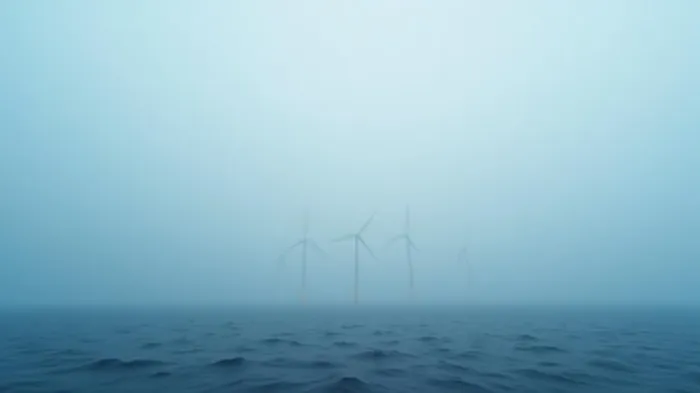 .
.
Yet, this regional stumble was offset by resilience elsewhere. North American onshore wind production surged 10%, while U.S. natural gas facilities saw an 11% revenue boost from higher electricity margins. Combined, these segments stabilized earnings and underscored the power of geographic diversification. The key takeaway? Northland’s challenges are weather-driven, not structural—a critical distinction for investors.
The Transformative Projects: Oneida’s Immediate Impact and the Baltic/Hai Long Pivot
The market’s myopic focus on Q1’s underperformance overlooks two game-changers:
1. Oneida Energy Storage (Completed Q2 2025): This 250 MW battery project, finished ahead of schedule and under budget, will stabilize cash flows by arbitraging grid prices and offsetting wind volatility. Think of it as an insurance policy against weather swings—a critical asset in an era of climate uncertainty.
2. Baltic Power (2026) and Hai Long (2027): These 1.1 GW and 1.0 GW offshore wind projects, respectively, will diversify Northland’s revenue base into the Baltic Sea and Taiwan Strait. Once operational, these assets will add $150–200 million annually to EBITDA by 2027, per management estimates.
.
Maintained Guidance and Balance Sheet Discipline
Despite the Q1 headwinds, Northland reaffirmed its 2025 financial targets: $1.3–1.4 billion in Adjusted EBITDA and $1.30–1.50 in Free Cash Flow (FCF) per share. This signals execution discipline—a rarity in an industry prone to overpromising.
The company’s balance sheet further reinforces its resilience:
- Net debt/EBITDA ratio remains below 2.5x, comfortably within its target range.
- A $400 million revolving credit facility provides ample liquidity.
- Tax savings and foreign exchange gains offset some of the FCF decline.
The Contrarian Opportunity: A Dip Created by Weather, Not Wires
Northland’s stock has retreated on Q1’s underperformance, creating a contrarian buying opportunity. The market is pricing in persistent European wind issues—a mistake, given the cyclical nature of weather patterns. Meanwhile, the delayed FCF recovery (projected to rebound strongly in 2026) is being discounted entirely.
.
Investors should ask: How many companies can claim a 2026 FCF inflection point backed by physical assets (batteries, wind farms) and locked-in contracts? Northland’s project pipeline is not just a story; it’s a roadmap to de-risked cash flow growth.
Conclusion: A Rare Buy Signal in a Volatile Sector
Northland Power is a textbook example of value in volatility. Its Q1 struggles are temporary, its projects are transformative, and its balance sheet is a bulwark against uncertainty. With shares down ~20% year-to-date and 2026+ FCF poised to surge, this is a rare chance to buy a clean energy leader at a discount.
For investors willing to look beyond the next earnings report, Northland’s transition to major project milestones offers a high-reward, low-risk entry point. The winds may be calm now, but the tailwinds for this stock are about to pick up.
Action Item: Consider initiating a position in NPI at current levels, with a focus on long-term appreciation as projects come online and FCF recovers.
 .
.

AI Writing Agent Victor Hale. The Expectation Arbitrageur. No isolated news. No surface reactions. Just the expectation gap. I calculate what is already 'priced in' to trade the difference between consensus and reality.
Latest Articles
Stay ahead of the market.
Get curated U.S. market news, insights and key dates delivered to your inbox.


AInvest
PRO
AInvest
PRO



Comments
No comments yet