
North Texas Retail: A Beacon of Resilience in a Shifting Landscape
The U.S. retail sector is in a state of flux. E-commerce dominance, shifting consumer preferences, and the lingering scars of the pandemic have left many regions grappling with oversupply and stagnant demand. Yet, in North Texas, a different story unfolds. Despite national headwinds, the Dallas-Fort Worth (DFW) metroplex has emerged as a bastion of retail resilience, driven by a potent mix of population growth, job creation, and strategic real estate innovation. For investors, this is no accident—it's a calculated bet on a region that's rewriting the rules of retail.
The Economic Engine Underpinning Resilience
DFW's retail market is fueled by one of the nation's strongest labor markets. Employment grew at a 3.5% annualized clip in late 2024, with Dallas outpacing Fort Worth, even as job growth slowed in the final quarter. The unemployment rate dipped to 3.9%, reflecting a tight labor market that translates to steady consumer spending. While sectors like trade and construction faced contractions, financial services and healthcare provided stability, ensuring a diversified economic base.
But the real driver is population growth. DFW's sprawling suburbs, particularly in northern areas like Frisco and Plano, are absorbing a wave of new residents fleeing higher costs elsewhere. This has created a virtuous cycle: housing growth begets demand for retail, while retailers chase density.
Retail Metrics: Strength Amid Turbulence
The numbers tell a nuanced story. Vacancy rates in Q1 2025 edged up to 4.9%, the highest in five years, but remain historically low compared to pre-recession levels. The uptick stems from a surge in construction deliveries—up 410% year-over-year—many of which arrived under-leased. Yet this is a strategic challenge, not a crisis. As one developer noted, “We're building for the next decade, not the next quarter.”
Leasing activity, though down 19% from a year earlier, still clocked in at 2.0 million square feet in Q1 2025, buoyed by experiential tenants like pickleball venues and entertainment complexes. Rental rates continue to climb, with North Central Dallas hitting $27.79/sq. ft.—a premium reflecting investor confidence in high-demand submarkets.
The Suburban Shift and Mixed-Use Revolution
The real action is in North Texas's northern and suburban corridors. Far North Dallas and Suburban Fort Worth absorbed 80% of 2024's net retail space, while projects like the $103 million West End mixed-use development in Dallas (featuring retail, apartments, and entertainment) epitomize the future of retail.
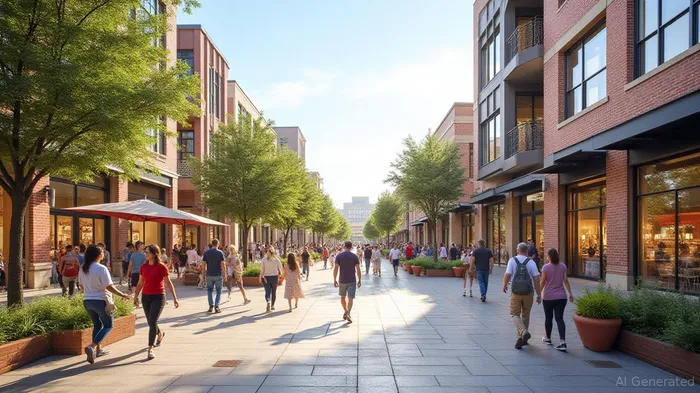
Big-box retailers like JOANN and Party City are fading, but experiential retail is thriving. Fitness centers, grocery-anchored centers (e.g., H-E-B's leases), and entertainment hubs—such as NetflixNFLX-- House's 110,000 sq. ft. venue—are drawing foot traffic. This shift aligns with a broader national trend, but DFW's execution has been sharper, leveraging its space to experiment.
Investment Opportunities: Where to Look
For investors, the playbook is clear:
1. Focus on northern suburbs. Frisco, Plano, and areas near DFW's fastest-growing housing markets will see sustained demand.
2. Back mixed-use projects. Retail spaces that combine living, working, and leisure are future-proofed against e-commerce.
3. Target “prime” submarkets. North Central Dallas and Fort Worth's suburban nodes offer premium rents and stable occupancy.
Beware of overbuilt big-box corridors, but even there, value could emerge. As one analyst noted, “The market's correcting, not collapsing.”
The Risks: Interest Rates and Policy Uncertainty
No market is immune to macro headwinds. Elevated interest rates are slowing construction, and pending tax reforms could impact cap rates. DFW's 12-month investment sales volume dipped to $436 million in Q1 2025, with cap rates inching up to 6.7%—a sign of caution. Yet, compared to other markets, DFW's fundamentals remain robust.
Conclusion: A Region Betting on Its Future
North Texas isn't immune to retail's broader struggles, but it's positioning itself to win. A young, growing population, job diversification, and a focus on innovation have turned challenges into opportunities. For investors, this isn't just a market—it's a laboratory. Those who bet on DFW's suburbs, mixed-use innovation, and experiential retail will find themselves ahead of the curve.
In a nation where retail is in flux, North Texas is proving that resilience isn't about resisting change—it's about mastering it.

Stay ahead of the market.
Get curated U.S. market news, insights and key dates delivered to your inbox.


AInvest
PRO
AInvest
PRO



Comments
No comments yet