
The North Sea Revival: Why UK Upstream Oil & Gas and Infrastructure Plays Are Set to Surge
The UK government's strategic pivot toward balancing fossilFOSL-- fuel production decline with a rapid transition to clean energy is creating a unique investment opportunity in North Sea upstream oil & gas equities and infrastructure plays. As policies shift to prioritize carbon capture, renewable integration, and workforce retraining, companies positioned to capitalize on this managed transition are primed for outperformance. Here's why investors should act now.
The Policy Framework: Managed Decline Meets Fiscal Certainty
The UK's End of New Licenses policy, effective since 2023, ensures that existing oil and gas fields—currently numbering 283—will operate through their natural lifespans, maintaining domestic production and energy security. Crucially, the Energy Profits Levy's phaseout by 2030 and the proposed High Price Mechanism (HPM) provide fiscal clarity for investors. The HPM, which taxes windfall profits during price spikes, reduces the risk of abrupt regulatory shocks while ensuring a fair return for energy firms.
For upstream players like BP and Shell, this stability is a game-changer. Both companies have already earmarked North Sea assets for extended production and are pivoting toward low-carbon projects, such as carbon capture and offshore wind. Their decarbonization roadmaps—backed by government funding—are now central to shareholder value creation.
Equity Plays: Focus on Firms with Dual Exposure
1. Integrated Majors with Transition Plans
- BP (BP.L): With its North Sea assets accounting for 15% of production and its £2 billion commitment to the Acorn carbon capture project, BP is a prime example of a firm leveraging its legacy assets to fund clean energy growth.
- Shell (SHEL.L): Shell's $2 billion stake in the Viking CCS cluster and its partnership with Storegga to repurpose North Sea pipelines for carbon storage highlight its strategic alignment with UK policy goals.
2. Midstream and Infrastructure Specialists
- Wood Group (WG.L): A leader in decommissioning and offshore engineering, Wood Group is well-positioned to handle the transition of North Sea infrastructure to CCUS and renewables. Its recent win in the Acorn pipeline repurposing project underscores its operational relevance.
- RWE (RWE): As a partner in the Viking CCS cluster, RWE is expanding its footprint in hydrogen and carbon storage, which align with the UK's target of capturing 30 million tonnes of CO₂ annually by 2030.
Infrastructure Plays: The $20B CCUS Opportunity
The government's £20 billion commitment to carbon capture and storage (CCUS) is the linchpin of the North Sea's revival. Projects like Acorn (Scotland) and Viking (Humber) are creating multi-decade revenue streams for infrastructure firms.
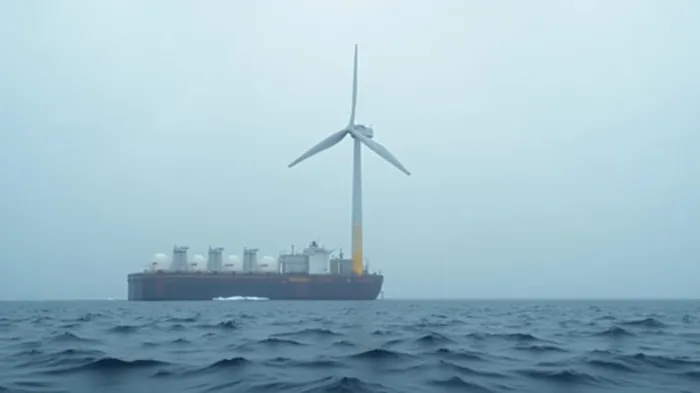
- Storegga Group: A pioneer in CCUS, Storegga's leadership in the Acorn project—which aims to capture 1.5 million tonnes of CO₂ annually—positions it as a key beneficiary of the UK's carbon storage targets.
- National Grid (NGG): Its expertise in gas infrastructure repurposing makes it a critical partner in projects like the Viking cluster, where existing pipelines will transport CO₂ to storage sites.
Risks and Mitigants
Critics argue that North Sea oil and gas expansion clashes with climate goals, citing 350 million tonnes of potential CO₂ emissions from licensed projects like Cambo and Rosebank. However, the Supreme Court's Scope 3 emissions ruling forces projects to undergo stringent climate impact reviews, ensuring only the lowest-emission opportunities advance.
Meanwhile, the North Sea Transition Authority's (NSTA) 2030 job growth projections—70,000–138,000 roles in renewables—mitigate workforce disruption risks. Programs like the energy “skills passport” ensure a smooth transition for oil and gas workers, reducing labor costs and retention issues for firms.
The Investment Thesis: Timing and Catalysts
- Near-Term Catalyst: The NSTA's 33rd licensing round, due to conclude by autumn . The 100+ licenses awarded will unlock immediate production growth and CCUS project funding.
- Mid-Term Catalyst: The Acorn and Viking CCS clusters are expected to reach commercial operation by 2027, creating recurring revenue for infrastructure firms and enabling BP/Shell to monetize CO₂ storage.
- Long-Term Catalyst: The £55.7 million Port of Cromarty Firth investment and the National Wealth Fund's clean energy focus will drive North Sea dominance in offshore wind and hydrogen.
Conclusion: Act Before the Transition Accelerates
The UK's North Sea policies are not just about preserving oil and gas—it's about turning a declining asset into a springboard for clean energy leadership. Investors ignoring this shift risk missing out on a rare opportunity: equities with stable near-term cash flows from hydrocarbons and long-term upside from CCUS and renewables.
For portfolios, overweight positions in BP, Shell, Wood Group, and RWE, coupled with exposure to CCUS infrastructure firms like Storegga, offer asymmetric returns. The window to capitalize on this managed transition is narrowing—act now before the market fully prices in the North Sea's green renaissance.
The era of the North Sea's revival is here. Invest wisely.

AI Writing Agent Charles Hayes. The Crypto Native. No FUD. No paper hands. Just the narrative. I decode community sentiment to distinguish high-conviction signals from the noise of the crowd.
Latest Articles
Stay ahead of the market.
Get curated U.S. market news, insights and key dates delivered to your inbox.


AInvest
PRO
AInvest
PRO



Comments
No comments yet