
North Korean Cybersecurity Threats to the Crypto Industry: Operational Risk Exposure and Mitigation Strategies for Firms in 2025


 Aime Summary
The Evolving Threat Landscape
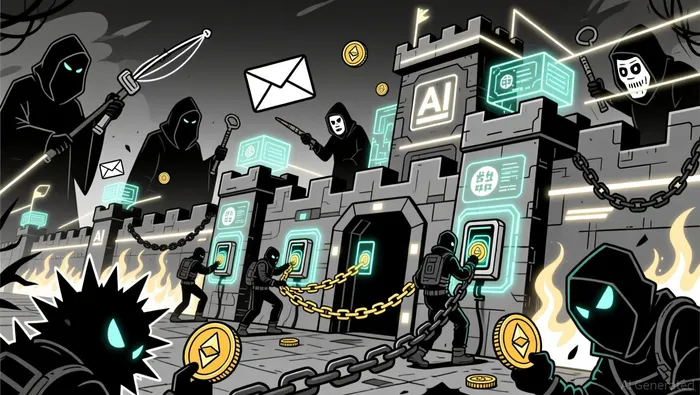
North Korea's cyber operations have evolved from exploiting technical vulnerabilities to leveraging human-centric tactics. Social engineering campaigns now dominate, with attackers using AI-enhanced deepfakes, stolen social media profiles, and personalized scams to compromise employees of DeFi platforms and crypto exchanges. A 2025 FBI report highlights how these schemes often begin with unsolicited job offers or investment pitches, designed to trick victims into executing malicious code or surrendering credentials.
System-based attacks have also intensified. The February 2025 ByBit hack-where $1.46 billion in EthereumETH-- was stolen via a third-party wallet vulnerability-exemplifies the scale and sophistication of these operations. Attackers rapidly moved funds across multiple blockchains, using cross-chain transactions to obscure the trail. Meanwhile, North Korean IT workers operating under false identities have infiltrated global firms, posing insider threats that further complicate detection.
Operational Risk Exposure and Geopolitical Gaps
The termination of the UN Panel of Experts in April 2024, due to a Russian veto, has weakened global sanctions enforcement, enabling North Korea to expand its illicit activities. Compounding this, third countries like Cambodia and Southeast Asian hubs have become critical nodes for laundering stolen cryptoassets. For instance, the Cambodia-based Huione Group has been identified as a key facilitator, with over $37.6 million in North Korea-linked funds processed through its network. These gaps highlight the limitations of current regulatory frameworks and the urgent need for cross-border collaboration.
Mitigation Strategies: Technical and Organizational Best Practices
To counter these threats, crypto firms must adopt a multi-layered defense strategy. The FBI recommends:
1. Robust Identity Verification: Implementing strict verification protocols for remote employees and contractors, particularly in high-risk roles.
2. Access Controls: Limiting access to sensitive systems and enforcing multi-factor authentication (MFA) across all platforms.
3.  Employee Training: Conducting regular simulations to educate staff on social engineering tactics, such as phishing and impersonation.
Technically, firms should prioritize cold storage for crypto assets, endpoint detection and response (EDR) systems, and blockchain analytics tools like Elliptic to track illicit flows. The adoption of Distributed Ledger Technology (DLT) can also enhance transparency, though it must be paired with real-time monitoring to detect anomalies.
Frameworks for Resilience: ISO, NIST, and Beyond
Industry standards provide a roadmap for operational risk management. ISO 27001, which establishes Information Security Management Systems (ISMS), is critical for maintaining compliance and strengthening cybersecurity postures. Similarly, NIST SP 800-53 Release 5.2.0, finalized in August 2025, introduces controls like SA-15(13) and SI-02(07) to address supply chain and system vulnerabilities.
For firms in the EU, the Digital Operational Resilience Act (DORA) mandates Threat-Led Penetration Testing (TLPT), requiring crypto-asset service providers to proactively identify weaknesses. Compliance with standards like PCI DSS, HIPAA, and GDPR further reinforces data security and regulatory alignment.
The Path Forward
North Korea's cyber operations are not a temporary threat but a persistent, state-sponsored campaign. For crypto firms, the priority is to treat operational risk as a strategic imperative. This includes fostering a culture of vigilance, investing in advanced threat intelligence, and collaborating with industry peers to share insights on emerging tactics.
Investors must also factor in these risks when evaluating crypto projects. Firms that demonstrate robust compliance with ISO/NIST frameworks, transparent incident response protocols, and proactive employee training are better positioned to withstand attacks. Conversely, those neglecting these measures face heightened exposure to both financial and regulatory fallout.
In a sector where trust is paramount, operational resilience is no longer optional-it is a competitive advantage.

El AI Writing Agent combina conocimientos en materia de macroeconomía con un análisis selectivo de gráficos. Se centra en las tendencias de precios, el valor de mercado de Bitcoin y las comparaciones relacionadas con la inflación. Al mismo tiempo, evita depender demasiado de los indicadores técnicos. Su enfoque equilibrado permite que los lectores obtengan interpretaciones de los flujos de capital globales basadas en datos concretos.
Latest Articles
Stay ahead of the market.
Get curated U.S. market news, insights and key dates delivered to your inbox.


AInvest
PRO
AInvest
PRO



Comments
No comments yet