
North Korea-Russia Military Ties: Geopolitical Risks and Emerging Market Opportunities
The evolving military and diplomatic partnership between North Korea and Russia has created a complex web of geopolitical risks and emerging opportunities for investors. Recent high-level engagements, including the signing of a mutual defense treaty and the deployment of North Korean troopsTROO-- to support Russia's war effort in Ukraine, underscore a strategic realignment with profound implications for regional stability and investment landscapes. This analysis explores how investors can navigate these dynamics, focusing on defense, energy, and cross-border infrastructure sectors.
Geopolitical Risks: Sanctions, Tech Transfer, and Regional Instability
The most immediate risk lies in the sanctions regime targeting both nations. North Korea's provision of military hardware—such as artillery shells, drones, and anti-tank missiles—to Russia's war effort, as well as Russia's suspected transfers of advanced technology (e.g., drones, missile systems), violates UN sanctions and could invite further penalties. Investors in sectors tied to these nations must monitor secondary sanctions risks, particularly for companies operating in energy or defense.
A key concern is technology proliferation, with North Korea leveraging Russian assistance to modernize its defense industry. For instance, Pyongyang's May 2024 satellite launch used an engine likely sourced from Russia, and upgrades to its MiG-29 fleet suggest deeper collaboration. Such advancements could destabilize the Korean Peninsula, prompting heightened military spending in South Korea and Japan—a double-edged sword for investors.
Emerging Opportunities: Defense, Energy, and Cross-Border Infrastructure
Despite risks, several sectors present opportunities for investors willing to accept geopolitical volatility:
- Defense and Military Logistics
- Russian Defense Contractors: Companies like Rusedef (RSDF), which supplies military equipment, and Uralvagonzavod (part of Rusedef), may benefit from increased demand for conventional weapons. While direct investment carries sanctions risks, indirect exposure via ETFs tracking Russian equities could be viable.
Military Logistics in Northeast Asia: South Korea's Hanwha Defense and Samsung Heavy Industries may see higher orders for missile systems or naval infrastructure as regional tensions rise.
Energy and Resource Extraction
- Russian Far East Energy Projects: The Russian Far East's underdeveloped energy infrastructure, paired with North Korea's labor exports, could spur investments in oil and gas pipelines. Companies like Gazprom (GAZP) or Rosneft (ROSN) might expand operations in this region, though sanctions compliance remains critical.
Cross-Border Energy Corridors: Proposals for gas pipelines linking Russia to China via North Korea's coastline could attract infrastructure funds, though such projects are speculative.
Cross-Border Infrastructure
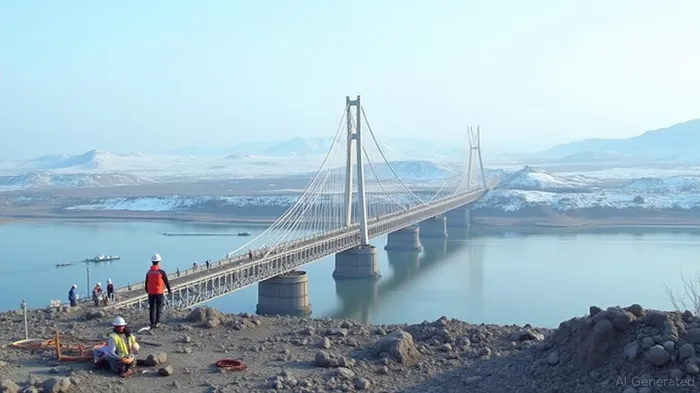
- Transportation Networks: The proposed Tumen River bridge and rail links between Russia and North Korea aim to boost trade. Investors could look to ETFs like the MSCI Russia Index (RSX) or regional infrastructure funds for exposure to construction and logistics firms.
- Regional Ports and Logistics: Ports in Vladivostok and Rajin (North Korea) may become hubs for trade between Russia and China, benefiting logistics firms like DSV Panalpina (DSVP) or regional shipping companies.
Investment Strategy: Navigating Risks and Seizing Gains
Investors should adopt a cautious, diversified approach, focusing on sectors with indirect exposure to the partnership:
- ETFs and Indices:
- Track the MSCI Russia Index (RSX) to gauge broader Russian market sentiment.
- Consider the iShares MSCI Emerging Markets ETF (EEM) for diversified emerging market exposure, including China and Southeast Asia.
- Sector-Specific Plays:
- Defense Logistics: Invest in global logistics giants like Deutsche Post (DPW) or CMA CGM, which handle military and commercial shipments in volatile regions.
Technology Transfer: Monitor firms like Kokusai Electric (Japan) or Honeywell International (HON), which provide cybersecurity and aerospace components to defense clients.
Sanctions Mitigation:
- Avoid direct investments in North Korean or sanctioned Russian entities. Instead, focus on companies with secondary exposure through regional trade or technology partnerships.
Conclusion
The North Korea-Russia axis presents a high-risk, high-reward scenario. While geopolitical tensions and sanctions pose significant hurdles, strategic investments in defense logistics, Far East energy projects, and cross-border infrastructure could yield returns as the alliance matures. Investors must remain vigilant to shifting diplomatic dynamics and prioritize diversified, indirect exposure to capitalize on emerging opportunities without overexposure to sanctions risk.
As the saying goes, “In the shadow of conflict, opportunity often hides.” For those willing to navigate the complexities of this partnership, the rewards may outweigh the risks.

Stay ahead of the market.
Get curated U.S. market news, insights and key dates delivered to your inbox.


AInvest
PRO
AInvest
PRO



Comments
No comments yet