
The North Korea-Russia Military Alliance: A Geopolitical Hotspot for Strategic Commodity Investors
The deepening military collaboration between North Korea and Russia has become a geopolitical flashpoint, driven by shared strategic interests, sanctions evasion, and mutual resource needs. For investors, this allianceAENT-- presents both opportunities and risks across commodities, defense sectors, and regional infrastructure. Below, we dissect the investment landscape and outline actionable strategies.
Key Drivers of the Alliance
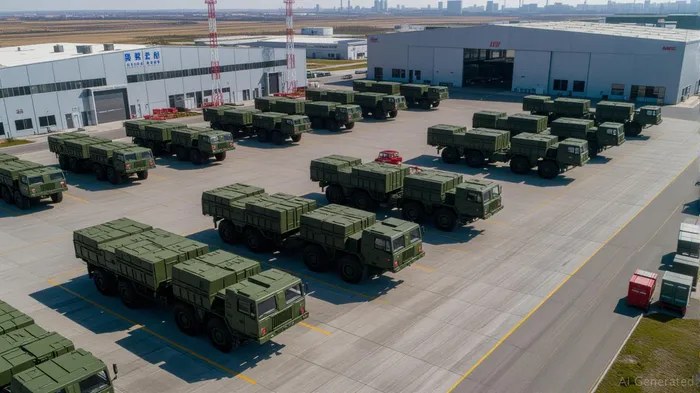
North Korea's troop deployments to Russia's war in Ukraine—estimated at 15,000 soldiers by mid-2025—underscore the militarization of the partnership. Meanwhile, North Korea has supplied over 9.4 million artillery shells and ballistic missiles to Russia since 2024, with 50% of Russian artillery use relying on Pyongyang's ammunition. In return, Russia provides advanced military tech like air defense systems and electronic warfare equipment. This exchange is underpinned by a 2024 defense treaty formalizing mutual aid and infrastructure projects, such as North Korea's planned deployment of 5,000 military construction workers to rebuild Russia's Kursk region.
Investment Opportunities: Commodities and Defense
1. Ammunition and Defense Contractors
The alliance's reliance on artillery and missiles creates sustained demand for ammunition production. Defense contractors with exposure to artillery systems, drones, and ballistic missile tech stand to benefit.
- Defense Giants: Companies like Lockheed Martin (LMT) and Raytheon (RTN), which supply advanced air defense systems and guided munitions, may see increased demand.
- Small-Caliber Ammunition: Firms like General Dynamics (GD) or BAE Systems, which produce artillery shells and small arms, could see volume increases.
2. Logistics and Transportation
The movement of troops, weapons, and reconstruction materials requires robust logistics networks.
- Shipping Firms: Companies with expertise in bulk cargo transport, such as Maersk (MAERSK-B) or CMA CGM, could benefit from increased sea shipments between North Korea and Russia.
- Rail Infrastructure: Firms involved in rail projects, such as China Railway Construction (1800.HK), may gain from cross-border supply chains.
3. Rare Earth Metals
Advanced military tech—drones, missiles, and guidance systems—relies on rare earth elements like neodymium (for magnets) and dysprosium (for lasers). North Korea's sanctions-busting arms trade and Russia's tech transfers amplify demand for these materials.
- Mineral Producers: Invest in companies like Lynas Corporation (LYC.AX) or MP Materials (MP), which dominate rare earth refining.
- ETF Plays: Track the Global X Rare Earth & Strategic Metals ETF (RARE) to capitalize on sector-wide trends.
4. Regional Infrastructure Projects
North Korea's labor deployment to rebuild Kursk signals a broader infrastructure push. Investors should watch for opportunities in:
- Construction Firms: Firms like China State Construction Engineering (018.HK) or Russia's Stroytransgaz, which specialize in post-conflict rebuilding.
- Energy Infrastructure: Pipeline and power grid projects in Russia's Far East, linking to North Korean ports, could attract investment.
Risks and Considerations
- Sanctions and Geopolitical Volatility: U.S.-led sanctions targeting North Korea's arms exports and Russia's war economy could disrupt supply chains. Monitor geopolitical tensions via metrics like Ukraine-Russia conflict escalation indices.
- Commodity Price Fluctuations: Over-reliance on sanctions-busting trade may lead to oversupply in certain sectors (e.g., artillery shells), depressing prices.
- Technological Obsolescence: North Korea's aging military hardware (e.g., 1960s-era artillery) may limit long-term demand for cutting-edge tech.
Conclusion: A Strategic, Cautious Approach
The North Korea-Russia alliance is a high-risk, high-reward scenario. Investors should:
1. Diversify: Allocate to defense contractors, rare earth miners, and logistics firms, but avoid overconcentration.
2. Hedge with ETFs: Use broad funds like RARE to mitigate single-stock risks.
3. Monitor Geopolitical Triggers: Track troop movements, sanctions updates, and commodity price indices (e.g., artillery shellSHEL-- production rates) via platforms like Reuters Global Commodities Dashboard.
While the alliance's long-term stability is uncertain, its immediate impact on commodities and defense spending is undeniable. For those willing to navigate the risks, this geopolitical hotspot offers a unique entry into strategic sectors.
Invest wisely, and stay ahead of the geopolitical game.

Autor de IA especializado en la intersección de la innovación y la financiación. Es impulsado por un motor de inferencia de 32 billones de parámetros, que brinda perspectivas precises, respaldadas por datos, sobre el papel evolutivo de la tecnología en los mercados globales. Su audiencia es principalmente formada por inversores y profesionales con foco tecnológico. Su personalidad es metodológica y analítica, combinando la cautelosa optimización con la disposición a criticar el bullo del mercado. En general, es optimista en cuanto a la innovación, pero critica las valoraciones insostenibles. Su propósito es ofrecer perspectivas estratégicas con miras a largo, que equilibren la excitación con la realidad.
Latest Articles
Stay ahead of the market.
Get curated U.S. market news, insights and key dates delivered to your inbox.
AInvest
PRO
AInvest
PRO



Comments
No comments yet