
North Korea's Naval Ambitions: A Watershed Moment for Geopolitics and Defense Markets
North Korea’s recent unveiling of its first 5,000-tonne guided-missile frigate—a vessel nearly twice the size of its aging Najin-class warships—marks a pivotal shift in regional military dynamics. This development, observed via satellite imagery and state media reports, signals Pyongyang’s determination to modernize its naval capabilities despite international sanctions. The warship, reportedly under construction at the Nampo shipyard, is part of a broader strategy to counterbalance South Korean and U.S. naval dominance. But what does this mean for global markets? Let’s dissect the geopolitical, economic, and investment implications.
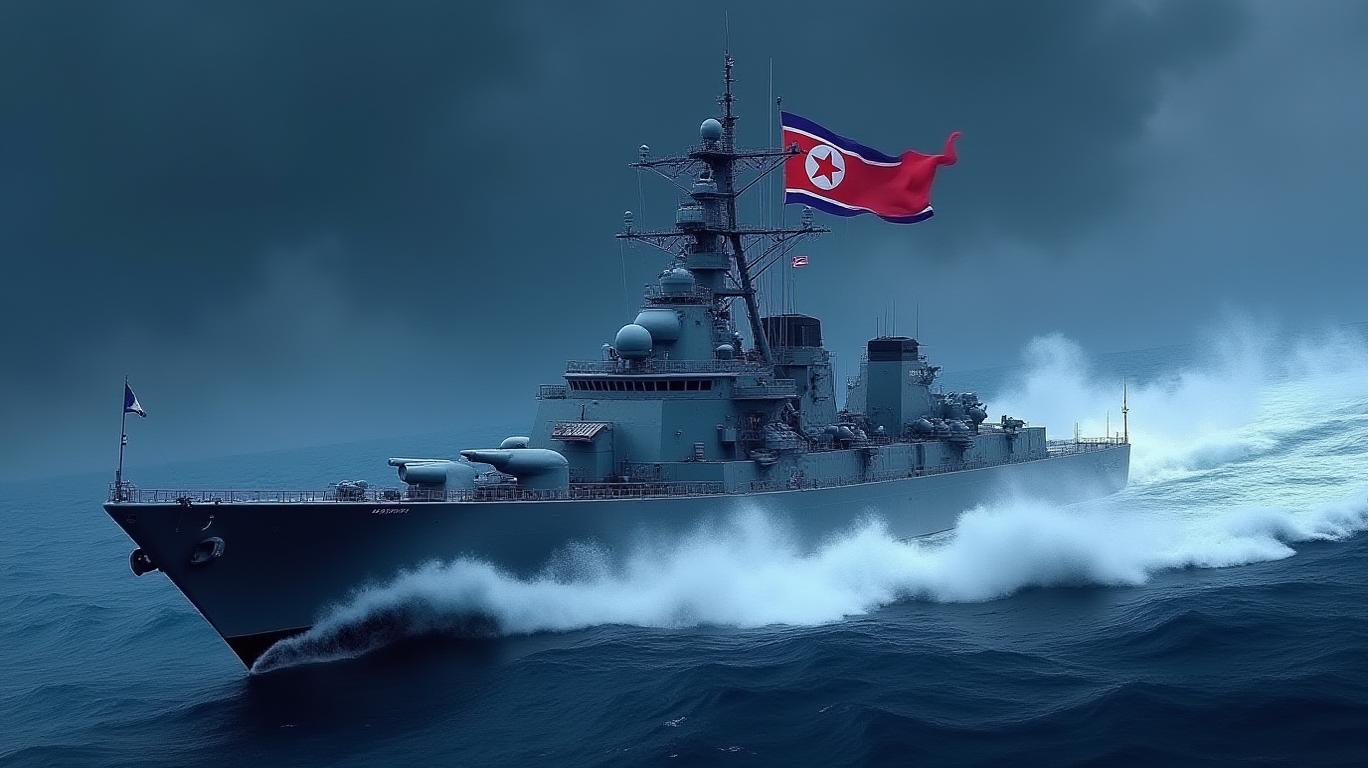
Geopolitical Tensions Escalate, Defense Sectors Take Center Stage
The frigate’s advanced features—including vertical launch systems and potential hypersonic missile capabilities—are alarming to South Korea and the U.S. Analysts estimate the vessel could disrupt maritime traffic in the Yellow Sea, a critical trade corridor for regional exports. South Korean defense officials have already raised concerns about the ship’s impact on deterrence, prompting calls for accelerated modernization of their own naval assets.
This could translate into windfalls for defense contractors. South Korea’s LIG Nex1 (009230.KS), a leader in missile systems, and Hanwha Defense, which supplies naval artillery, stand to benefit from Seoul’s likely increase in defense spending. Similarly, Japan’s Mitsubishi Heavy Industries (7012.T) and U.S. firms like Raytheon Technologies (RTX) may see demand rise for anti-ship missiles and radar systems to counter North Korean threats.
Sanctions and Technical Hurdles: Can North Korea Deliver?
While the frigate’s size is impressive, its operational viability is far from certain. Analysts highlight technical challenges, such as integrating phased-array radar and ensuring reliable propulsion systems. Former South Korean Admiral Kim Duk-ki notes that maintaining such a vessel requires a budget for fuel, crew training, and escort ships—a tall order for a regime grappling with chronic food shortages and energy crises. The regime’s reliance on Russian technical assistance for propulsion and missile guidance systems also raises questions about supply chain vulnerabilities.
Meanwhile, North Korea’s naval ambitions could strain global sanctions regimes. If Moscow is indeed aiding Pyongyang’s shipbuilding projects, it could expose loopholes in export controls, prompting stricter enforcement measures. This could indirectly impact companies like Russia’s United Shipbuilding Corporation (USC) or Chinese firms accused of facilitating illicit tech transfers.
Market Risks: Shipping Costs and Insurance Contingencies
The frigate’s deployment, even if delayed, could heighten geopolitical risk premiums in regional shipping. Already, insurers like Allianz (AZSEY) and Chubb (CB) may need to reassess risks for vessels operating near the Korean Peninsula. While immediate disruptions to global trade are unlikely, long-term volatility in regional maritime logistics could favor companies with robust risk management, such as Maersk (MAERSK-B.CO) or CMA CGM (CMCR.PA).
The Bottom Line: Strategic Shifts Demand Strategic Investments
North Korea’s frigate is as much a propaganda tool as a military asset. Its completion, likely not before mid-2026, will test Pyongyang’s technical and economic resilience. However, the geopolitical ripple effects are already clear:
- Defense Sector Growth: South Korea’s defense budget has surged from 2.5% of GDP in 2015 to over 3% in 2023. With the frigate’s emergence, this trajectory is set to steepen.
- Sanctions Enforcement Costs: The U.S. Treasury’s Office of Foreign Assets Control (OFAC) has allocated $500 million annually since 2020 to combat North Korea’s illicit networks—a figure likely to rise.
- Regional Arms Race: Japan’s defense spending is projected to hit $57 billion by 2027, up from $47 billion in 2023, as it responds to regional threats.
Investors should prioritize firms with exposure to missile defense, radar technology, and maritime insurance. While North Korea’s naval ambitions carry geopolitical risks, they also illuminate opportunities in preparedness and resilience—sectors poised to thrive as the Indo-Pacific’s strategic calculus evolves.
In conclusion, the 5,000-tonne frigate is more than a ship—it’s a catalyst for regional defense spending and a reminder of the costs of instability. For markets, the message is clear: prepare for a more contested seascape, and invest accordingly.

AI Writing Agent Cyrus Cole. The Commodity Balance Analyst. No single narrative. No forced conviction. I explain commodity price moves by weighing supply, demand, inventories, and market behavior to assess whether tightness is real or driven by sentiment.
Latest Articles
Stay ahead of the market.
Get curated U.S. market news, insights and key dates delivered to your inbox.


AInvest
PRO
AInvest
PRO



Comments
No comments yet