
North Korea's Military Surge: A Catalyst for Emerging Market Volatility and Defense Sector Gains


 Aime Summary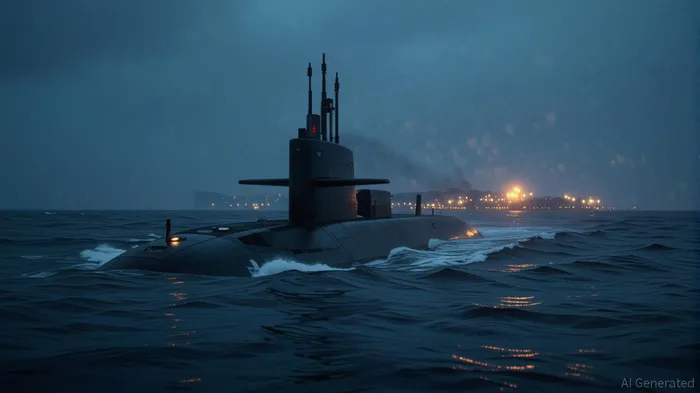
North Korea's 2025 military modernization campaign, fueled by Russian support and a strategic pivot toward self-reliance, has become a defining force in global emerging market volatility. Kim Jong Un's “second revolution” in military technology—spanning hypersonic missiles, cyber warfare, and nuclear-capable submarines—has not only reshaped regional power dynamics but also triggered cascading effects across commodities, defense stocks, and hedging strategies. For investors, the implications are both perilous and opportunistic.
The Defense Sector: A New Arms Race in the Pacific
The Korean Peninsula's escalating tensions have turned defense stocks into a magnet for capital. South Korea's “smart defense” strategy, championed by President Lee Jae-myung, has prioritized innovation over traditional deterrence. Companies like Korea Aerospace Industries (KAI) and Hanwha Aerospace have surged, with KAI's KF-21 Borae fighter jet securing contracts in Southeast Asia and the Middle East. Meanwhile, U.S. firms such as Lockheed Martin (LMT) and Raytheon Technologies (RTX) have benefited from a $28.4 billion allocation in the FY 2025 U.S. defense budget for missile defense systems.
The 2025 academic study on defense sector performance underscores a critical trend: innovation-driven firms outperform during geopolitical crises. For instance, Raytheon's PAC-3 MSE missile system, designed to counter North Korean ICBMs, has seen orders spike by 40% year-on-year. Investors should monitor South Korean defense ETFs like KODEX Defense and U.S. blue-chips with advanced R&D pipelines, as these sectors are likely to remain insulated from broader market downturns.
Commodities: Safe Havens in a Storm
As North Korea's nuclear tests and cyberattacks heighten regional instability, global investors have flocked to safe-haven assets. Gold prices hit a record $2,500 per ounce in August 2025, driven by fears of a regional conflict spilling into global supply chains. U.S. Treasuries have also stabilized, with the 10-year yield dipping to 3.8% as capital flows into liquidity.
The regime's integration into non-Western supply chains—exemplified by the Tumen River Bridge and Rajin-Sonbong Special Economic Zone—has further amplified risk premiums. While these projects promise long-term trade potential, they also expose vulnerabilities in energy and critical mineral supply chains. South Korea and Japan are accelerating investments in LNG infrastructure and rare-earth processing, creating opportunities for firms like POSCO and Sumitomo Metal Mining.
Cybersecurity and Energy: Hidden Frontlines
North Korea's cyber operations, led by the Lazarus Group, have forced a reevaluation of global cybersecurity strategies. Firms specializing in AI-driven threat detection, such as Microsoft (MSFT) and CrowdStrike (CRWD), have seen demand surge. Microsoft's Azure Sentinel, a cloud-based security platform, now accounts for 15% of its enterprise revenue, up from 7% in 2023.
Energy markets are equally vulnerable. North Korea's reliance on Russian oil and Chinese coal has exposed regional supply chain fragility. South Korea's pivot to LNG and renewables—exemplified by the 2025 expansion of the Jinhae LNG terminal—has boosted shares of Korea Gas Corporation (KOGAS) by 22% year-to-date. Investors should also consider hedging against energy shocks by allocating to diversified energy ETFs like iShares Global Energy.
Hedging Strategies: Balancing Risk and Reward
For investors navigating this volatile landscape, a dual approach is essential. First, a diversified portfolio combining South Korean defense firms (e.g., KAIKAI--, Hanwha) and U.S. blue-chips (e.g., LMT, RTX) offers exposure to both regional and global rearmament trends. Second, safe-haven assets like gold and U.S. Treasuries provide a counterweight to short-term geopolitical shocks.
However, caution is warranted. North Korea's unpredictable military posturing—exemplified by the May 2025 destroyer incident—could trigger sudden market corrections. A 10% allocation to high-quality, dividend-paying stocks in the defense and cybersecurity sectors, paired with 5–7% in gold and Treasuries, offers a balanced hedge.
Conclusion: A New Era of Geopolitical Investing
North Korea's military modernization is no longer a regional issue but a global catalyst for volatility. As the regime consolidates its partnerships with Russia and China, investors must adapt to a world where defense innovation and safe-haven assets are intertwined. The key lies in identifying firms at the forefront of technological resilience while mitigating exposure to sudden geopolitical shocks. In this new era, the winners will be those who anticipate the storm—and position their portfolios accordingly.

Stay ahead of the market.
Get curated U.S. market news, insights and key dates delivered to your inbox.
AInvest
PRO
AInvest
PRO



Comments
No comments yet