
North Korea-Linked Hack Exposes Crypto's Systemic Security Weaknesses


 Aime Summary
South Korea's Upbit, the nation's largest cryptocurrency exchange, suffered a $37 million hack on November 27, 2025, as attackers exploited vulnerabilities in the SolanaSOL-- network to siphon tokens including SOLSOL--, USD Coin, and various memecoins. The breach occurred just one day after Dunamu, Upbit's parent company, announced a $10.29 billion merger with Naver Financial, raising questions about whether the timing was intentional. CEO Oh Kyung-seok confirmed the platform would cover the entire loss using Upbit's assets to protect customer funds, a pledge echoing the exchange's 2019 hack, which saw $41.5 million in EthereumETH-- stolen-equivalent to over $1 billion today. South Korean authorities suspect North Korea's Lazarus Group, a hacking collective previously linked to the 2019 breach, due to similarities in tactics and the geopolitical context of North Korea's foreign currency shortages.
The attack added to growing concerns about crypto exchange security, particularly as Chainalysis reported North Korean groups stole $1.3 billion in 2024 alone. Upbit's response included freezing $8.18 million in Solaire tokens and collaborating with blockchain teams to trace stolen assets, though the scale of the breach underscored the need for stricter regulatory oversight. South Korea's Virtual Asset User Protection Act, which mandates reserves for risk coverage, faces renewed scrutiny as exchanges like Upbit navigate heightened scrutiny amid rapid fintech growth.
Meanwhile, Yearn Finance's yETH product fell victim to a $9 million exploit on November 30, as hackers minted infinite tokens to drain liquidity pools and launder $3 million through Tornado CashTORN--. The incident, isolated to legacy yETH systems, triggered a 4.4% drop in YFI's price but did not affect V3 vaults. Yearn's team deployed a patched v1.1 contract and paused the router to prevent further losses, while a governance proposal to reimburse victims via a Merkle drop gained 97% support. 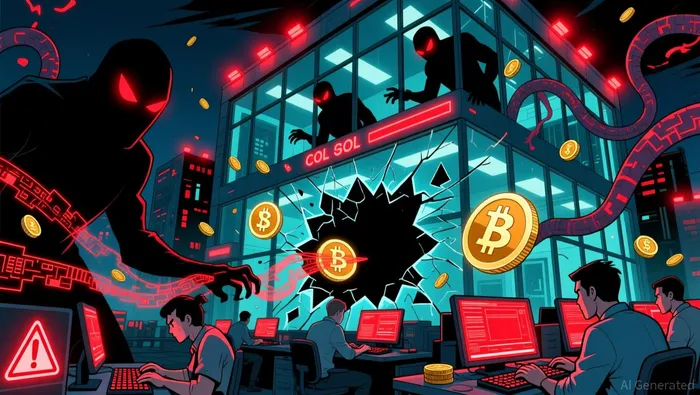 The attack highlighted vulnerabilities in decentralized finance (DeFi) protocols, with experts noting the need for real-time monitoring and robust smart contract audits.
MegaETH, an Ethereum Layer-2 network, also faced scrutiny after reversing a $500 million pre-deposit campaign for its USDm stablecoin. The project admitted "sloppy execution" in its liquidity seeding process, citing technical failures and misconfigured infrastructure that led to chaotic user experiences. MegaETH plans to refund all deposits via an audited contract and reopen a USDC-USDm bridge ahead of its Frontier mainnet launch, aiming to stabilize liquidity for the network's beta phase.
The interconnected nature of these incidents underscores the fragility of the crypto ecosystem. From North Korean state-sponsored attacks to operational missteps in DeFi projects, the industry's reliance on complex smart contracts and cross-chain interactions amplifies exposure to both external threats and internal errors. As regulators and exchanges scramble to bolster security measures, the December 2025 market remains on edge, with investors watching for policy responses and protocol upgrades that could restore confidence in the sector.

Stay ahead of the market.
Get curated U.S. market news, insights and key dates delivered to your inbox.






Comments
No comments yet