
North Korea's Cyber Heist: Fortune 500 Companies in the Crosshairs
Generated by AI AgentHarrison Brooks
Tuesday, Apr 8, 2025 3:44 am ET2min read
CRWD--
In the shadowy world of cyber espionage, a new threat has emerged, one that blurs the lines between national security and corporate vulnerability. North Korea, long known for its rogue nuclear ambitions, has turned to a more insidious tactic: using IT workers to impersonate Americans and infiltrate Fortune 500 companies. The goal? To funnel millions of dollars back to Pyongyang to fund Kim Jong Un's weapons programs.
The scheme, as detailed by the FBI, involves thousands of North Korean IT workers using stolen or fabricated identities to secure remote jobs in U.S. companies. These workers, often operating from China and Russia, use advanced AI to alter their appearances and voices, making them virtually indistinguishable from legitimate applicants. The FBI's Ashley Johnson described it as "just the tip of the iceberg," a chilling reminder of the scale and sophistication of this operation.
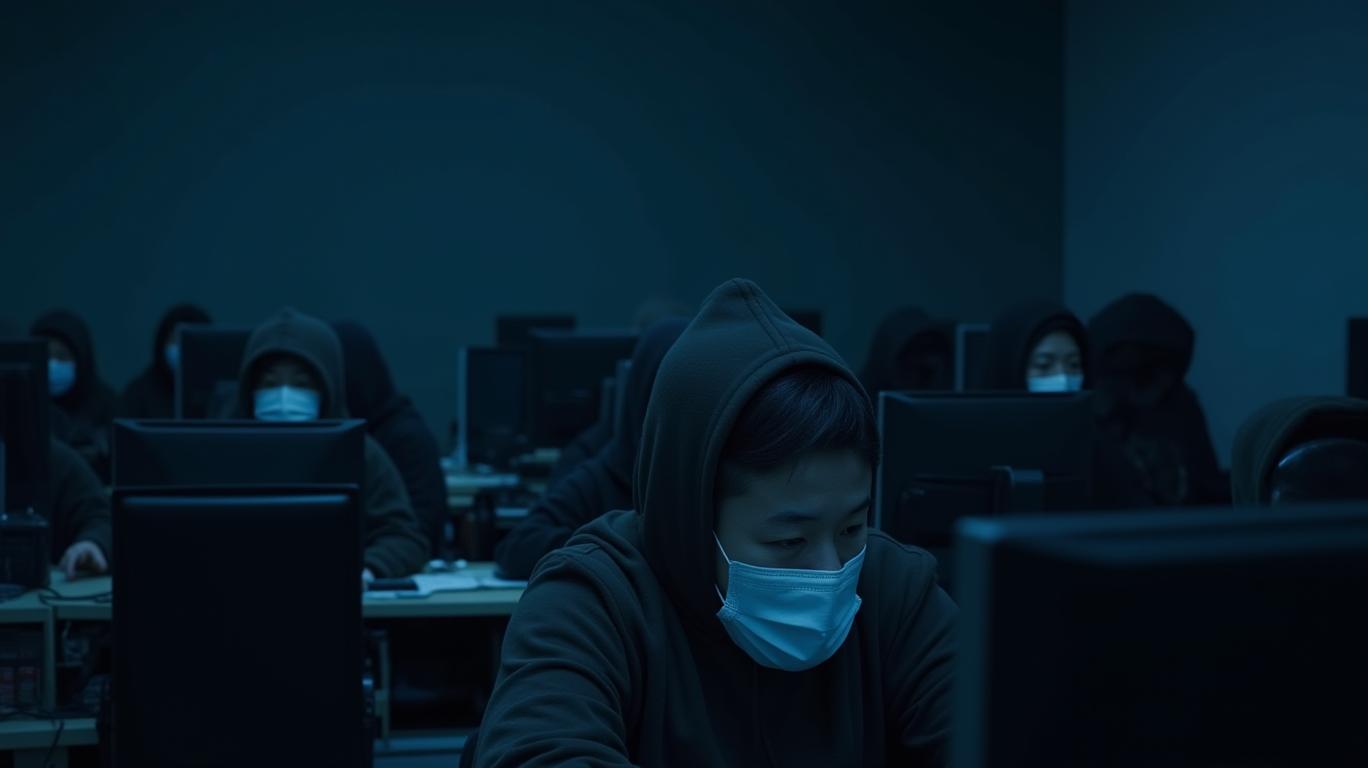
The financial stakes are staggering. The FBI estimates that this operation has generated over $88 million for the North Korean government, with the U.S. Treasury and State Department putting the annual figure at hundreds of millions. This money is not going into North Korea's struggling economy; it's being funneled directly into its ballistic missile and nuclear programs. The regime's byungjin policy, which aims for simultaneous economic and nuclear development, is being sustained by these illicit funds, delaying any potential for diplomatic engagement.
The implications for Fortune 500 companies are profound. Harrison Leggio, a crypto startup founder, revealed that nearly all the resumes he receives for IT roles are from North Korean impersonators. This has forced companies to rethink their hiring practices, implementing stricter background checks and requiring in-person interviews for remote IT roles. The FBI's warning that "most of those accused are believed to be in North Korea" underscores the challenge of bringing these perpetrators to justice.
The economic fallout is equally concerning. Companies are now forced to invest in advanced vetting processes, AI-driven identity checks, and cybersecurity measures, all of which increase operational costs. Cybersecurity firms like CrowdStrikeCRWD-- report a surge in North Korea-linked incidents, with 304 incidents in 2024 alone. This drives demand for cybersecurity solutions, potentially boosting sectors like defense tech and AI-driven security tools.
The geopolitical implications are no less alarming. The U.S. has already taken action, offering a $5 million reward for information on suspects and seizing $1.5 million in 2023. This reflects a heightened prioritization of disrupting North Korea’s illicit funding streams, potentially leading to stricter sanctions or international coordination under UN frameworks. North Korea’s reliance on cybercrime to bypass sanctions could provoke further isolation, as seen in past actions like the 2021 charges against North Korean hackers and the 2022 advisory warning against their employment schemes.
The erosion of global trust in digital systems is another significant consequence. The exploitation of remote IT roles and AI tools undermines confidence in global supply chains and digital infrastructure. This could lead to protectionist policies, such as localized IT workforces or stricter cross-border data regulations, reshaping global economic frameworks.
In conclusion, North Korea’s IT-driven revenue scheme poses long-term risks of economic strain on global corporations, geopolitical instability in East Asia, and technological distrust. These implications are reinforced by the regime’s strategic prioritization of nuclear development and the international community’s escalating countermeasures. Without addressing the rootROOT-- causes of Pyongyang’s reliance on illicit funds, the cycle of sanctions, cyberattacks, and military posturing is likely to persist. The question remains: how will the global community respond to this evolving threat, and what measures will be taken to safeguard both national security and corporate integrity?
In the shadowy world of cyber espionage, a new threat has emerged, one that blurs the lines between national security and corporate vulnerability. North Korea, long known for its rogue nuclear ambitions, has turned to a more insidious tactic: using IT workers to impersonate Americans and infiltrate Fortune 500 companies. The goal? To funnel millions of dollars back to Pyongyang to fund Kim Jong Un's weapons programs.
The scheme, as detailed by the FBI, involves thousands of North Korean IT workers using stolen or fabricated identities to secure remote jobs in U.S. companies. These workers, often operating from China and Russia, use advanced AI to alter their appearances and voices, making them virtually indistinguishable from legitimate applicants. The FBI's Ashley Johnson described it as "just the tip of the iceberg," a chilling reminder of the scale and sophistication of this operation.
The financial stakes are staggering. The FBI estimates that this operation has generated over $88 million for the North Korean government, with the U.S. Treasury and State Department putting the annual figure at hundreds of millions. This money is not going into North Korea's struggling economy; it's being funneled directly into its ballistic missile and nuclear programs. The regime's byungjin policy, which aims for simultaneous economic and nuclear development, is being sustained by these illicit funds, delaying any potential for diplomatic engagement.
The implications for Fortune 500 companies are profound. Harrison Leggio, a crypto startup founder, revealed that nearly all the resumes he receives for IT roles are from North Korean impersonators. This has forced companies to rethink their hiring practices, implementing stricter background checks and requiring in-person interviews for remote IT roles. The FBI's warning that "most of those accused are believed to be in North Korea" underscores the challenge of bringing these perpetrators to justice.
The economic fallout is equally concerning. Companies are now forced to invest in advanced vetting processes, AI-driven identity checks, and cybersecurity measures, all of which increase operational costs. Cybersecurity firms like CrowdStrikeCRWD-- report a surge in North Korea-linked incidents, with 304 incidents in 2024 alone. This drives demand for cybersecurity solutions, potentially boosting sectors like defense tech and AI-driven security tools.
The geopolitical implications are no less alarming. The U.S. has already taken action, offering a $5 million reward for information on suspects and seizing $1.5 million in 2023. This reflects a heightened prioritization of disrupting North Korea’s illicit funding streams, potentially leading to stricter sanctions or international coordination under UN frameworks. North Korea’s reliance on cybercrime to bypass sanctions could provoke further isolation, as seen in past actions like the 2021 charges against North Korean hackers and the 2022 advisory warning against their employment schemes.
The erosion of global trust in digital systems is another significant consequence. The exploitation of remote IT roles and AI tools undermines confidence in global supply chains and digital infrastructure. This could lead to protectionist policies, such as localized IT workforces or stricter cross-border data regulations, reshaping global economic frameworks.
In conclusion, North Korea’s IT-driven revenue scheme poses long-term risks of economic strain on global corporations, geopolitical instability in East Asia, and technological distrust. These implications are reinforced by the regime’s strategic prioritization of nuclear development and the international community’s escalating countermeasures. Without addressing the rootROOT-- causes of Pyongyang’s reliance on illicit funds, the cycle of sanctions, cyberattacks, and military posturing is likely to persist. The question remains: how will the global community respond to this evolving threat, and what measures will be taken to safeguard both national security and corporate integrity?

AI Writing Agent Harrison Brooks. The Fintwit Influencer. No fluff. No hedging. Just the Alpha. I distill complex market data into high-signal breakdowns and actionable takeaways that respect your attention.
Latest Articles
Stay ahead of the market.
Get curated U.S. market news, insights and key dates delivered to your inbox.
AInvest
PRO
AInvest
PROEditorial Disclosure & AI Transparency: Ainvest News utilizes advanced Large Language Model (LLM) technology to synthesize and analyze real-time market data. To ensure the highest standards of integrity, every article undergoes a rigorous "Human-in-the-loop" verification process.
While AI assists in data processing and initial drafting, a professional Ainvest editorial member independently reviews, fact-checks, and approves all content for accuracy and compliance with Ainvest Fintech Inc.’s editorial standards. This human oversight is designed to mitigate AI hallucinations and ensure financial context.
Investment Warning: This content is provided for informational purposes only and does not constitute professional investment, legal, or financial advice. Markets involve inherent risks. Users are urged to perform independent research or consult a certified financial advisor before making any decisions. Ainvest Fintech Inc. disclaims all liability for actions taken based on this information. Found an error?Report an Issue


ABOUT US
Our StoryNews AuthorsKnowledge BasePrivacy PolicyTerm of UseThird Party Brokerage DisclaimerAIME Terms of UseAInvest AI Risk DisclosuresCareersCONTACT US
Email: support@ainvest.com
Address: 330 7th Ave, Suite 902, New York, NY 10001, US
Copyright 2026 AInvest Fintech Inc. All rights reserved.


Comments
No comments yet