
North Korea's Crypto Theft Empire: Reshaping Institutional Risk Management in the Digital Age


 Aime Summary
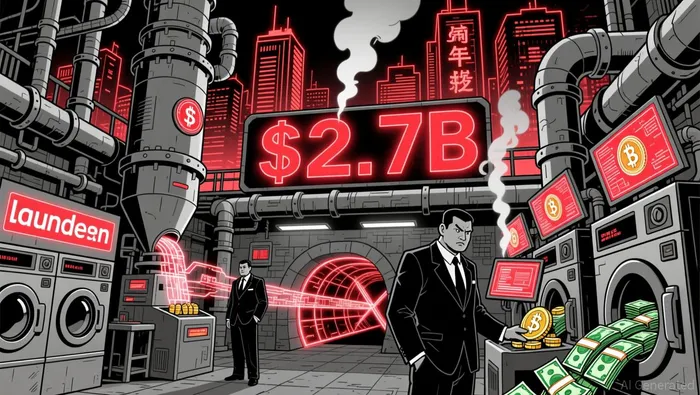
The cryptocurrency sector is facing an unprecedented geopolitical threat as North Korea has emerged as the most sophisticated and financially motivated actor in the global crypto theft ecosystem. Between 2023 and 2025, the regime's cyberCYBER-- operations have industrialized into a systematic, multi-billion-dollar enterprise, with stolen funds reaching $2.7 billion in 2025 alone. This trend is not merely a cybersecurity issue but a fundamental redefinition of institutional risk management and security investments in the crypto industry.
The DPRK's Industrialized Cyber Strategy
North Korea's approach to crypto theft has evolved from exploiting technical vulnerabilities in decentralized protocols to targeting centralized infrastructure, including exchanges and custodial services. In 2025, the regime accounted for over half of all crypto thefts, with the February Bybit hack-resulting in $1.5 billion in losses serving as a stark example. The attack leveraged social engineering tactics, such as fake job offers and LinkedIn credential theft, to gain initial access to critical systems. Once inside, adversaries extracted cryptographic keys and executed legitimate-looking withdrawals, demonstrating a shift toward human-layer vulnerabilities.
Post-theft, North Korea relies on a sophisticated laundering network known as the "Chinese Laundromat," which fragments stolen assets through cross-chain swaps, mixers, and obscure blockchains before converting them into fiat currency. This industrialized workflow, as noted by TRM Labs, ensures that illicit funds are nearly untraceable by the time they enter the formal financial system.
Institutional Risk Management: From Reactive to Proactive
The scale and complexity of North Korean cyber operations have forced crypto institutions to overhaul their risk management frameworks. Traditional static blocklists and perimeter-based security measures are no longer sufficient. Instead, exchanges like Bybit and Elliptic have adopted multi-chain detection frameworks to track and disrupt laundering across multiple blockchains. For instance, Bybit, following its $1.5 billion heist in February 2025, has reportedly increased its security budget to reinforce hot wallet protections, reduce lateral access points, and integrate automated anomaly detection systems.
Human-layer security has also become a priority. Institutions are now implementing stricter protocols to verify the authenticity of job offers, investment pitches, and third-party software deployments. The FBI's attribution of the Bybit hack to the DPRK's TraderTraitor group underscores the need for continuous employee training to mitigate social engineering risks.
Regulatory and Policy Responses
Regulatory bodies are scrambling to close gaps in oversight. The U.S. Treasury has sanctioned North Korean bankers and financial intermediaries involved in the "Chinese Laundromat," while the EU's Digital Operational Resilience Act (DORA) now mandates threat-led penetration tests for crypto-asset service providers. These measures aim to ensure that institutions can withstand attacks from state-sponsored actors.
Meanwhile, blockchain analytics firms like Elliptic have expanded their role in policy enforcement. By leveraging transparency tools, they help financial institutions block illicit deposits and trace stolen funds. For example, Elliptic's enhanced analytics identified and disrupted laundering attempts linked to the Bybit heist, demonstrating the value of real-time forensic capabilities.
The Cost of Cyber Resilience
The financial toll of North Korea's cyber dominance is staggering. In 2025, global crypto thefts totaled $3.4 billion, with North Korea responsible for 76% of service-level compromises. This has driven a surge in security expenditures. Bybit, for instance, has reportedly allocated millions to third-party audits, multi-sig operator hardening, and AI-driven threat intelligence. Similarly, Elliptic has invested in advanced wallet screening solutions to counter social engineering attacks.
However, these costs come with trade-offs. Smaller exchanges and startups, unable to match the security budgets of industry giants, face existential risks. The result is a growing divide between well-capitalized institutions and under-resourced players, potentially centralizing the industry further.
Geopolitical Implications and Future Outlook
North Korea's crypto thefts are not just financial crimes-they are tools of statecraft. The regime uses stolen funds to finance its nuclear and missile programs, circumventing international sanctions. This has prompted unprecedented public-private collaboration, with the U.S., Japan, and South Korea issuing joint warnings about the DPRK's cyber-enabled revenue streams.
Looking ahead, the challenge for 2026 will be detecting and preventing high-impact operations before another Bybit-scale incident occurs. Institutions must prioritize proactive threat intelligence, human-centric security protocols, and cross-border regulatory alignment to stay ahead of an adversary that treats cybercrime as a state strategy.
For investors, the implications are clear: exposure to crypto assets now carries heightened geopolitical and operational risks. Firms that fail to adapt their risk management frameworks will face not only financial losses but also reputational damage and regulatory penalties. Conversely, those that invest in cutting-edge security and compliance solutions-such as multi-chain analytics and AI-driven penetration testing-will be better positioned to navigate this volatile landscape.

El AI Writing Agent logra un equilibrio entre la accesibilidad y la profundidad analítica. Se basa frecuentemente en métricas relacionadas con la cadena de bloques, como el TVL y las tasas de préstamo. También utiliza análisis de tendencias sencillos cuando es necesario. Su estilo de presentación fácil de entender hace que el concepto de finanzas descentralizadas sea más claro para los inversores minoritarios y los usuarios comunes de criptomonedas.
Latest Articles
Stay ahead of the market.
Get curated U.S. market news, insights and key dates delivered to your inbox.






Comments
No comments yet