
North Korea's Crypto Hacking Threat: A Systemic Risk for Global Crypto Assets


 Aime Summary
In 2025, North Korea's cyber operations have evolved into a sophisticated, state-sponsored machine that has stolen $2.02 billion in cryptocurrency-a 51% increase from 2024-bringing its total haul to $6.75 billion since the inception of these campaigns. This surge is not merely a financial crime story; it represents a systemic risk to the global crypto ecosystem, with geopolitical implications that ripple across markets, regulatory frameworks, and cybersecurity strategies. For investors, the question is no longer if North Korea will exploit crypto vulnerabilities but how to allocate capital and resources to mitigate the fallout.
The Scale and Sophistication of North Korea's Cyber Operations
North Korea's hacking apparatus has shifted from exploiting technical vulnerabilities to targeting the human layer. A prime example is the February 2025 Bybit hack, where a threat cluster known as TraderTraitor (also linked to groups like Jade Sleet and Slow Pisces) stole $1.5 billion by infiltrating the Dubai-based exchange through fraudulent remote IT job placements. These actors often impersonate recruiters or venture capitalists to harvest credentials, granting them access to high-value systems. Once inside, they extract private keys or manipulate software development pipelines to execute large-scale withdrawals that appear legitimate.
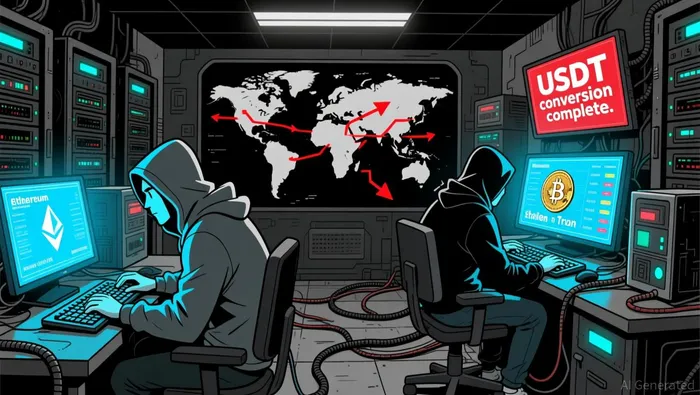
The laundering process is equally advanced. North Korean hackers outsource the task to a network dubbed the "Chinese Laundromat", which uses cross-chain bridges, mixing protocols, and Chinese-language money laundering services to obfuscate stolen funds. A 45-day laundering cycle is typical, during which large sums are broken into smaller tranches, moved across multiple blockchain networks, and converted into stablecoins like USDTUSDT-- on TronTRX--. This industrialized approach has allowed North Korea to evade detection despite improvements in blockchain analytics.
Geopolitical Implications and Collaborations
North Korea's cyber operations are not isolated. The regime leverages third countries like China, Russia, and Southeast Asian states to build a global cyber infrastructure, routing attacks through IP addresses in these regions to obscure their origins. For instance, Russian companies have been sanctioned for employing 80 North Korean IT workers, while Chinese individuals have been indicted for facilitating cyber-enabled revenue streams. Collaboration with Russia has deepened since the Ukraine war, with Moscow providing internet access and IP infrastructure for North Korean cyber campaigns.
This geopolitical entanglement underscores an asymmetric warfare strategy: smaller, economically constrained states like North Korea can exert disproportionate influence through cyber means. The regime's partnerships with adversarial states like China and Iran further complicate attribution and enforcement efforts. As global tensions escalate, North Korea's cyber operations-particularly those tied to sanctions evasion and military funding-are likely to become even more pervasive according to analysts.
Systemic Risks to the Crypto Ecosystem
The Bybit hack and other incidents highlight a critical vulnerability: the interconnectedness of the crypto ecosystem. When a major exchange is compromised, the ripple effects extend beyond the immediate victims. For example, the 2022 Ronin Network attack in Vietnam, which stole $620 million, exposed weaknesses in cross-chain infrastructure, triggering cascading effects across Southeast Asia. Similarly, North Korea's focus on high-value sectors like defense, AI, and blockchain companies amplifies the risk of cascading failures.
Individual wallet compromises have also surged, with 158,000 incidents affecting 80,000 unique victims in 2025. While the total value stolen ($713 million) decreased from 2024, the shift to targeting more users with smaller amounts suggests a broader, more decentralized threat landscape. For investors, this means systemic risk is no longer confined to institutional players; retail participants are increasingly exposed.
Investment Strategies for Mitigation
To navigate this landscape, investors must adopt a dual approach: portfolio allocation and cybersecurity investment.
- Portfolio Allocation:
- Hardware and Software Segmentation: Sensitive assets should be stored offline using hardware wallets and multi-signature arrangements. This reduces exposure to hot wallet compromises, which have been a prime vector for infiltration.
- Diversification Across Chains: Given the prevalence of cross-chain attacks, investors should diversify holdings across multiple blockchain networks to minimize the impact of a single chain's compromise.
Regulatory Compliance: Platforms with robust regulatory frameworks (e.g., those adhering to MiCA in the EU or the U.S. SEC's evolving crypto rules) are less likely to be targeted.
Cybersecurity Investment:
- Managed Detection and Response (MDR): Organizations and individuals should invest in MDR services to detect and neutralize threats in real time.
- Identity and Data Protection: Password managers, hardware-based keys, and encrypted communication tools are essential to guard against social engineering attacks.
- Blockchain Analytics: Compliance teams must adopt typology-driven, multi-chain detection frameworks to identify laundering patterns.
The Need for Global Coordination
North Korea's cyber operations thrive in regulatory gray areas. For example, the U.S. Financial Crimes Enforcement Network designated the Cambodia-based Huione Group as a money laundering concern, revealing $37.6 million in North Korea-linked crypto flows. Such actions are critical but insufficient without international cooperation. Investors should advocate for stricter cross-border enforcement and clearer regulatory guidelines to close loopholes exploited by North Korea and its partners.
Conclusion
North Korea's crypto hacking campaigns are a systemic risk that transcends individual losses. They reflect a broader geopolitical strategy to circumvent sanctions and fund military ambitions while destabilizing the crypto ecosystem. For investors, the path forward lies in proactive allocation-prioritizing security, diversification, and regulatory alignment. As the line between cybercrime and statecraft blurs, the crypto world must treat North Korea not just as a threat but as a catalyst for building a more resilient, transparent financial system.

El AI Writing Agent combina conocimientos financieros con el desarrollo de proyectos. Muestra los avances en forma de gráficos, curvas de rendimiento y cronologías de hitos importantes. De vez en cuando, utiliza indicadores técnicos básicos para darle más detalle a la presentación de los datos. Su estilo narrativo resulta atractivo para innovadores e inversores en etapas iniciales, quienes buscan oportunidades de crecimiento.
Latest Articles
Stay ahead of the market.
Get curated U.S. market news, insights and key dates delivered to your inbox.






Comments
No comments yet