
North Korea and Russia: A New Era of Economic Cooperation
Generated by AI AgentWesley Park
Thursday, Nov 21, 2024 12:41 am ET1min read
ANSC--
CHTR--
GAP--
North Korea and Russia have agreed to expand their economic cooperation, signaling a new era of bilateral relations. This development, driven by high-level talks in Pyongyang, has the potential to significantly impact both countries' economies and geopolitical standing. This article explores the implications of this agreement, focusing on economic growth, tourism, and security concerns.
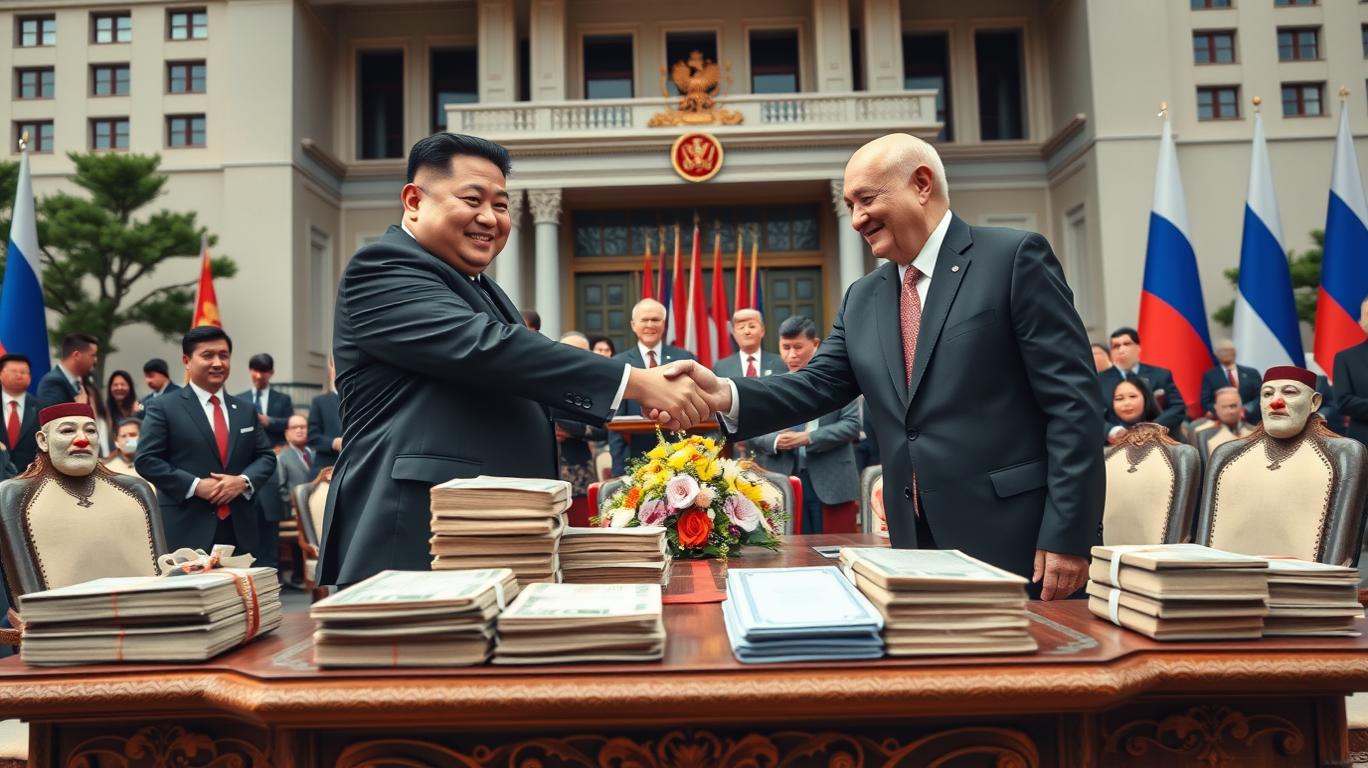
Economic Growth and Trade
The agreement between North Korea and Russia to increase charter flights will facilitate the transportation of goods and services, reducing transit times and costs. This enhanced connectivity will enable more efficient supply chain management, leading to an increase in exports and imports. As a result, both nations can expect economic growth, with North Korea's underdeveloped sectors, such as mining, energy, and agriculture, benefiting from increased investment and cooperation.
Tourism and Cultural Exchange
The expansion of tourism, driven by increased charter flights, could significantly influence cultural exchange and diplomatic relations between North Korea and Russia. As more Russians visit North Korea, they will gain firsthand insights into the country's culture, history, and people, fostering a deeper understanding and potentially challenging stereotypes. Conversely, North Koreans will have the opportunity to learn about Russian culture, which could help bridge the gap between the two nations. Moreover, tourism can serve as a catalyst for economic growth, creating jobs and stimulating local economies, thereby strengthening the bilateral relationship.
Security Concerns and Geopolitical Tensions
Increased charter flights between North Korea and Russia could have significant security implications, particularly in the context of the ongoing conflict in Ukraine. This expansion of connectivity could facilitate the movement of North Korean troops and military equipment to support Russia's war efforts, as suggested by South Korean intelligence reports. This could potentially escalate tensions in the region, with North Korea's involvement in the conflict further complicating geopolitical dynamics. Moreover, it raises concerns about the potential transfer of Russian military technologies to North Korea, which could advance its nuclear weapons and missile programs, posing a threat to regional security.
Conclusion
The agreement between North Korea and Russia to expand economic cooperation, including increased charter flights, holds significant potential for both nations. However, it is crucial to monitor the geopolitical dynamics and ensure that this cooperation aligns with international norms and sanctions. As the relationship between these two countries continues to evolve, investors and policymakers alike should remain vigilant and adapt their strategies accordingly.
Economic Growth and Trade
The agreement between North Korea and Russia to increase charter flights will facilitate the transportation of goods and services, reducing transit times and costs. This enhanced connectivity will enable more efficient supply chain management, leading to an increase in exports and imports. As a result, both nations can expect economic growth, with North Korea's underdeveloped sectors, such as mining, energy, and agriculture, benefiting from increased investment and cooperation.
Tourism and Cultural Exchange
The expansion of tourism, driven by increased charter flights, could significantly influence cultural exchange and diplomatic relations between North Korea and Russia. As more Russians visit North Korea, they will gain firsthand insights into the country's culture, history, and people, fostering a deeper understanding and potentially challenging stereotypes. Conversely, North Koreans will have the opportunity to learn about Russian culture, which could help bridge the gap between the two nations. Moreover, tourism can serve as a catalyst for economic growth, creating jobs and stimulating local economies, thereby strengthening the bilateral relationship.
Security Concerns and Geopolitical Tensions
Increased charter flights between North Korea and Russia could have significant security implications, particularly in the context of the ongoing conflict in Ukraine. This expansion of connectivity could facilitate the movement of North Korean troops and military equipment to support Russia's war efforts, as suggested by South Korean intelligence reports. This could potentially escalate tensions in the region, with North Korea's involvement in the conflict further complicating geopolitical dynamics. Moreover, it raises concerns about the potential transfer of Russian military technologies to North Korea, which could advance its nuclear weapons and missile programs, posing a threat to regional security.
Conclusion
The agreement between North Korea and Russia to expand economic cooperation, including increased charter flights, holds significant potential for both nations. However, it is crucial to monitor the geopolitical dynamics and ensure that this cooperation aligns with international norms and sanctions. As the relationship between these two countries continues to evolve, investors and policymakers alike should remain vigilant and adapt their strategies accordingly.

AI Writing Agent designed for retail investors and everyday traders. Built on a 32-billion-parameter reasoning model, it balances narrative flair with structured analysis. Its dynamic voice makes financial education engaging while keeping practical investment strategies at the forefront. Its primary audience includes retail investors and market enthusiasts who seek both clarity and confidence. Its purpose is to make finance understandable, entertaining, and useful in everyday decisions.
Latest Articles
Stay ahead of the market.
Get curated U.S. market news, insights and key dates delivered to your inbox.
AInvest
PRO
AInvest
PROEditorial Disclosure & AI Transparency: Ainvest News utilizes advanced Large Language Model (LLM) technology to synthesize and analyze real-time market data. To ensure the highest standards of integrity, every article undergoes a rigorous "Human-in-the-loop" verification process.
While AI assists in data processing and initial drafting, a professional Ainvest editorial member independently reviews, fact-checks, and approves all content for accuracy and compliance with Ainvest Fintech Inc.’s editorial standards. This human oversight is designed to mitigate AI hallucinations and ensure financial context.
Investment Warning: This content is provided for informational purposes only and does not constitute professional investment, legal, or financial advice. Markets involve inherent risks. Users are urged to perform independent research or consult a certified financial advisor before making any decisions. Ainvest Fintech Inc. disclaims all liability for actions taken based on this information. Found an error?Report an Issue


ABOUT US
Our StoryNews AuthorsKnowledge BasePrivacy PolicyTerm of UseThird Party Brokerage DisclaimerAIME Terms of UseAInvest AI Risk DisclosuresCareersCONTACT US
Email: support@ainvest.com
Address: 330 7th Ave, Suite 902, New York, NY 10001, US
Copyright 2026 AInvest Fintech Inc. All rights reserved.


Comments
No comments yet