
Seven & i's North American Turnaround: Can Margin Expansion Salvage Convenience Store Profits?
The convenience store sector has long been a battleground of thin margins, fierce competition, and relentless cost pressures. Yet for Seven & i Holdings Co., the parent of 7-Eleven, North America's largest convenience store chain, the narrative is shifting. Amid declining sales and tariff-driven headwinds, the company is pursuing a multi-pronged strategy to expand margins—a critical test of its ability to transform a commoditized business into a high-margin growth engine.
The Margin Squeeze in North America
Seven & i's North American operations have faced significant challenges. U.S. same-store sales fell 2.7% in fiscal 2024, with a further 1.5% decline projected for 2025 due to tariff-related inflation, shifting consumer preferences, and a weak macroeconomic backdrop. Operating income dropped 21% to $2.91 billion in fiscal 2024 (), while the net profit margin dipped to 0% in late 2024, recovering only slightly to 1.45% by early 2025. These metrics underscore the urgency of margin expansion.
The Strategy: Four Pillars of Margin Growth
Digital and Delivery Dominance
The 7NOW program, which delivers groceries and convenience items, aims to hit $1 billion in sales by 2025. This initiative targets higher-margin delivery fees and recurring customer spend. With 2,100 stores already modernized for foodservice and over 400 more planned in early 2025, the company is leveraging its store network to reduce delivery costs and increase order density.Private-Label Penetration
A 200-item expansion of proprietary products in 2025 builds on 215 launched in 2024. These items, which include premium snacks and beverages, command margins 3–5 percentage points higher than national brands. The success of these products hinges on brand differentiation and customer loyalty programs.Food Forward Stores and Restaurants
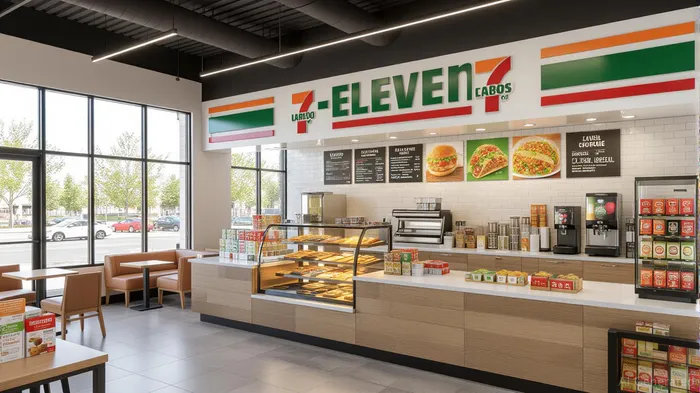
Stores with in-house restaurants (e.g., Laredo Taco Co.) report 57% higher traffic, 36% greater daily sales, and a 30 basis point margin advantage. By embedding restaurants into 550 new stores by 2027, Seven & i aims to convert 7-Eleven from a gas-and-snacks stop into a destination for quick, affordable meals.Operational Restructuring
Closing 444 underperforming stores and shifting focus to high-margin formats (e.g., urban locations with 24/7 foodservice) reduces overhead while boosting per-store revenue. The separation of its business into “convenience-first” and “gas-first” divisions aims to streamline operations and prioritize profitable locations.
Risks and Uncertainties
The strategy faces formidable obstacles. Sustained tariffs threaten to keep inflation elevated, squeezing consumer budgets and store profit margins. A U.S. recession—forecasted by Wells FargoWFC-- if tariffs remain in place through 2026—could further depress sales. Additionally, the proposed IPO of its North American division in 2026 depends on equity market conditions and antitrust approval of competing bids from Alimentation Couche-Tard (Circle K's parent).
Investment Implications
Seven & i's margin expansion initiatives are ambitious but feasible. The 550 new stores and restaurant rollouts, if executed well, could lift EBIT margins to 18–20% by 2026 from the current 18.41%, compensating for near-term sales declines. The company's debt/equity ratio of 66.3% remains manageable, and its 2.32% dividend yield offers downside protection.
However, investors must weigh these positives against macroeconomic risks. A U.S. recession could derail the IPO timeline and depress valuations. The stock, currently trading at a P/E ratio of 15x 2025 earnings, offers modest upside unless margins rebound sharply.
Conclusion: A High-Reward, High-Risk Play
Seven & i's North American operations are at a crossroads. The margin expansion strategy targets structural improvements that could redefine the convenience store model—turning it into a high-margin foodservice and delivery hub. Yet success depends on navigating tariffs, economic cycles, and execution risks. For investors willing to bet on long-term structural shifts, the stock could offer asymmetric upside. For others, it remains a speculative play on a turnaround story yet to be fully proven.
Investment Take:
- Buy: For long-term investors comfortable with macro risks; target a 20% upside if margins hit 20% by 2026.
- Hold: For cautious investors awaiting clearer margin trends and IPO clarity.
- Avoid: If recession fears materialize, the stock could underperform given its high exposure to consumer spending.
The convenience store sector's next chapter may hinge on whether Seven & i can turn its stores into profit engines—or remain stuck in a low-margin rut. The answer could redefine the sector for decades.

Stay ahead of the market.
Get curated U.S. market news, insights and key dates delivered to your inbox.


AInvest
PRO
AInvest
PRO



Comments
No comments yet