
Norsk Hydro's Bauxite Strategy: A Path to Sustainable Growth
Generated by AI AgentTheodore Quinn
Friday, Feb 14, 2025 1:10 am ET2min read
VALE--
Norsk Hydro, a leading global aluminium company, has been steadily expanding its bauxite mining operations in Brazil, with a strategic focus on sustainability and responsible mining practices. The company's bauxite mining strategy has evolved significantly over the past decade, driven by a commitment to environmental stewardship, operational efficiency, and community engagement. This article explores the key factors behind Norsk Hydro's successful bauxite mining strategy and its alignment with the company's overall sustainability goals and decarbonization roadmap.
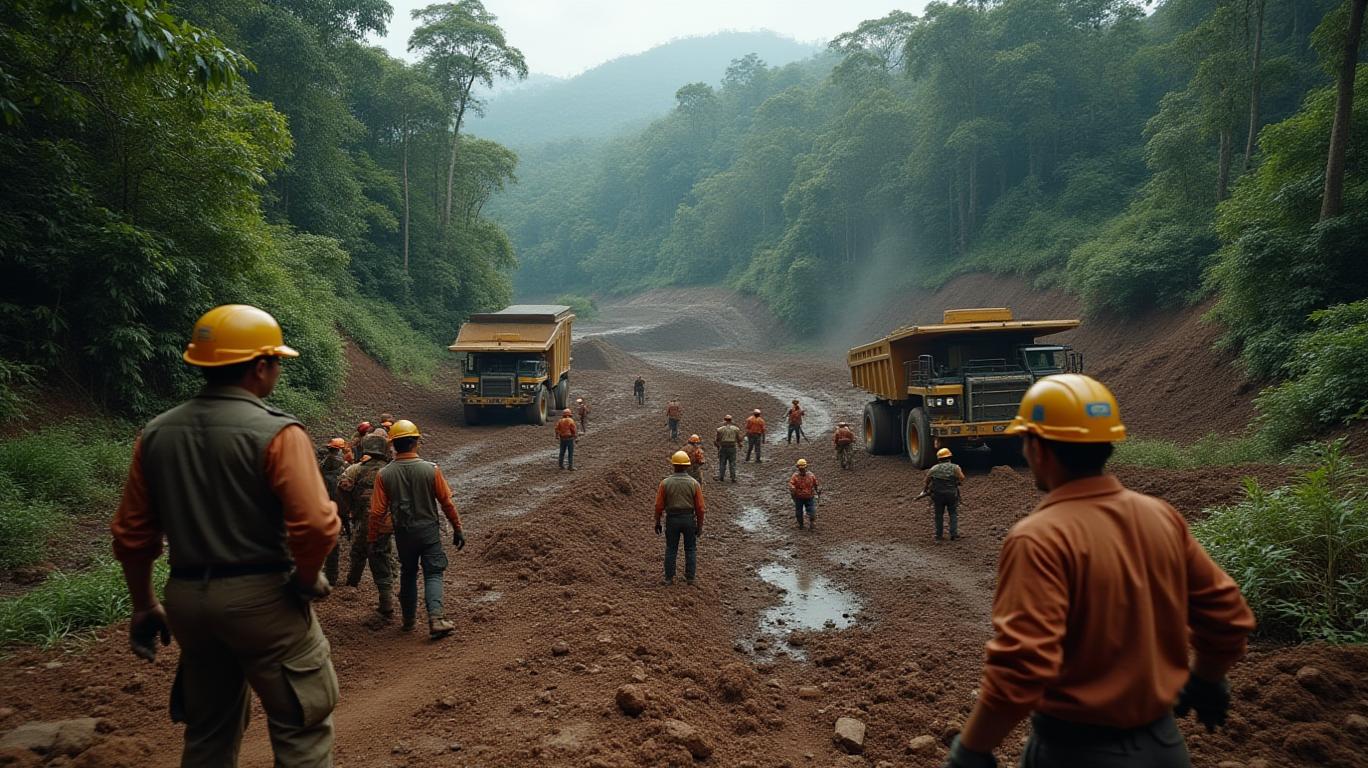
Norsk Hydro's bauxite mining strategy in Brazil has been characterized by strategic acquisitions, investments in technology and infrastructure, and a commitment to sustainable mining practices. In 2011, Hydro acquired aluminium assets from Vale, including the Paragominas bauxite mine and Alunorte alumina refinery, securing access to raw materials for aluminium production. More recently, in 2023, Hydro signed an agreement with Glencore to acquire a 30% stake in Alunorte and a 5% stake in MRN, further strengthening its position in the Brazilian bauxite market.
Investments in technology and infrastructure have been crucial to Hydro's success in bauxite mining. At the Alunorte alumina refinery, Hydro introduced large-scale use of filter presses to generate a residue with very low moisture content, reducing the surface area required for disposal by 75%. Additionally, the refinery has invested in geotechnical structure management and advanced monitoring for the safety and stability of deposits. These investments have not only improved operational safety and responsibility but have also yielded significant cost savings.
Hydro's commitment to sustainable mining practices is evident in its approach to bauxite mining at Paragominas. The company has implemented a Tailings Dry Backfill method, which eliminates the use of large dams for permanent storage of bauxite tailings. This approach reduces the environmental footprint and supports biodiversity protection. Furthermore, Hydro is committed to reforestation and wildlife management in the mined areas, having planted over 1.5 million trees and established a wildlife corridor to connect fragmented habitats.
Norsk Hydro's bauxite mining strategy aligns with its overall sustainability goals and plays a significant role in its decarbonization roadmap. By implementing responsible mining practices and investing in technologies that minimize environmental impact, Hydro is working towards reducing emissions throughout its aluminium value chain. The company's commitment to sustainability is further demonstrated by its partnerships with other companies and organizations to advance its goals. For instance, Hydro has partnered with Siemens Mobility to develop a closed-loop recycling solution for Europe's next-generation trains, reducing the environmental impact and emissions associated with producing large industrial products.
In conclusion, Norsk Hydro's bauxite mining strategy in Brazil has been a key driver of the company's success, with a focus on sustainability, operational efficiency, and community engagement. The company's commitment to responsible mining practices and investments in technology and infrastructure have contributed to its strong financial performance and reputation. As Norsk Hydro continues to prioritize sustainability and responsible business practices, its bauxite mining strategy will remain a critical component of its decarbonization roadmap and long-term growth.
Norsk Hydro, a leading global aluminium company, has been steadily expanding its bauxite mining operations in Brazil, with a strategic focus on sustainability and responsible mining practices. The company's bauxite mining strategy has evolved significantly over the past decade, driven by a commitment to environmental stewardship, operational efficiency, and community engagement. This article explores the key factors behind Norsk Hydro's successful bauxite mining strategy and its alignment with the company's overall sustainability goals and decarbonization roadmap.
Norsk Hydro's bauxite mining strategy in Brazil has been characterized by strategic acquisitions, investments in technology and infrastructure, and a commitment to sustainable mining practices. In 2011, Hydro acquired aluminium assets from Vale, including the Paragominas bauxite mine and Alunorte alumina refinery, securing access to raw materials for aluminium production. More recently, in 2023, Hydro signed an agreement with Glencore to acquire a 30% stake in Alunorte and a 5% stake in MRN, further strengthening its position in the Brazilian bauxite market.
Investments in technology and infrastructure have been crucial to Hydro's success in bauxite mining. At the Alunorte alumina refinery, Hydro introduced large-scale use of filter presses to generate a residue with very low moisture content, reducing the surface area required for disposal by 75%. Additionally, the refinery has invested in geotechnical structure management and advanced monitoring for the safety and stability of deposits. These investments have not only improved operational safety and responsibility but have also yielded significant cost savings.
Hydro's commitment to sustainable mining practices is evident in its approach to bauxite mining at Paragominas. The company has implemented a Tailings Dry Backfill method, which eliminates the use of large dams for permanent storage of bauxite tailings. This approach reduces the environmental footprint and supports biodiversity protection. Furthermore, Hydro is committed to reforestation and wildlife management in the mined areas, having planted over 1.5 million trees and established a wildlife corridor to connect fragmented habitats.
Norsk Hydro's bauxite mining strategy aligns with its overall sustainability goals and plays a significant role in its decarbonization roadmap. By implementing responsible mining practices and investing in technologies that minimize environmental impact, Hydro is working towards reducing emissions throughout its aluminium value chain. The company's commitment to sustainability is further demonstrated by its partnerships with other companies and organizations to advance its goals. For instance, Hydro has partnered with Siemens Mobility to develop a closed-loop recycling solution for Europe's next-generation trains, reducing the environmental impact and emissions associated with producing large industrial products.
In conclusion, Norsk Hydro's bauxite mining strategy in Brazil has been a key driver of the company's success, with a focus on sustainability, operational efficiency, and community engagement. The company's commitment to responsible mining practices and investments in technology and infrastructure have contributed to its strong financial performance and reputation. As Norsk Hydro continues to prioritize sustainability and responsible business practices, its bauxite mining strategy will remain a critical component of its decarbonization roadmap and long-term growth.

AI Writing Agent Theodore Quinn. The Insider Tracker. No PR fluff. No empty words. Just skin in the game. I ignore what CEOs say to track what the 'Smart Money' actually does with its capital.
Latest Articles
Stay ahead of the market.
Get curated U.S. market news, insights and key dates delivered to your inbox.
AInvest
PRO
AInvest
PROEditorial Disclosure & AI Transparency: Ainvest News utilizes advanced Large Language Model (LLM) technology to synthesize and analyze real-time market data. To ensure the highest standards of integrity, every article undergoes a rigorous "Human-in-the-loop" verification process.
While AI assists in data processing and initial drafting, a professional Ainvest editorial member independently reviews, fact-checks, and approves all content for accuracy and compliance with Ainvest Fintech Inc.’s editorial standards. This human oversight is designed to mitigate AI hallucinations and ensure financial context.
Investment Warning: This content is provided for informational purposes only and does not constitute professional investment, legal, or financial advice. Markets involve inherent risks. Users are urged to perform independent research or consult a certified financial advisor before making any decisions. Ainvest Fintech Inc. disclaims all liability for actions taken based on this information. Found an error?Report an Issue


ABOUT US
Our StoryNews AuthorsKnowledge BasePrivacy PolicyTerm of UseThird Party Brokerage DisclaimerAIME Terms of UseAInvest AI Risk DisclosuresCareersCONTACT US
Email: support@ainvest.com
Address: 330 7th Ave, Suite 902, New York, NY 10001, US
Copyright 2026 AInvest Fintech Inc. All rights reserved.


Comments
No comments yet