
Nordstrom Closes Two Stores Amid Shift to Value-First Retailing
ByAinvest
Tuesday, Aug 26, 2025 4:13 pm ET1min read
ROST--
Ross Stores and TJX Companies, the parent of TJ Maxx, Marshalls, and HomeGoods, recently reported strong earnings. Ross Stores' sales rose 4.6% to $5.53 billion, with same-store sales up 2% and earnings per share hitting $1.56, topping expectations [1]. TJX's revenue climbed 6.9% to $14.4 billion, with earnings per share at $1.10, also beating forecasts [1]. Both retailers credited their growth to shoppers' demand for value-priced goods.
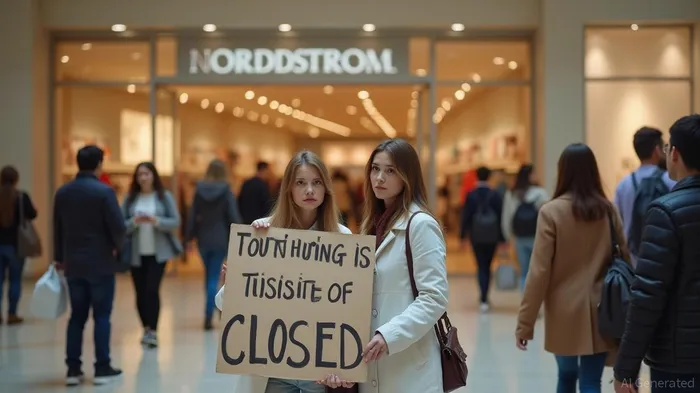
Nordstrom, on the other hand, is struggling to adapt to this shift. The company's Santa Monica location at the Third Street Promenade shopping district will shut its doors on August 26, while its St. Louis Galleria store closed on August 24 [1]. Nordstrom's spokesperson stated that the closures were driven by profitability concerns and lease negotiations. The company believes it will better serve customers in each region by leveraging its surrounding stores and digital channels [1].
The closures underscore a broader shift in retail. Consumers are reluctant to pay department-store prices, favoring the "treasure hunt" model of off-price retailers. Even higher-income households are "trading down," a trend that has helped Ross and TJX grow their customer base beyond traditional bargain hunters [1].
Despite these challenges, Nordstrom has shown signs of resilience. Before being taken private, the company reported strong results, with comparable sales rising 4.7% year over year in its fiscal fourth quarter [1]. Nordstrom also has expansion plans, with at least 24 new Nordstrom Rack locations announced for late 2025 and beyond [1].
In contrast, Nordstrom Rack, designed to compete directly with Ross and TJX, has struggled to replicate the same level of shopper enthusiasm. Analysts note that while TJ Maxx and Ross deliver the thrill of finding a deal, Nordstrom Rack often feels more like a clearance outlet [1].
The closures and earnings reports highlight the shifting balance of power in American shopping. Discounters like Ross and TJX are reaping the rewards of a value-first mindset, while traditional department stores like Nordstrom are struggling to adapt.
References:
[1] https://www.thestreet.com/retail/nordstrom-closes-two-more-stores-amid-worrying-shopper-behavior
[2] https://www.marketbeat.com/instant-alerts/filing-kayne-anderson-rudnick-investment-management-llc-has-23532-million-stock-position-in-ross-stores-inc-rost-2025-08-24/
TJX--
Nordstrom is closing two stores in California and Missouri due to profitability concerns and lease negotiations, while Ross Stores and TJX Companies, parent of TJ Maxx, Marshalls, and HomeGoods, report strong earnings as shoppers seek value-priced apparel and home goods amid inflation and higher interest rates. Nordstrom's Rack brand is growing, but the closures highlight the struggles of traditional department stores in a market where consumers are prioritizing deals over aspirational shopping.
Nordstrom, the high-end retailer, has announced the closure of two stores in California and Missouri, citing profitability concerns and lease negotiations. The closures come as shoppers increasingly prioritize value-priced apparel and home goods amid inflation and higher interest rates, a trend that has benefited off-price retailers like Ross Stores and TJX Companies.Ross Stores and TJX Companies, the parent of TJ Maxx, Marshalls, and HomeGoods, recently reported strong earnings. Ross Stores' sales rose 4.6% to $5.53 billion, with same-store sales up 2% and earnings per share hitting $1.56, topping expectations [1]. TJX's revenue climbed 6.9% to $14.4 billion, with earnings per share at $1.10, also beating forecasts [1]. Both retailers credited their growth to shoppers' demand for value-priced goods.
Nordstrom, on the other hand, is struggling to adapt to this shift. The company's Santa Monica location at the Third Street Promenade shopping district will shut its doors on August 26, while its St. Louis Galleria store closed on August 24 [1]. Nordstrom's spokesperson stated that the closures were driven by profitability concerns and lease negotiations. The company believes it will better serve customers in each region by leveraging its surrounding stores and digital channels [1].
The closures underscore a broader shift in retail. Consumers are reluctant to pay department-store prices, favoring the "treasure hunt" model of off-price retailers. Even higher-income households are "trading down," a trend that has helped Ross and TJX grow their customer base beyond traditional bargain hunters [1].
Despite these challenges, Nordstrom has shown signs of resilience. Before being taken private, the company reported strong results, with comparable sales rising 4.7% year over year in its fiscal fourth quarter [1]. Nordstrom also has expansion plans, with at least 24 new Nordstrom Rack locations announced for late 2025 and beyond [1].
In contrast, Nordstrom Rack, designed to compete directly with Ross and TJX, has struggled to replicate the same level of shopper enthusiasm. Analysts note that while TJ Maxx and Ross deliver the thrill of finding a deal, Nordstrom Rack often feels more like a clearance outlet [1].
The closures and earnings reports highlight the shifting balance of power in American shopping. Discounters like Ross and TJX are reaping the rewards of a value-first mindset, while traditional department stores like Nordstrom are struggling to adapt.
References:
[1] https://www.thestreet.com/retail/nordstrom-closes-two-more-stores-amid-worrying-shopper-behavior
[2] https://www.marketbeat.com/instant-alerts/filing-kayne-anderson-rudnick-investment-management-llc-has-23532-million-stock-position-in-ross-stores-inc-rost-2025-08-24/
Stay ahead of the market.
Get curated U.S. market news, insights and key dates delivered to your inbox.
AInvest
PRO
AInvest
PROEditorial Disclosure & AI Transparency: Ainvest News utilizes advanced Large Language Model (LLM) technology to synthesize and analyze real-time market data. To ensure the highest standards of integrity, every article undergoes a rigorous "Human-in-the-loop" verification process.
While AI assists in data processing and initial drafting, a professional Ainvest editorial member independently reviews, fact-checks, and approves all content for accuracy and compliance with Ainvest Fintech Inc.’s editorial standards. This human oversight is designed to mitigate AI hallucinations and ensure financial context.
Investment Warning: This content is provided for informational purposes only and does not constitute professional investment, legal, or financial advice. Markets involve inherent risks. Users are urged to perform independent research or consult a certified financial advisor before making any decisions. Ainvest Fintech Inc. disclaims all liability for actions taken based on this information. Found an error?Report an Issue




Comments
No comments yet