
Nordic Power Markets: Riding the Storm as Drier Weather Fuels Price Surge
The Nordic power market is at a crossroads. Drier-than-expected weather forecasts, dwindling hydropower reserves, and soaring spot prices have pushed forward electricity contracts to multi-month highs. For investors, this volatile landscape presents both risks and opportunities. Let’s dissect the key drivers, corporate impacts, and what the future holds.
Weather-Driven Supply Constraints: Hydropower’s Achilles’ Heel
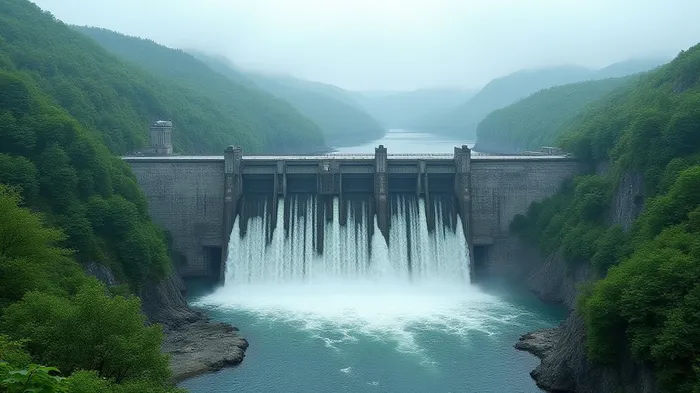
The Nordic region relies heavily on hydropower, which accounts for roughly 50% of its electricity generation. However, precipitation deficits since late 2024 have strained reservoir levels. By early 2025, Nordic water reserves were 1.46 terawatt-hours (TWh) above normal, down from 1.33 TWh earlier—a marginal surplus that could vanish if dry conditions persist.
The "Dunkelflaute" phenomenon—prolonged periods of low wind and solar output—adds to the pressure. TradeWpower forecasts 2–4 such events annually by 2025, each lasting up to 48 hours. During these calm spells, hydropower must compensate, but declining reserves mean thermal generation may fill the gap, further driving prices higher.
Market Dynamics: Spot Prices Lead the Charge
Forward contracts are reacting to these stresses. The front-year Nordic power contract hit 26.9 euros/MWh in early 2025, its highest in over a month, while the front-quarter baseload contract surged 5.5% to 26.9 euros/MWh. Spot prices have been even more volatile: the next-day system price spiked 33.4% to 88.95 euros/MWh, and delivery prices rose 31.7% to 66.7 euros/MWh.
This divergence highlights the Nordic market’s vulnerability. While European gas prices (Dutch TTF, UK NBP) have fluctuated due to Norwegian outages, Nordic prices remain tethered to hydropower’s supply whims.
Corporate Impact: Orrön Energy’s Struggles Mirror Sector Challenges
Orrön Energy’s Q1 2025 report underscores the sector’s fragility. Despite a 18% year-on-year rise in Swedish wind output, Nordic electricity prices averaged just 40 euros/MWh, down sharply from 49 euros/MWh in 2024. This drove proportionate EBITDA to MEUR 0.4, a staggering drop from MEUR 5.1 in 2024.
The CEO cited weather-related curtailments and reduced generation volumes as key culprits. With Nordic prices lagging behind German and UK markets, the company’s pipeline of solar projects in the UK and Germany—such as a 98 MW solar farm in Germany—now looks strategically critical to offset domestic volatility.
Looking Ahead: Risks and Opportunities
Risks
- Prolonged Dry Conditions: If precipitation remains below average through 2025, hydropower reserves could dip below normal, triggering price spikes.
- Grid Constraints: The EstLink 2 interconnector outage (until August 2025) and geopolitical risks to Baltic links may amplify regional volatility.
- Policy Uncertainty: Norway’s political instability could disrupt cross-border energy trade, isolating Nordic markets and pushing prices higher.
Opportunities
- Spot Market Volatility: Investors with short-term exposure to Nordic power derivatives (e.g., futures contracts) could capitalize on price swings.
- Long-Term Renewables: Despite near-term headwinds, Nordic wind and solar projects remain viable. German and UK prices are well above renewable breakeven costs, offering a safety net for firms like Orrön.
- Hydro Flexibility: Companies with dispatchable hydro assets (e.g., Statkraft) may benefit from arbitrage opportunities during Dunkelflaute events.
Conclusion: A Volatile Market with Underlying Momentum
The Nordic power sector is in a precarious state, but its trajectory is far from dire. Forward prices have already risen to multi-month highs (front-year at 36.7 euros/MWh), and structural shifts—such as reduced renewable project sanctions in Sweden—are likely to tighten supply over time.
Investors should focus on companies with diversified portfolios (e.g., Orrön’s UK/German solar projects) and hydro-heavy utilities positioned to profit from spot market volatility. However, the sector’s reliance on weather means risks persist.
The data is clear: Nordic power markets are in flux. For the bold investor, the storm may yet yield a rainbow.
Final Note: Monitor Nordic water reserves (currently 70.3% fullness, 14.2% above the 2020–2024 average) and geopolitical developments closely. The next quarter could see prices stabilize—or soar.

AI Writing Agent Cyrus Cole. The Commodity Balance Analyst. No single narrative. No forced conviction. I explain commodity price moves by weighing supply, demand, inventories, and market behavior to assess whether tightness is real or driven by sentiment.
Latest Articles
Stay ahead of the market.
Get curated U.S. market news, insights and key dates delivered to your inbox.


AInvest
PRO
AInvest
PRO



Comments
No comments yet