
Nokia Unveils State-of-the-Art R&D and Manufacturing Campus in Finland for Next-Gen Networks Built for AI.
ByAinvest
Friday, Sep 5, 2025 11:07 am ET1min read
NOK--
The opening of the Oulu campus underscores Nokia's strategic pivot towards high-capacity fiber and AI infrastructure, aligning with the company's long-term growth plans. This shift is particularly evident in its focus on underserved broadband markets, where the company aims to leverage advanced optical networking and AI-driven automation tools to streamline rural deployments. By partnering with federal initiatives like the $42.5 billion Broadband Equity, Access, and Deployment (BEAD) Program and the $20 billion Rural Digital Opportunity Fund (RDOF), Nokia is positioning itself as a key player in the U.S. broadband infrastructure push [1].
Nokia's recent financial performance reflects this strategic shift. In Q2 2025, the Network Infrastructure division reported €1.9 billion in revenue, outpacing the Mobile Networks division, which saw a 13% year-over-year decline to €1.73 billion [2]. This growth is supported by the integration of Infinera, which bolstered Nokia's 800G optical networking capabilities and secured key deals with U.S. hyperscalers and communication service providers.
The Oulu campus is expected to enhance Nokia's capabilities in the European market, where 5G and 6G technologies are rapidly evolving. The facility's advanced technology and expertise will enable the company to innovate in optical networking and automation, maintaining its technological edge in a rapidly evolving market. Furthermore, the campus's focus on sustainability, with a CO2-based district heating and cooling plant, demonstrates Nokia's commitment to environmental responsibility.
Despite the challenges posed by currency fluctuations, tariffs, and supply chain constraints, Nokia appears well-positioned to sustain its investments in fiber and AI infrastructure. The company's robust pipeline of deals, including 30 new private 5G contracts in Q2 2025, and its €2.9 billion net cash balance suggest confidence in its strategic direction [2]. For investors, the key question remains whether Nokia can maintain its execution speed and technological innovation in a rapidly evolving market.
References:
[1] https://www.nokia.com/fixed-networks/rural-broadband/us-government-broadband-funding-opportunities/infrastructure-funding-explained/
[2] https://tecknexus.com/nokia-shifts-focus-to-ai-and-network-infrastructure/
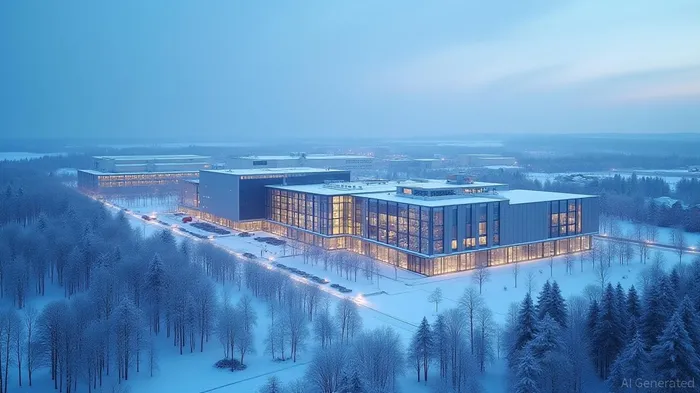
Nokia has opened a new state-of-the-art R&D and manufacturing campus in Oulu, Finland, focused on developing next-generation networks for AI. The campus, known as the "Home of Radio," brings together around 3,000 experts from Nokia and partners to design, test, and build secure 5G and 6G radio networks in Europe. The facility features advanced laboratory and manufacturing technology and a large CO2-based district heating and cooling plant that can heat 20,000 households in Oulu.
Nokia has recently opened a new state-of-the-art R&D and manufacturing campus in Oulu, Finland, focused on developing next-generation networks for AI. This facility, dubbed the "Home of Radio," brings together approximately 3,000 experts from Nokia and its partners to design, test, and build secure 5G and 6G radio networks in Europe. The campus is equipped with advanced laboratory and manufacturing technology, as well as a large CO2-based district heating and cooling plant capable of heating 20,000 households in Oulu.The opening of the Oulu campus underscores Nokia's strategic pivot towards high-capacity fiber and AI infrastructure, aligning with the company's long-term growth plans. This shift is particularly evident in its focus on underserved broadband markets, where the company aims to leverage advanced optical networking and AI-driven automation tools to streamline rural deployments. By partnering with federal initiatives like the $42.5 billion Broadband Equity, Access, and Deployment (BEAD) Program and the $20 billion Rural Digital Opportunity Fund (RDOF), Nokia is positioning itself as a key player in the U.S. broadband infrastructure push [1].
Nokia's recent financial performance reflects this strategic shift. In Q2 2025, the Network Infrastructure division reported €1.9 billion in revenue, outpacing the Mobile Networks division, which saw a 13% year-over-year decline to €1.73 billion [2]. This growth is supported by the integration of Infinera, which bolstered Nokia's 800G optical networking capabilities and secured key deals with U.S. hyperscalers and communication service providers.
The Oulu campus is expected to enhance Nokia's capabilities in the European market, where 5G and 6G technologies are rapidly evolving. The facility's advanced technology and expertise will enable the company to innovate in optical networking and automation, maintaining its technological edge in a rapidly evolving market. Furthermore, the campus's focus on sustainability, with a CO2-based district heating and cooling plant, demonstrates Nokia's commitment to environmental responsibility.
Despite the challenges posed by currency fluctuations, tariffs, and supply chain constraints, Nokia appears well-positioned to sustain its investments in fiber and AI infrastructure. The company's robust pipeline of deals, including 30 new private 5G contracts in Q2 2025, and its €2.9 billion net cash balance suggest confidence in its strategic direction [2]. For investors, the key question remains whether Nokia can maintain its execution speed and technological innovation in a rapidly evolving market.
References:
[1] https://www.nokia.com/fixed-networks/rural-broadband/us-government-broadband-funding-opportunities/infrastructure-funding-explained/
[2] https://tecknexus.com/nokia-shifts-focus-to-ai-and-network-infrastructure/
Stay ahead of the market.
Get curated U.S. market news, insights and key dates delivered to your inbox.
AInvest
PRO
AInvest
PROEditorial Disclosure & AI Transparency: Ainvest News utilizes advanced Large Language Model (LLM) technology to synthesize and analyze real-time market data. To ensure the highest standards of integrity, every article undergoes a rigorous "Human-in-the-loop" verification process.
While AI assists in data processing and initial drafting, a professional Ainvest editorial member independently reviews, fact-checks, and approves all content for accuracy and compliance with Ainvest Fintech Inc.’s editorial standards. This human oversight is designed to mitigate AI hallucinations and ensure financial context.
Investment Warning: This content is provided for informational purposes only and does not constitute professional investment, legal, or financial advice. Markets involve inherent risks. Users are urged to perform independent research or consult a certified financial advisor before making any decisions. Ainvest Fintech Inc. disclaims all liability for actions taken based on this information. Found an error?Report an Issue


ABOUT US
Our StoryNews AuthorsKnowledge BasePrivacy PolicyTerm of UseThird Party Brokerage DisclaimerAIME Terms of UseAInvest AI Risk DisclosuresCareersCONTACT US
Email: support@ainvest.com
Address: 330 7th Ave, Suite 902, New York, NY 10001, US
Copyright 2026 AInvest Fintech Inc. All rights reserved.


Comments
No comments yet