
NOAA Enhances Weather Forecasting With Drone Data: What Investors Need to Know
 Aime Summary
NOAA is using weather drones to collect atmospheric data in the lower atmosphere, a critical gap in current weather monitoring systems. The drones will provide vertical profiles of temperature, humidity, and wind, improving the accuracy of short-term weather forecasts. This initiative is part of a partnership between NOAA and Meteomatics, with data integration managed by KBR and Synoptic Data. The pilot project is scheduled to run until April 2026 and is based in Oklahoma. The enhanced data is expected to help predict severe weather events like thunderstorms, winter storms, and fog more effectively.
In the age of increasingly severe weather events, the accuracy of weather forecasting can make the difference between preparedness and disaster. Now, the National Oceanic and Atmospheric Administration (NOAA) is partnering with Meteomatics to deploy weather drones in a bid to improve forecasting precision in the lower atmosphere. This move is part of a broader effort to enhance public safety and reduce economic disruptions caused by unpredictable weather.
How Is NOAA Using Weather Drones to Improve Forecasting?
NOAA's National Mesonet Program (NMP) has partnered with Meteomatics to launch the Meteodrone, a specialized weather drone that collects atmospheric data between 50 and 20,000 feet above ground. This region of the atmosphere has traditionally been underserved by traditional weather monitoring systems, such as ground stations and satellites, which are either too high or too low to capture detailed data. The drones bridge this gap by collecting vertical profiles of key weather variables like temperature, humidity, and wind. 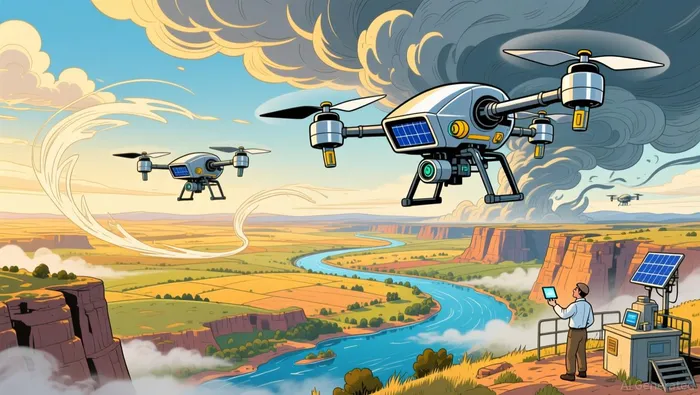 This data will be integrated into the National Weather Service's (NWS) forecasting models, helping meteorologists detect and predict weather phenomena more accurately.
The partnership is part of a pilot project in Oklahoma and will continue through April 2026. The goal is to refine forecasting for events such as thunderstorm formation, fog dissipation, and the spread of smoke and pollutants. These improvements are expected to help reduce delays in aviation, protect utility infrastructure, and improve emergency response times.
What Does This Mean for Investors and the Market?
For investors, the deployment of weather drones by NOAA signals a long-term shift toward more technologically advanced weather monitoring and forecasting. This shift has the potential to reduce weather-related disruptions in key economic sectors, including agriculture, energy, and transportation. For example, airlines and power companies stand to benefit from earlier warnings about weather events, allowing for better planning and mitigation. As a result, the market may see a greater emphasis on companies that supply advanced weather monitoring technologies.
The Meteomatics-NOAA partnership also highlights the growing role of public-private collaborations in addressing climate-related challenges. This trend may lead to more funding and regulatory support for private firms with innovative solutions in climate technology and weather forecasting. Investors who follow emerging climate tech trends may find opportunities in companies that provide data integration services, drone technologies, and software platforms for weather analysis.
What Are the Risks and Limitations of This New Approach?
While the use of weather drones is promising, it is still in the early stages of deployment. The pilot project is expected to provide valuable insights into the effectiveness of the technology and how well it integrates with existing forecasting models. There are also questions about the long-term costs of maintaining a drone-based monitoring system and whether the data collected is sufficient to justify the investment.
Moreover, the regulatory environment for commercial drone use is still evolving. As federal drone regulations continue to be updated, there may be additional hurdles for companies like Meteomatics in scaling this technology for broader use. Still, the initial results from the Oklahoma project could determine the future direction of NOAA's weather monitoring strategy and influence similar initiatives in other countries.
In sum, NOAA's use of weather drones represents a significant step forward in the field of meteorology. For investors, it underscores the increasing importance of climate-related technologies and the potential for new market opportunities in weather forecasting and environmental monitoring. As the pilot project moves forward, it will be worth watching how the data is used and how it impacts the accuracy of weather predictions in real-world scenarios.

Stay ahead of the market.
Get curated U.S. market news, insights and key dates delivered to your inbox.






Comments
No comments yet