
NJ Transit: Navigating Infrastructure Investment Crossroads Amid Fiscal Realities and Ambitious Projects
New Jersey's transit system, a lifeline for millions, stands at a pivotal juncture. NJ Transit's operational challenges—from aging infrastructure to fiscal constraints—are juxtaposed against a wave of ambitious projects funded by federal grants and innovative public-private partnerships. For investors, the agency's pathPATH-- forward offers a mix of risks and opportunities, demanding a nuanced analysis of its strategic bets and vulnerabilities.
Operational Challenges: A Fiscal Tightrope Walk
NJ Transit's FY2025 budget gap of $106.6 million underscores its precarious financial state. Ridership has yet to fully rebound post-pandemic, squeezing revenue streams. A 15% fare hike in July 2024, followed by annual 3% increases, has sparked public backlash, testing the agency's ability to balance affordability with sustainability.
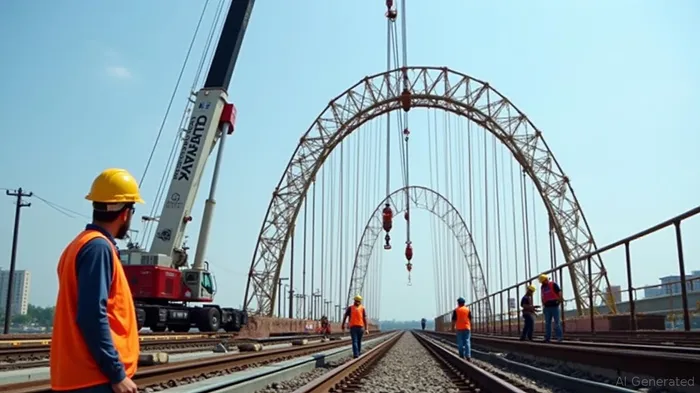
The root of many disruptions lies in its aging infrastructure. Overheating wires, faulty components, and the 110-year-old Portal North Bridge—now 70% replaced—highlight systemic risks. While Amtrak's $4 billion 2026 budget for Northeast Corridor (NEC) upgrades aims to address these issues, the $291 million cut in NEC grants from FY2025 to FY2026 raises concerns about funding continuity.
Strategic Projects: A Gamble on Modernization
NJ Transit's response is a bold portfolio of projects under the Gateway Program, including the $1.6 billion Portal Bridge replacement and the $12.5 billion HudsonHSON-- Tunnel. These ventures, paired with the Raritan River Bridge upgrade and Newark Penn Station renovation, aim to boost capacity and reliability.
The Hoboken Long Slip Project ($195 million) and County Yard/Delco Lead Facility ($500 million) reflect a focus on resiliency and operational efficiency. Meanwhile, the Glassboro-Camden Light Rail Line and Hudson-Bergen Light Rail extension seek to expand transit access, aligning with regional growth.
Public-Private Partnerships: A New Revenue Frontier
NJ Transit's partnership with BetMGM, which renamed the Meadowlands Rail Line, marks a shift toward non-traditional revenue streams. Similarly, its UITP training center and RIDERS' CHOICE paratransit pilot (using Uber/Lyft) exemplify collaborations that reduce fiscal burdens while enhancing services.
The Gateway Program's Full Funding Grant Agreement (FFGA)—the largest in U.S. history—highlights federal backing, but execution risks remain. Delays or cost overruns could strain budgets, as seen in the Roseville Tunnel rehabilitation, critical for restoring Sussex County rail service.
Sustainability and Technology: A Shift Toward the Future
NJ Transit's push for a zero-emission bus fleet by 2040—supported by $99 million for charging infrastructure—aligns with ESG trends. Solar-powered bus shelters and AI-driven safety systems (e.g., pedestrian detection) signal a tech-forward approach.
The NJ TRANSIT Mobile App, now handling cash payments and boasting a 4.8/5 rating, underscores efforts to improve customer experience—a critical factor in retaining ridership.
Risks and Opportunities: Where the Rubber Meets the Road
Risks:
1. Funding Volatility: Reliance on federal grants (e.g., the $4.4 billion from Biden's infrastructure law) exposes NJ Transit to political and budgetary shifts. A could reveal correlations between Amtrak's performance and transit funding trends.
2. Execution Delays: The Portal Bridge's completion timeline (70% done as of 2024) and the Hudson Tunnel's $12.5 billion price tag highlight potential overruns.
3. Ridership Uncertainty: Post-pandemic work habits and fare hikes may suppress demand, squeezing revenue.
Opportunities:
1. Modernization Payoffs: Upgraded infrastructure could reduce disruptions, boosting reliability and ridership. The CONNECT NEC 2037 plan, sequencing 150 projects, promises long-term stability.
2. ESG Appeal: Zero-emission goals and sustainability initiatives align with investor demand for ESG-compliant assets.
3. PPP Scalability: The BetMGM model could inspire more revenue-sharing deals, reducing reliance on fares and taxes.
Investment Considerations
For equity investors, Amtrak (AMTK) serves as a proxy for NECNECB-- infrastructure health. Its stock's performance reflects broader sector trends, with $2.1 billion in projected 2026 revenue offering a baseline for NJ Transit's ecosystem.
Infrastructure ETFs like XINF (S&P Global Infrastructure) or IGF (PowerShares Global Infrastructure) provide diversified exposure. Meanwhile, BetMGM (MGMT)'s naming rights deal hints at ancillary opportunities in transit branding.
Caution is warranted, however. NJ Transit's non-profit status means investors must indirectly benefit via contractors (e.g., construction firms) or regional real estate. The $55 billion economic impact of its 10-year plan could buoy sectors like commercial property or tech.
Conclusion: A High-Reward, High-Risk Venture
NJ Transit's journey is a microcosm of U.S. transit modernization—fraught with fiscal and operational hurdles but brimming with potential. For investors, patience is key. Long-term capital allocators might bet on infrastructure ETFs or Amtrak, while short-term traders should monitor federal funding news and project milestones.
The agency's success hinges on executing its vision without buckling under fiscal or logistical pressures. For now, NJ Transit remains a compelling, albeit volatile, bet on the future of mobility.

Delivering real-time insights and analysis on emerging financial trends and market movements.
Latest Articles
Stay ahead of the market.
Get curated U.S. market news, insights and key dates delivered to your inbox.


AInvest
PRO
AInvest
PRO



Comments
No comments yet