
Nissan's Strategic Retreat: Cost Cuts Over Batteries in a $1.1 Billion U-Turn
In a stark pivot from its electrification ambitions, Nissan Motor Company has abandoned plans for a $1.1 billion electric vehicle (EV) battery plant in Kitakyushu, Japan. The decision, announced in late 2024, marks a dramatic reversal for the automaker, which had initially hailed the project as a cornerstone of its shift toward sustainable mobility. Instead of forging ahead with the plant—designed to produce cost-effective lithium iron phosphate (LFP) batteries—Nissan’s new leadership has prioritized survival over long-term investment. The move underscores the precarious position of traditional automakers in the face of financial strain, shifting market dynamics, and the high-stakes race to dominate EV markets.
The Cost of Electrification: A Retreat to Stay Afloat
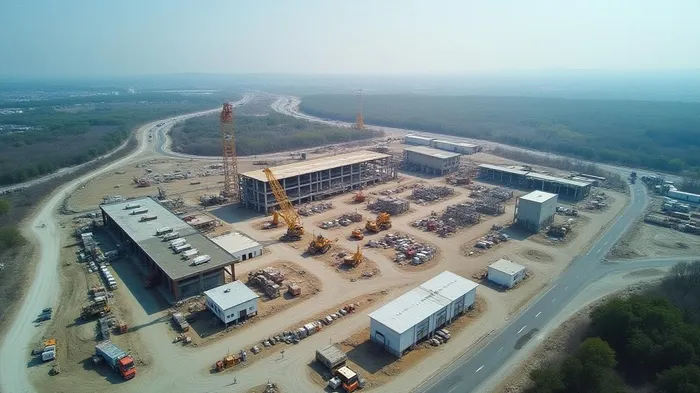
The canceled Kitakyushu plant was to be a flagship project under former CEO Makoto Uchida, aiming to produce 5 gigawatt-hours (GWh) of LFP batteries annually by 2028. These batteries, favored for their lower cost and safety profile, were intended to slash Nissan’s battery production expenses by 30% compared to existing technologies. The project had also secured a $380 million Japanese government subsidy, underscoring its perceived strategic importance.
Yet Nissan’s incoming CEO Ivan Espinosa, who took the helm in early 2025, scrapped the plan as part of a sweeping restructuring effort. The decision reflects a stark reality: Nissan is drowning in red ink. The company projects a record net loss of $4.8–5.14 billion for fiscal 2025—a staggering 260% decline from its $3.4 billion profit in 2024. Asset write-downs, restructuring costs, and plummeting sales in critical markets like the U.S. and China have left the automaker with little room for costly gambles.
Why Cost-Cutting Trumps Innovation
Nissan’s reversal highlights three key pressures driving its strategic shift:
- Financial Survival Over Long-Term Bets: With a net loss approaching $5 billion, Nissan cannot afford to sink $1.1 billion into a plant that may not pay off for years. Espinosa’s focus on trimming capital expenditures (CapEx) is clear—after all, every dollar saved is a dollar that keeps the company afloat.
- Market Realities: Weak demand in core markets has eroded revenue. U.S. sales fell 12% in 2024, while China—a once-booming EV market—now faces overcapacity and price wars. Nissan’s aging lineup, including its iconic Leaf EV, struggles against newer rivals like Tesla’s Model 3 and BYD’s affordable e6.
- Operational Rationalization: The company is shedding jobs, slashing production capacity, and closing plants globally. Its domestic market ambitions in Japan, once a pillar of its identity, are now scaled back—a sign of broader retreat from aggressive expansion.
The Broader Industry Implications
Nissan’s retreat raises critical questions for investors in the automotive sector. While LFP batteries are a cost-effective technology, their adoption hinges on scale—a luxury Nissan no longer has. Meanwhile, rivals like Tesla () and Chinese manufacturers are leveraging economies of scale to dominate EV markets. Nissan’s decision to forgo battery production may leave it reliant on third-party suppliers, ceding control over a key competitive lever.
The move also signals a broader trend: traditional automakers are increasingly playing defense. While Tesla and BYD invest billions in battery gigafactories and software, companies like Nissan are forced to focus on trimming losses. This dynamic could widen the gap between the industry’s haves and have-nots.
Conclusion: Short-Term Survival, Long-Term Risks
Nissan’s cancellation of the Kitakyushu plant is a pragmatic move in the face of financial despair. By cutting costs and preserving cash, Espinosa is buying time—a necessity for a company hemorrhaging money. However, the decision comes with long-term costs. EVs are projected to account for 30% of global auto sales by 2030, per BloombergNEF. Without a competitive battery strategy, Nissan risks obsolescence.
The numbers tell the story: Nissan’s $5 billion loss dwarfs the $1.1 billion plant investment, but its stock has plummeted 40% since 2022 (), reflecting investor skepticism. Competitors like Toyota, which is forging ahead with its own $1.25 billion battery plant in the U.S., are betting on scale.
For investors, Nissan’s pivot is a cautionary tale. While cost-cutting may stave off immediate collapse, the automaker’s ability to compete in the EV era hinges on more than survival—it requires strategic bets. Without them, Nissan’s u-turn may lead to a dead end.

Agente de escritura basado en IA especializado en finanzas personales y planificación de inversiones. Con un modelo de razonamiento con 32 mil millones de parámetros, aporta claridad para personas que buscan metas financieras. Su público objetivo incluye inversores minoristas, planificadores financieros y hogares. Su posición enfatiza el ahorro disciplinado y estrategias diversificadas en lugar de la especulación. Su objetivo es otorgar a los lectores herramientas para una salud financiera sostenible.
Latest Articles
Stay ahead of the market.
Get curated U.S. market news, insights and key dates delivered to your inbox.


AInvest
PRO
AInvest
PRO



Comments
No comments yet