
Nissan's Recall Crisis: A Wake-Up Call for Automotive Safety and Proactive Quality Control
The automotive industry's relentless pursuit of innovation has, at times, come at the cost of oversight. Nowhere is this clearer than in Nissan's 2025 global engine recall—a crisis that underscores the peril of prioritizing speed over systemic quality control. With over 900,000 vehicles affected worldwide, the stakes for automakers are clear: proactive defect detection must become as ingrained as the engines themselves. Drawing parallels to the success of Problem-Oriented Policing (POP) in crime reduction, this article explores how Nissan's reactive approach to quality control has exposed vulnerabilities, and why automakers must adopt rigorous, data-driven frameworks to avoid similar fallout.
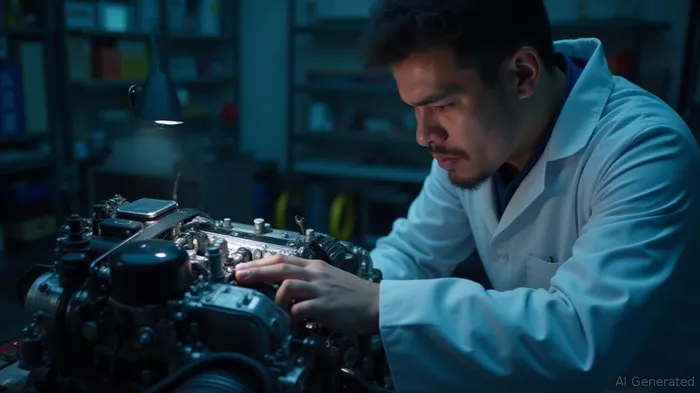
The Nissan Recall: A Perfect Storm of Flaws
Nissan's recall targets models with 1.5L and 2.0L VC-Turbo engines, including the Altima, QX50, Rogue, and QX55. The defect—manufacturing flaws in engine bearings—has already caused four fires and over 1,000 warranty claims. While Nissan estimates only 1.2% of recalled vehicles require full engine replacement, this figure may underestimate the scale of the problem. The financial toll is steep: up to $500 million in direct costs, compounded by potential liability claims and reputational damage.
Despite a temporary stock surge of 5.89% to $5.03 on July 3, 2025—likely due to investor relief over the recall's proactive disclosure—Nissan's shares remain under pressure. Competitors like ToyotaTM-- and HondaHMC--, with stronger brand loyalty and more disciplined quality control, continue to outperform.
The POP Model: A Blueprint for Proactive Defect Detection
Problem-Oriented Policing (POP), which uses the SARA framework (Scan, Analyze, Respond, Assess), has proven transformative in crime reduction. Its principles—identifying root causes, tailoring responses, and rigorously evaluating outcomes—offer a direct parallel to quality control in manufacturing.
Take the Jersey City public housing case, where POP reduced crime by addressing systemic issues like poor lighting and unsecured buildings. Similarly, automakers must “scan” production data for anomalies, “analyze” root causes (e.g., supplier inconsistencies or assembly-line errors), “respond” with targeted fixes, and “assess” outcomes through real-time monitoring.
Nissan's crisis reveals a failure to apply this logic. Instead of anticipating defects through predictive analytics, it waited for customer complaints and warranty claims to surface—a reactive stance that amplifies costs and risks.
Lessons from Crime Reduction: Why Proactivity Pays
POP's success hinges on place-based interventions and data-driven decision-making—tools equally vital in manufacturing. Consider the New Home Construction theft reduction in Charlotte, where police partnered with builders to delay appliance installation until occupancy. This tailored solution addressed the root problem (unsecured sites) without over-reliance on arrests.
Automakers can learn from this. By integrating sensors and AI into production lines to flag deviations in real time, companies could preempt defects like Nissan's bearing flaws. Toyota's TPS (Toyota Production System) already exemplifies this ethos, with its “stop-the-line” principle enabling immediate fixes to minor issues before they escalate.
The Regulatory and Financial Risks of Lagging Behind
Regulators are increasingly demanding transparency. The U.S. NHTSA is investigating potential delays in Nissan's recall disclosure, while the EU's Automotive Safety Regulation Act (2026) could penalize noncompliance with fines of up to 2% of global revenue. For Nissan, this translates to potential penalties exceeding $1 billion if found negligent.
Moreover, consumer trust is fragile. A single recall can erode decades of brand equity, as seen in Toyota's 2009-2010 unintended acceleration crisis. Nissan's recall, occurring amid a broader decline in U.S. sales, risks accelerating its slide against rivals.
Investment Implications: Prioritize Proactive Players
Investors should scrutinize automakers' quality control frameworks and recall histories. Companies like Toyota and Honda, which have historically managed recalls efficiently and maintained strong customer retention, offer safer bets. Meanwhile, firms with reactive approaches or poor supplier oversight—like Nissan—face heightened risks as regulatory scrutiny tightens.
- Buy: Toyota (TM), Honda (HMC), and automakers with embedded data analytics in manufacturing.
- Avoid: Firms with frequent recalls, opaque supply chains, or weak consumer satisfaction scores.
Conclusion
Nissan's recall is not just a mechanical failure but a strategic one. The automotive industry's future demands more than innovation—it requires institutionalized proactivity, akin to the SARA framework. Investors should reward companies that treat quality control as a core competency, while treating laggards with caution. In an era of tightening regulations and fickle consumers, those who learn from Nissan's missteps will drive the next chapter of automotive excellence.


Delivering real-time insights and analysis on emerging financial trends and market movements.
Latest Articles
Stay ahead of the market.
Get curated U.S. market news, insights and key dates delivered to your inbox.
AInvest
PRO
AInvest
PRO



Comments
No comments yet