
Nissan's Engine Recall Crisis: A Litmus Test for Automotive Resilience
The automotive industry's ability to manage operational risks and maintain consumer trust is being tested anew by Nissan's recent recall of over 480,000 vehicles due to engine defects. This crisis, while specific to Nissan, raises broader questions about the sector's capacity to balance innovation with quality control. For investors, the recall underscores the importance of backing automakers with robust risk-management frameworks and proven resilience in volatile markets.
The Nissan Recall: Costs, Confidence, and Contradictions
Nissan's June 2025 recall targets models like the Altima, Rogue, and Infiniti QX50, all equipped with VC-Turbo engines prone to bearing failures. While the direct financial impact—estimated at $50–$200 million—is manageable, the recall exacerbates existing vulnerabilities. The company faces a projected ¥200 billion ($1.56 billion) operating loss for Q2 2025, driven by restructuring costs and declining market share. Despite these pressures, Nissan's stock surged 5.9% to $5.03 on July 3, reflecting investor optimism that proactive recalls signal transparency.
Yet this surge masks deeper risks. Consumer confidence is eroding due to recurring recalls (three major ones since 2023) and past scandals like emissions cheating. A 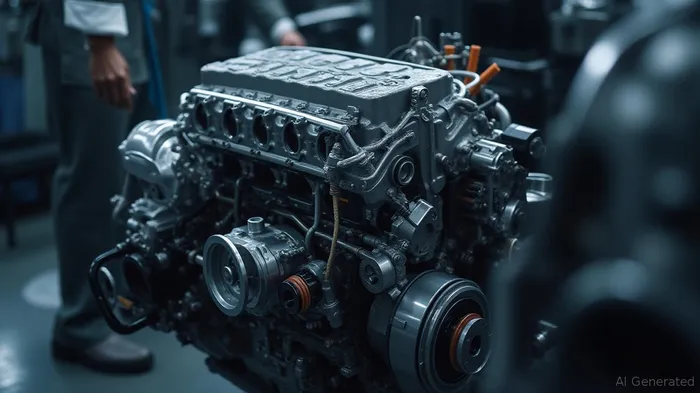 underscores the technical challenge Nissan faces. Warranty claims and potential litigation—amplified by four reported engine fires—could strain margins further. The recall's timing, just before the July 4th travel peak, also risks alienating customers during high-revenue periods.
Sector-Wide Risks and Opportunities
Nissan's crisis is not isolated. The broader automotive sector is grappling with rising recall volumes and quality control challenges:
- Ford's Seatbelt Recall: Over 1.8 million vehicles recalled due to improperly secured seatbelts, highlighting systemic manufacturing flaws.
- Honda's Fuel Injection Glitch: Affecting 469,000 vehicles, underscoring software-related vulnerabilities.
- Tesla's Software Updates: While recalls often involve remote fixes, the company's low J.D. Power scores (due to insufficient survey responses) hint at unresolved reliability issues.
Yet amid this turbulence, resilient players emerge. reveals a stark contrast: Toyota's stock rose 18% despite recalling 317,000 vehicles in Q1 2025, reflecting its reputation for reliability. Toyota's proactive approach—evident in its Tundra recall for reverse lamp defects—aligns with its J.D. Power rankings (Lexus at 166 PP100 in IQS) and Consumer Reports' endorsement as a top brand.
Investing in Resilience: Key Metrics and Targets
For investors, the automotive sector demands a focus on three pillars:
1. Quality Control: Automakers with low PP100 scores in J.D. Power's IQS (e.g., Subaru at 169 PP100, ToyotaTM-- at 162 PP100) or high Consumer Reports reliability rankings (Subaru, Lexus) offer safer bets.
2. Operational Efficiency: Companies reducing recalls while scaling EV production, such as HondaHMC-- (9 recalls in 2025 but strong hybrid sales), or GMGM-- (11 recalls but gains in EV market share).
3. Brand Trust: Premium brands like Porsche (despite 186 PP100 in VDS) benefit from emotional loyalty, but mass-market leaders like Hyundai (173 PP100) offer better value.
Recommendations for Investors
- Avoid Short-Term Gambles: Nissan's stock surge is a risky play unless the company demonstrates structural improvements. Its reliance on low valuations (0.4x P/B ratio) and high debt ($2.4 billion in U.S. tariffs annually) make it a high-risk, low-reward bet.
- Back Proven Resilience: Toyota (TM) and Subaru (SUBCY) remain top choices due to their quality control and EV momentum. Toyota's 32 electrified models and Subaru's Solterra EV reliability gains offer dual exposure to innovation and stability.
- Monitor EV Transitions: TeslaTSLA-- (TSLA) and RivianRIVN-- (RIVN) face execution risks, but their influence on BEV quality (as seen in J.D. Power's data) positions them as long-term bets—if investors can tolerate volatility.
Conclusion
Nissan's recall crisis is a litmus test for automotive resilience. While short-term gains may lure speculators, sustainable value lies with automakers that prioritize quality over cost-cutting. Investors should focus on companies with strong operational track records and robust risk-management systems, such as Toyota and Subaru, to navigate this era of recalls and technological disruption. The automotive sector's future belongs to those who balance innovation with integrity.

Delivering real-time insights and analysis on emerging financial trends and market movements.
Latest Articles
Stay ahead of the market.
Get curated U.S. market news, insights and key dates delivered to your inbox.


AInvest
PRO
AInvest
PRO



Comments
No comments yet