
NIPSCO Rate Hike: A Barometer for Utility Sector Regulation and Valuation
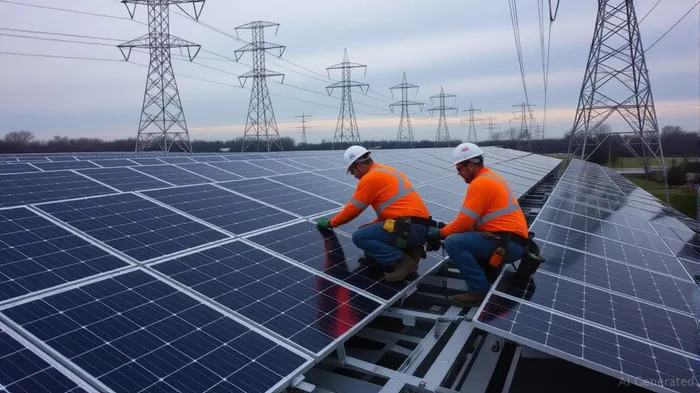
The Indiana Utility Regulatory Commission's (IURC) approval of NIPSCO's 16.75% electric rate hike in late June 2025 marks a pivotal moment for the regulated utility sector. While the decision addresses urgent capital needs—$2 billion for renewables and $769.5 million for grid upgrades—it also underscores evolving regulatory priorities that will reshape investor calculus. For utilities, the stakes are high: regulatory outcomes now directly tie to valuation shifts, customer affordability, and the viability of long-term infrastructure projects.
Regulatory Environment Shift: Balancing Growth and Equity
NIPSCO's case exemplifies a broader trend in state-level utility regulation: balancing investor returns with heightened scrutiny of customer impacts. The approved rate increase—reduced by 30% from NIPSCO's initial $368.7 million request to $257 million—reflects regulators' growing focus on mitigating burdens for residential and smaller commercial customers. Key compromises included:
- A 10% increase for large industrial users (e.g., U.S. Steel) versus 16.75% for residential customers, shielding industrial anchors critical to regional economies.
- New income-qualified payment assistance programs and waived reconnection fees to offset immediate financial pain.
This “pro-business, pro-infrastructure, but pro-customer” approach is a departure from earlier eras when utilities prioritized equity returns above all else. Regulators are now leveraging settlements to align rate designs with social equity goals, a theme echoed in recent cases like New York's $1.6 billion electric utility filing (Jan 2025) and Virginia's gas rate decrease (Jan 2025).
Valuation Implications: ROE, Capital Spend, and Regulatory Risk
The NIPSCO decision offers a template for assessing valuation risks in regulated utilities. Three factors are critical:
1. Return on Equity (ROE) Authorizations
The IURC approved a 9.75% ROE, below NIPSCO's requested 10.5%, aligning with a national trend of regulators pushing ROEs toward the 9.5%-10% range. This narrower band compresses equity returns, pressuring utilities to optimize capital efficiency. For investors, this means valuations will hinge on:
- Cost recovery certainty: Will projects like NIPSCO's coal-to-renewables transition deliver promised savings ($70M annually by 2028)?
- Regulatory predictability: States like Indiana are now requiring utilities to demonstrate “fair” rate designs, potentially limiting upside for over-leveraged firms.
2. Capital Expenditure (CapEx) Scale and Purpose
NIPSCO's $2 billion investment in renewables and grid modernization reflects a sector-wide pivot toward long-term resilience over short-term profit. Utilities that tie CapEx to clear regulatory benefits—such as outage reduction (NIPSCO aims to cut outages by 40%)—will gain favor. Conversely, projects perceived as “gold-plated” or speculative (e.g., advanced nuclear without federal subsidies) face pushback.
3. Customer Assistance as a Valuation Multiplier
Regulators increasingly view customer support programs as a prerequisite for approval, not an afterthought. NIPSCO's new payment assistance and flexible plans (up to 12-month payment terms) may reduce default risks, indirectly boosting credit ratings and equity valuations. Utilities without such programs could see higher discount rates applied to future cash flows.
Comparative Case Analysis: NIPSCO vs. Sector Peers
Recent rate cases highlight divergent regulatory outcomes:
| Utility/State | Rate Increase | Key Drivers | ROE Outcome | Customer Impact |
|---------------|---------------|-------------|-------------|-----------------|
| NIPSCO (IN) | 16.75% (residential) | Renewable transition, grid upgrades | 9.75% | Mitigated via assistance programs |
| New York Co (NY) | 25% (proposed) | Urban grid modernization | 9.5% (pending) | Major backlash from households |
| Virginia Gas Co (VA) | -1.5% | Regulatory true-up | N/A | Minimal impact |
The New York case, for instance, faces public opposition due to its steep increase for residential customers, illustrating the risks of overreliance on rate hikes for urban infrastructure. NIPSCO's more nuanced approach—targeting industrial users while shielding vulnerable households—appears more sustainable, setting a precedent for utilities in mid-sized markets.
Stress-Testing Valuations: Scenarios for Utilities
Investors must model how regulatory shifts could disrupt earnings. Consider two scenarios for NIPSCO-like utilities:
Scenario 1: Favorable Regulatory Environment
- Assumptions:
- ROE held at 9.75%.
- Renewable projects achieve $70M annual savings by 2028.
- Customer defaults drop 15% due to assistance programs.
- Outcome: Equity valuations rise 10%-15%, with multiples expanding to 18-20x forward earnings.
Scenario 2: Adverse Regulatory Environment
- Assumptions:
- ROE capped at 9.0% due to political pressure.
- Coal transition savings delayed by 2 years.
- Rate hikes face legal challenges, reducing collections.
- Outcome: Valuations contract 10%-20%, with multiples shrinking to 15-17x.
Investment Recommendations
- Buy NIPSCO (NI) for Its Structured Approach
- NIPSCO's negotiated settlement and focus on customer mitigation reduce regulatory tail risk. Its stock (currently trading at ~$55) offers a 3.5% dividend yield with 8%-10% annual EPS growth through 2026.
Avoid Utilities Overexposed to Urban Rate Hikes
Firms like Consolidated EdisonED-- (ED), which face New York's stricter affordability standards, may struggle to recover costs without shareholder dilution.
Monitor Federal Policy on Nuclear and Renewables
- Utilities with DOE grants (e.g., $2.5B for nuclear) or long-term PPA contracts (e.g., Duke Energy's 34GW renewables) are less reliant on rate case outcomes.
Conclusion: Regulation as a New Performance Metric
The NIPSCO case is a microcosm of the utility sector's evolution. Regulators are no longer passive arbiters of returns—they're active architects of outcomes, favoring utilities that align CapEx with social goals. Investors must now treat regulatory alignment as a core valuation input, prioritizing firms with:
- Transparent cost recovery mechanisms.
- Customer-centric rate designs.
- Diversified revenue streams (e.g., renewables PPAs).
For NIPSCO, the 16.75% hike is a win—but its true test lies in executing its $2 billion plan without triggering a backlash. The lesson for the sector? In an era of climate urgency and cost consciousness, utilities that can't balance innovation with affordability will face not just regulatory headwinds, but investor skepticism.

Delivering real-time insights and analysis on emerging financial trends and market movements.
Latest Articles
Stay ahead of the market.
Get curated U.S. market news, insights and key dates delivered to your inbox.




Comments
No comments yet