
Nippon Steel's Bold Play in the U.S. Market: A Blueprint for Dominance in a Decarbonizing World
The global steel industry is undergoing a seismic shift, driven by consolidation, decarbonization mandates, and geopolitical realignments. At the epicenter of this transformation stands Nippon Steel, whose audacious moves in the U.S. market since 2023 have redefined its trajectory as a leader in both scale and sustainability. From navigating U.S. political headwinds to pioneering green steel innovations, Nippon Steel is positioning itself to capitalize on a world hungry for low-carbon infrastructure and resilient supply chains. Here's why investors should take note.
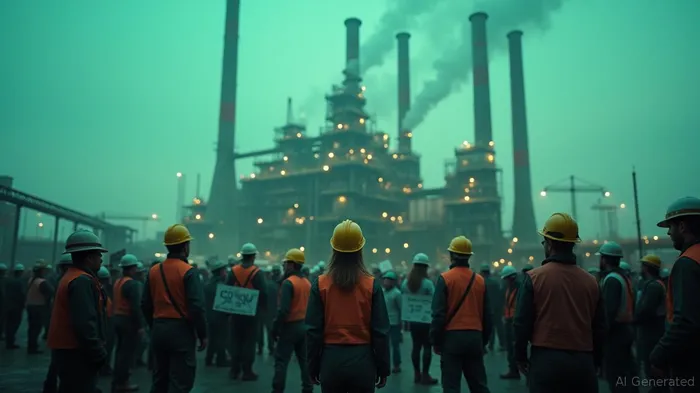
The U.S. Steel Gambit: Strategy Amid Stalemate
Nippon Steel's $14.9 billion bid to acquire U.S. Steel in late 2023 was a masterstroke—had it succeeded. The deal aimed to boost global production capacity to 86 million tons, counterbalancing Japan's shrinking demand and Asia's overcapacity. But U.S. regulators intervened: Biden blocked it in January 2025 on national security grounds, while Trump's May 2025 compromise—a $14 billion partnership with U.S. Steel—rebalanced control in favor of American stakeholders.
This pivot underscores Nippon Steel's adaptability. By agreeing to a “partial ownership” structureGPCR--, it avoids full foreign control backlash while retaining strategic influence. The deal's emphasis on job creation (70,000 roles) and U.S. Steel's Pittsburgh headquarters retention align with Trump's pro-American manufacturing agenda, ensuring political viability.
Green Steel: The Competitive Edge
While U.S. Steel grapples with declining shipments (-1.1% in Q1 2025), Nippon Steel is doubling down on NSCarbolex Neutral, its game-changing low-carbon steel. Already adopted by Nissan for mass-market vehicles, this product slashes emissions by 30% and opens doors to automotive giants prioritizing ESG compliance.
Nippon Steel's environmental acumen extends beyond products. In February 2025, it secured SuMPO EPD certifications for pipes and tubes, signaling alignment with EU's stringent Ecodesign directives. Its sea forest initiative—using steel slag to sequester carbon—earned Japan's top science award, reinforcing its reputation as a sustainability pioneer.
Global Reach, Localized Sustainability
Nippon Steel's expansion isn't confined to the U.S. In Thailand, its subsidiary NS-SUS won the Prime Minister's Industry Award for tinplate innovations, while a new plating line in Thailand boosts Southeast Asian capacity. In India, a $1 billion integrated steel mill in Andhra Pradesh—set to use eco-friendly technologies—targets the subcontinent's booming infrastructure needs. These moves diversify risk and lock in growth in regions with rising demand and laxer regulatory hurdles.
Operational Efficiency: Pruning to Grow
While rivals bloat with underutilized assets, Nippon Steel is surgically streamlining. Selling stakes in Kobe Steel and Nippon Steel Kowa since 2024 reallocates capital toward high-potential projects. A joint venture with Nakayama Steel Works to manage an electric arc furnace (EAF) optimizes production costs, while consolidating Japan's steelmaking capacity avoids overcapacity pitfalls.
Why This Matters for Investors
The steel industry's future belongs to firms that blend scale, sustainability, and geopolitical agility. Nippon Steel's U.S. partnership sidesteps protectionist barriers, its green steel portfolio captures premium pricing from automakers and governments, and its global footprint mitigates regional demand volatility.
Even setbacks—like Biden's rejection—are tactical wins. The revised deal's focus on U.S. job creation and technology transfer positions Nippon Steel as a strategic ally, not a predator, in a post-Trump era. Meanwhile, competitors like U.S. Steel, burdened by legacy costs and regulatory lag, struggle to match Nippon Steel's agility.
The Investment Thesis
Nippon Steel is engineering a moat in two domains:
1. Supply Chain Resilience: U.S. partnerships + Southeast Asia/India expansions = diversified production and access to high-growth markets.
2. ESG Leadership: NSCarbolex Neutral and carbon sequestration tech position it as a partner of choice for automakers and governments under net-zero mandates.
With stock valuations still undervalued relative to its peers' risk profiles (see the visual comparison), and a 2025 pipeline of green projects and partnerships, Nippon Steel offers a rare blend of near-term earnings stability and long-term disruptor potential.
Risks? Yes—but Manageable
Political pushback, raw material price swings, and delays in green tech adoption pose risks. Yet Nippon Steel's adaptive strategy—whether pivoting from acquisition to partnership or scaling sustainability—suggests it can navigate these headwinds better than most.
Final Call: Act Now or Miss the Steel Revolution
The world isn't just demanding steel—it's demanding steel that doesn't cost the Earth. Nippon Steel is the architect of this new paradigm. With its U.S. foothold secured, its green innovations scaling, and its operational efficiency unmatched, this is a stock primed to thrive as the decarbonization era accelerates.
Investors who recognize that steel isn't “just steel” anymore will see Nippon Steel as a cornerstone of their industrial portfolio. The question isn't whether the industry will consolidate—it's who will lead it. The answer is already in the works.

Stay ahead of the market.
Get curated U.S. market news, insights and key dates delivered to your inbox.


AInvest
PRO
AInvest
PRO



Comments
No comments yet