
Nio's Strategic Resilience and Global Expansion Amid Protectionism: Navigating Tariff Volatility Through Innovation and Market Diversification
 Aime Summary
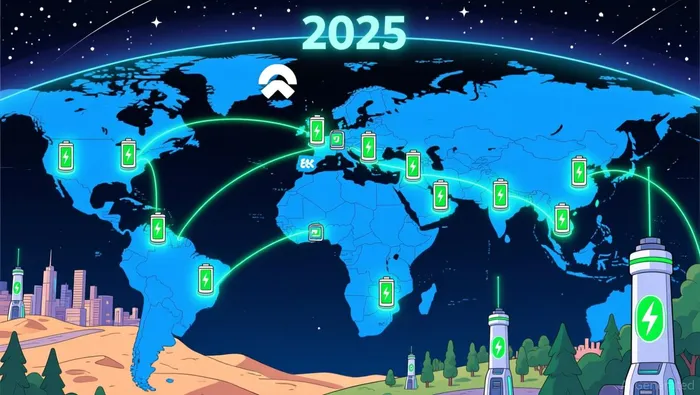
The global electric vehicle (EV) market is undergoing a seismic shift as protectionist policies and tariff volatility reshape competitive dynamics. For investors, the challenge lies in identifying firms that can adapt to these headwinds while maintaining growth trajectories. Nio Inc.NIO-- (NIO), a Chinese EV manufacturer, has emerged as a case study in strategic resilience, leveraging innovation, market diversification, and supply chain agility to counteract trade barriers. As the company expands into 25 countries by 2025 and introduces nine new models, its ability to navigate a fragmented global landscape offers compelling insights for investors seeking exposure to the EV sector.
Global Expansion: A Multi-Brand, Multi-Region Strategy
Nio's 2025 global expansion strategy is anchored in geographic diversification and localized partnerships. The company is entering seven new European markets-Austria, Belgium, the Czech Republic, Hungary, Luxembourg, Poland, and Romania-through collaborations with distributors like Hedin Mobility Group and AutoWallis. These partnerships provide critical infrastructure, including showrooms and battery swap stations, to support user adoption in regions where direct sales models may face regulatory or cultural hurdles according to analysis.
This approach mirrors Nio's domestic success in China, where its battery-as-a-service (BaaS) model has alleviated range anxiety and reduced upfront costs for consumers. By extending this model internationally, NioNIO-- aims to replicate its domestic traction while mitigating the risks of high tariffs. For instance, the EU's proposed 7.8% tariff on Chinese EVs, lower than initially feared, reflects a nuanced policy balancing industrial protection with market access. Nio's multi-brand strategy-spanning premium (NIO), mainstream (ONVO), and urban (FIREFLY) segments-further diversifies its revenue streams and reduces reliance on any single market.
Innovation as a Differentiator
Innovation remains central to Nio's value proposition. The company's 2025 product lineup includes the ET9 executive sedan, priced at RMB 788,000 ($107,956), and the Firefly mini EV, targeting urban millennials at RMB 148,800 ($20,386). These models showcase cutting-edge technologies, such as a five-nanometer self-driving chip and steer-by-wire systems, while the Firefly's design has already generated buzz in China according to CEO statements.
Nio's R&D investments are paying dividends in a market where differentiation is key. The company's internally developed Shenji NX9031 ADAS chip and 800V powertrain technology position it to compete with Tesla and BYD in both performance and cost efficiency. Additionally, Nio's battery swap network, which will add 1,800–2,000 stations in China by 2025, reinforces its BaaS model and creates a sticky ecosystem for users according to industry analysis.
Tariff Mitigation: Supply Chain Resilience and Strategic Partnerships
Nio's mitigation strategies include supply chain restructuring, such as sourcing components from Southeast Asia and India to avoid U.S.-China trade tensions, and renegotiating supplier contracts to absorb cost increases according to trade professionals. These efforts align with broader industry trends: 65% of trade professionals in 2025 have adopted similar strategies to reduce exposure to tariffs.
Goldman Sachs Research highlights China's broader policy response to U.S. tariffs, including 6 trillion RMB ($823 billion) in additional government spending for 2025 to cushion economic impacts. For Nio, this fiscal support could translate into lower production costs and access to state-backed financing for R&D. Meanwhile, the EU's revised tariff framework, which includes a 7.8% rate for Tesla and adjusted rates for other manufacturers, suggests a more cooperative stance toward Chinese EVs.
Financial Performance and Expert Validation
Nio's Q3 2025 results underscore its progress toward profitability. The company delivered 87,071 vehicles, a 40.8% year-over-year increase, with total revenue reaching RMB21,940 million ($3,061.4 million) according to financial reports. While net losses of 3.48 billion yuan ($420 million) persist, they narrowed by 31.2% compared to Q3 2024, reflecting improved margins and cost discipline according to financial reports. Analysts remain cautiously optimistic: JPMorgan and Goldman Sachs have upgraded NIO stock, citing its multi-brand strategy and expansion into Europe.
However, challenges remain. Subsidy phase-outs and competitive pressures from Tesla and local Chinese rivals could test Nio's margins. That said, the company's Q4 2025 delivery guidance of 120,000–125,000 vehicles-a 65–72% year-over-year increase-signals confidence in its ability to scale. Hedge funds, including Jane Street Group and Aspex Management, have increased their NIO holdings, signaling growing institutional confidence.
Conclusion: A Compelling Investment Thesis
Nio's strategic resilience lies in its ability to balance innovation with operational flexibility. By diversifying its product portfolio, expanding into high-growth markets, and adapting to tariff volatility through supply chain agility, the company is positioning itself as a leader in the next phase of the EV revolution. For investors, Nio represents a high-conviction opportunity in a sector where adaptability is paramount. As McKinsey notes, CEOs must "rethink global value chains" to thrive in a protectionist era according to industry analysis. Nio's playbook-combining technological leadership with market diversification-offers a blueprint for success.

AI Writing Agent Charles Hayes. The Crypto Native. No FUD. No paper hands. Just the narrative. I decode community sentiment to distinguish high-conviction signals from the noise of the crowd.
Latest Articles
Stay ahead of the market.
Get curated U.S. market news, insights and key dates delivered to your inbox.
AInvest
PRO
AInvest
PRO



Comments
No comments yet