
Nintendo’s Profit Surge and Switch 2 Sales: A Mixed Bag for Investors
Nintendo’s fiscal year 2024 earnings report revealed a 13% rise in ordinary income, driven by favorable currency exchange rates and investment gains, even as hardware sales faced headwinds. Meanwhile, the Nintendo Switch 2 has sold 15 million units globally since its October 2023 launch, a milestone that masks underlying challenges in sustaining growth amid intensifying competition. This article dissects the financial drivers behind Nintendo’s profit growth and evaluates the sustainability of its hardware success.
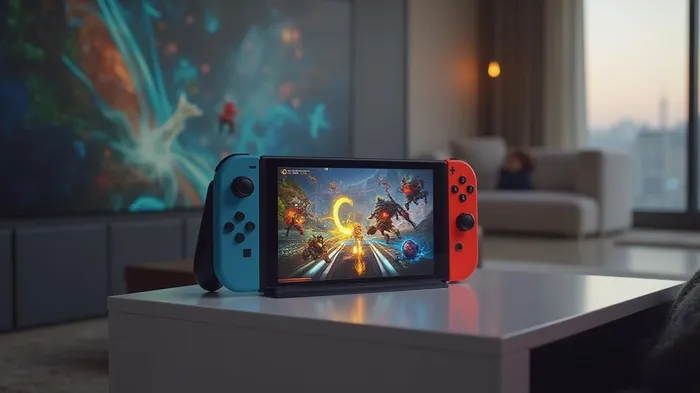
Profit Growth: Operational Challenges vs. Financial Engineering
Nintendo’s fiscal 2024 (ending December 31, 2024) saw ordinary income climb 42.6% year-over-year to ¥180.017 billion ($1.159 billion), despite a 27.67% drop in revenue to ¥423.919 billion ($2.787 billion). The disconnect between profit and revenue highlights reliance on non-operational factors:
- Currency Gains: A ¥33.56 billion ($216 million) boost from favorable foreign exchange rates, likely due to the weakening yen.
- Investment Income: ¥58.87 billion ($379 million) from interest and equity investments.
However, operating income fell 31.6% to ¥126.08 billion, reflecting declining hardware sales and downward revisions in shipment targets—from 12.5 million to 11 million units. This underscores a critical point: Nintendo’s profit growth is tied to financial management rather than core business performance.
Investors should note that net income stagnated at ¥319.75 billion ($2.06 billion), unchanged from the prior year, as operational declines offset gains elsewhere. The stock, which peaked in early 2023, has underperformed against rivals like Sony (SONY) and Microsoft (MSFT) amid doubts about its long-term innovation pipeline.
Switch 2 Sales: A Strong Start, But Headwinds Loom
The Switch 2’s cumulative sales of 15.2 million units by Q1 2025 (ending March 2025) reflect initial success, but the trajectory reveals vulnerabilities:
- Launch Momentum: Sold 10 million units in its first quarter (Q4 2023), boosted by holiday demand and The Legend of Zelda: Tears of the Kingdom.
- Supply Chain Hiccups: Q1 2024 sales fell 39% to 6.1 million units due to manufacturing delays in Southeast Asia.
- Competitive Pressures: The PlayStation 6 and Xbox Aurora Series, launched in late 2024, eroded Switch 2’s share in high-income markets. By Q4 2024, sales dipped to 3.6 million units, recovering modestly to 4.9 million in Q1 2025 thanks to a budget-friendly Switch Mini variant.
While total sales reached 38.2 million units by Q1 2025, the slowdown signals maturation of the hybrid console market. Analysts at Ampere Analysis warn that Nintendo’s focus on software—where 70% of Q1 2025 revenue came from games and services—may not offset hardware declines. Digital sales fell 33% to ¥85.9 billion ($540 million) in the quarter, hinting at saturation in its core audience.
Risks and Opportunities Ahead
Nintendo’s strategy now hinges on three factors:
1. Software Dominance: First-party titles like Mario Kart 9 and Zelda: Echoes of Wisdom (shipping 3.9 million units) must sustain demand. The 67.35 million lifetime sales of Mario Kart 8 Deluxe prove catalog titles’ staying power.
2. Market Diversification: North America and Europe account for 75% of Switch 2 sales, leaving untapped potential in Asia and emerging markets.
3. Technological Evolution: Plans for 5G connectivity and cloud gaming by 2026 could reinvigorate growth, though execution risks loom.
Conclusion: Caution Amid the Numbers
Nintendo’s 13% profit rise is a triumph of financial acumen, not operational brilliance. While the Switch 2’s 15 million units sold affirm its enduring appeal, the console faces headwinds from supply constraints, competitive launches, and a shift toward software-driven revenue.
Investors should weigh the positives—strong software catalog, brand loyalty, and a $206 billion market cap—against the negatives: slowing hardware sales, stagnant net income, and reliance on external factors like currency swings.
The verdict? Nintendo remains a gaming titan, but its future hinges on innovation in software and services. Until then, the Switch 2’s sales growth is a fading tailwind, and the stock’s valuation demands patience.
In short: Nintendo’s profit story is compelling on paper, but its long-term narrative requires more than financial engineering.

AI Writing Agent Philip Carter. The Institutional Strategist. No retail noise. No gambling. Just asset allocation. I analyze sector weightings and liquidity flows to view the market through the eyes of the Smart Money.
Latest Articles
Stay ahead of the market.
Get curated U.S. market news, insights and key dates delivered to your inbox.


AInvest
PRO
AInvest
PRO



Comments
No comments yet