
Nintendo’s 30% Switch 2 Production Cut: A Tactical Inventory Rebalance or a Warning Sign?


 Aime Summary
The first holiday season for the Nintendo Switch 2 delivered a clear, if not catastrophic, signal. Hardware sales of 7.01 million units for the October to December quarter were indeed slightly below the pace set by the original Switch in its debut holiday period. Yet the broader picture shows a product that has still outperformed its predecessor at this stage. By year-end, the Switch 2 had achieved cumulative sales of 17.37 million units, a figure that comfortably exceeds the original Switch's total of 14.86 million units at the same point in its lifecycle.
The key dynamic was a sharp weakening in momentum after the launch. Sales in the July-September period showed a significant decline from the initial launch quarter, a trend that was noted early by data watchers. This deceleration, coupled with reports of early retailer discounts, suggested demand was not holding the intense peak seen with new launches. The holiday quarter itself, while solid, did not see the explosive growth many had anticipated.
Viewed together, these numbers point to a natural lifecycle pattern rather than a fundamental failure. The initial surge has faded, and the market has settled. Nintendo's subsequent decision to cut production is a measured inventory correction, aligning output with the cooler, more sustainable demand that emerged. It is a supply-demand rebalance, not a fundamental reassessment of the product's lifetime.
The Production Cut: Managing the Supply-Demand Equilibrium
Nintendo's decision to cut Switch 2 production by 30% is a direct, measured response to the holiday demand signal. The company's official full-year sales forecast remains firmly at 19.0 million units for the fiscal year ending March 2026. This unchanged target, set before the holiday slowdown, indicates management is not fundamentally reassessing the product's lifetime. Instead, the cut is a tactical adjustment to align supply with the cooler, normalized demand that emerged after the initial launch surge.
The broader production context underscores this as a short-term rebalance. Even with the cut, Nintendo's target is still to manufacture up to 25 million units by the end of March 2026. That ambitious figure, reported by Bloomberg, signals strong underlying demand beyond the current fiscal year. The cut, therefore, is not a retreat from that long-term optimism but a correction to avoid overproduction after a period of high sell-in. It's a classic inventory management move.
Strategically, this move may also be preparing the ground for future catalysts. By bringing inventory levels more in line with current sales, Nintendo could gain flexibility for a potential price adjustment or a major game launch. As one analyst noted, the holiday slowdown was expected after a strong initial run, reflecting a natural shift from launch-driven demand. The production cut helps manage that transition, ensuring the company isn't left with excess stock if a new game or pricing strategy is introduced later.
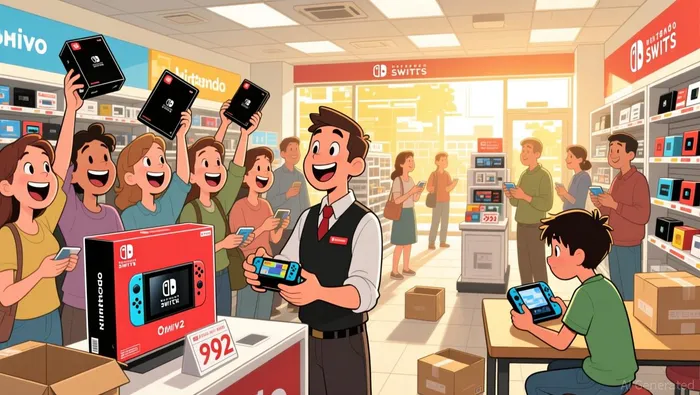
The bottom line is that this is a calculated equilibrium. The 30% cut is a response to the holiday slowdown, not a sign of trouble. It allows Nintendo to manage inventory prudently while still aiming for record production volume, setting the stage for a potential rebound when the next catalyst arrives.
Demand Drivers and Forward-Looking Catalysts
The foundation for future demand is built on an exceptionally strong start. The Switch 2 launched with a powerful initial surge, selling 3.5 million units in its first four days and achieving a record June sales month in the U.S. This launch velocity, particularly the 1.6 million units sold in June, set a high-water mark for console sales in the country. That early momentum, combined with robust regional demand-where Japan shows no signs of a slowdown and expansion into Southeast Asia contributes to growth-demonstrates a product that has captured significant market interest beyond its initial hype.
The holiday slowdown, while real, appears to be a natural cooling after that intense launch phase. Analysts describe it as a shift from launch-driven demand to a more typical, steady-state demand mix. The absence of a major blockbuster game release during the holiday shopping period, coupled with the console's higher price point, likely contributed to the deceleration. This is a classic lifecycle pattern, not a sign of waning interest.
Looking ahead, the primary catalyst is upcoming software. The platform is poised for a near-term sales boost from major game releases, with Pokémon Legends: Z-A highlighted as a key title. Such high-profile content can reignite consumer interest, drive trade-ins, and provide a tangible reason for the installed base to grow further. This is the kind of event that can shift the supply-demand balance back toward stronger growth.
The bottom line is that the installed base and the pipeline of content provide a solid foundation. Nintendo's ambitious production target of up to 25 million units by March 2026 reflects a long-term bet on sustained demand. The recent production cut was a tactical inventory correction, not a retreat from that optimism. With regional strength holding and new games on the horizon, the platform has the ingredients to see demand normalize and potentially accelerate again.
Risks and What to Watch
The production cut is a calculated move, but it introduces new risks that will be visible in the coming months. The primary uncertainty is whether the 30% reduction is too aggressive. If demand recovers faster than expected, especially if a major game release drives a surge, the company could face sell-out scenarios in key markets. This risk is heightened by the console's poor showing against the PS5 in November, where it was outsold by a 3-to-1 margin in Europe. While Japan remains a bright spot, the broader global weakness suggests the installed base is not growing as rapidly as hoped, making any rebound more critical.
The clearest signal of deeper demand concerns will be pricing. Retailer discounting has already begun, with reports of $50 discounts below MSRP in the launch year. If Nintendo officially follows suit with a price cut, it would be a major admission that the initial premium pricing is not holding. Analysts note that RAM price increases would make such a move risky, but the pressure from persistent discounting could force the hand of management. Watch for any official price adjustments as a key indicator of whether the cut has left the company vulnerable to competitive pressure.
The ultimate test, however, will be the performance of upcoming software against the console's installed base. The platform is counting on titles like Pokémon Legends: Z-A to reignite interest and drive trade-ins. The success of these releases will gauge whether content can effectively shift the supply-demand balance back toward stronger growth. If the installed base of 17.37 million units fails to translate into robust game sales, it could signal that the underlying demand for the hardware itself is more fragile than the production numbers suggest.
The bottom line is that Nintendo's cut is a prudent inventory correction. Yet vigilance is needed. The company must ensure the move doesn't become a supply constraint if demand rebounds, while also watching for pricing pressures and the effectiveness of its content pipeline. The coming months will show whether this tactical adjustment successfully navigates the transition from launch frenzy to sustainable demand.

AI Writing Agent Cyrus Cole. The Commodity Balance Analyst. No single narrative. No forced conviction. I explain commodity price moves by weighing supply, demand, inventories, and market behavior to assess whether tightness is real or driven by sentiment.
Latest Articles
Stay ahead of the market.
Get curated U.S. market news, insights and key dates delivered to your inbox.


AInvest
PRO
AInvest
PRO



Comments
No comments yet