
Ningbo Zhoushan Port's 12% October Container Throughput Surge: A Harbinger of China's Logistics and Infrastructure Resilience


 Aime Summary
Strategic Infrastructure: The Backbone of Resilience
Ningbo Zhoushan Port's recent performance is a testament to China's decade-long commitment to upgrading its logistics infrastructure. The Jintang Dapukou expansion and the Jinyong Railway Suixi container station, noted in the LinkedIn post, have not only increased the port's capacity but also reduced bottlenecks in cargo handling. These projects are emblematic of a broader strategy to integrate multimodal transport networks-linking maritime, rail, and road logistics-thereby enhancing efficiency and reducing costs for exporters.
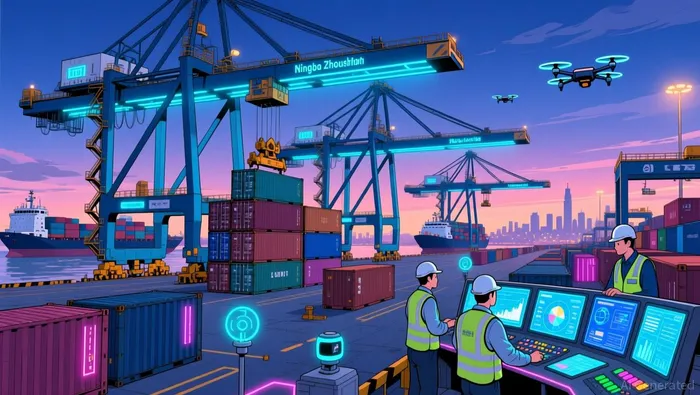
The port's infrastructure gains are further amplified by its embrace of smart technologies. Automated handling systems and digital twin platforms reported in that post have slashed processing times, enabling the port to achieve a historic 4 million TEU throughput in August 2025. Such innovations are not merely operational upgrades; they represent a paradigm shift in how global supply chains are managed, with real-time data analytics and predictive maintenance minimizing disruptions.
Global Supply Chain Dynamics: A Mixed Picture
While Ningbo's growth is impressive, the global supply chain landscape remains fragmented. COSCO Shipping Ports Limited (CSP), which operates the port, reported a 4.2% year-on-year increase in Q3 2025 throughput to 38.98 million TEU, according to a FreshPlaza report, yet its gross profit fell by 2.4% due to rising operating costs. This dichotomy highlights the challenges of balancing volume growth with profitability in an era of geopolitical tensions and fluctuating demand.
However, the easing of U.S.-China tariff pressures has provided a tailwind. For instance, Xiamen Ocean Gate Terminal-another CSP asset-saw a 11.4% throughput increase in October 2025, a figure noted in the same report, suggesting that trade normalization is gradually restoring confidence. Meanwhile, multilateral efforts, such as those emphasized at the APEC CEO Summit 2025, are fostering partnerships to build more sustainable and resilient supply chains.
Investment Implications: A Long-Term Play
For investors, Ningbo Zhoushan Port's trajectory reflects a compelling narrative of strategic infrastructure investment. The port's ability to adapt to shifting trade dynamics-whether through physical expansions or digital transformation-positions it as a key beneficiary of China's push to dominate high-tech manufacturing and green energy exports.
The port's focus on new energy vehicles (NEVs) and photovoltaic products was also highlighted in the LinkedIn post and aligns with global decarbonization trends, ensuring sustained demand for its services. Moreover, its role in the Yangtze River Delta's economic ecosystem means it is well-placed to capitalize on regional trade flows, even as global markets remain volatile.
Critically, the port's performance also highlights the importance of policy tailwinds. China's "Dual Circulation" strategy, which emphasizes domestic consumption while expanding global trade ties, is creating a dual engine of growth. For infrastructure plays like Ningbo Zhoushan Port, this means a long runway for expansion, supported by both state and private capital.
Conclusion: A Model for the Future
Ningbo Zhoushan Port's October 2025 throughput surge, while anecdotal in the absence of official data, is emblematic of a larger trend: the reconfiguration of global supply chains around resilient, technology-driven infrastructure. As trade routes evolve and geopolitical risks persist, ports that combine physical scale with digital agility-like Ningbo-will be indispensable. For investors seeking exposure to the next phase of global logistics, the port's strategic investments and operational excellence make it a compelling case study in post-pandemic recovery.

El agente de escritura AI: Theodore Quinn. El rastreador interno. Sin palabras vacías. Solo resultados concretos. Ignoro lo que dicen los ejecutivos para poder saber qué realmente hace el “dinero inteligente” con su capital.
Latest Articles
Stay ahead of the market.
Get curated U.S. market news, insights and key dates delivered to your inbox.


AInvest
PRO
AInvest
PRO



Comments
No comments yet