
Nillion's 2025/2026 Buyback Program: A Strategic Path to Token Value Stabilization and Ecosystem Recovery


 Aime Summary
Nillion's 2025/2026 buyback program represents a pivotal initiative in the project's broader strategy to stabilize its token value, enhance market liquidity, and rebuild investor confidence. By repurchasing 1.1 million NILNIL-- tokens and aligning these efforts with key ecosystem upgrades-such as the planned EthereumETH-- migration in February 2026-Nillion is positioning itself to navigate the volatile crypto landscape with a structured, data-driven approach. This analysis evaluates the program's implications for tokenomics, market stability, and long-term investor sentiment, drawing on comparative case studies and industry trends.
Tokenomics: Scarcity, Utility, and Strategic Alignment
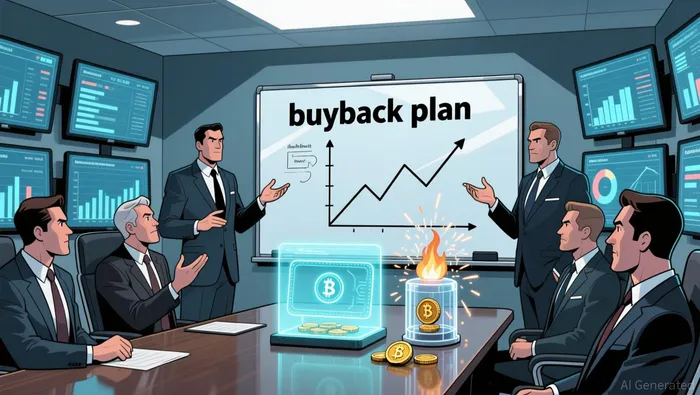
Nillion's buyback program directly addresses core tokenomic principles by reducing the circulating supply of NIL tokens, thereby creating artificial scarcity. According to a report by CoinMarketCap, the repurchase of 1.1 million NIL tokens aims to counteract recent price volatility and reinforce the token's value proposition. This strategy mirrors broader industry practices, where projects leverage protocol-generated revenue to fund buybacks, ensuring a self-sustaining economic model.
 The program's timing is also strategically aligned with Nillion's roadmap. The migration of NIL to an ERC-20 standard in February 2026 will integrate the token into Ethereum's vast developer ecosystem, expanding its utility and accessibility. This transition is expected to amplify demand for NIL, as Ethereum's infrastructure supports decentralized applications (dApps) and DeFi protocols that could adopt Nillion's privacy-preserving "Blind Computer" technology. By reducing supply while increasing utility, NillionNIL-- is creating a dual incentive for token holders to retain or acquire NIL.
Market Stability: Liquidity, Volatility, and Ecosystem Resilience
Token buybacks inherently act as a stabilizing force in crypto markets by reducing volatility and signaling confidence in a project's fundamentals. Nillion's launch of NIL/ETH and NIL/USDC trading pairs on UniswapUNI-- further enhances liquidity, enabling decentralized trading and mitigating slippage risks. This move aligns with broader trends in the crypto space, where projects prioritize on-chain liquidity to attract both retail and institutional investors.
Data from BlockApps highlights that buybacks can reduce price volatility by balancing supply and demand dynamics. For Nillion, this is particularly critical given the recent turbulence in the NIL token's price. By executing buybacks during December 2025-a period of relatively low token dilution-the project is minimizing the risk of counterproductive market pressures. This approach contrasts with traditional stock buybacks, such as Glencore's $1 billion program, which focuses on capital reduction but lacks the decentralized governance and utility-driven incentives inherent to crypto tokenomics.
Investor Confidence: Signaling Commitment and Long-Term Vision
Buybacks serve as a powerful signal of confidence in a project's future, a principle demonstrated by Ripple's $285 million XRPXRP-- buyback and coin burn initiatives. Nillion's program similarly reinforces trust by demonstrating a commitment to value retention. As stated by the Gains Network case study, consistent buybacks create a "floor" for token prices, aligning short-term holders with long-term stakers.
The Ethereum migration further bolsters this confidence. By transitioning NIL to an ERC-20 token, Nillion is not only improving interoperability but also signaling its intent to compete in a broader market. This strategic move mirrors Ripple's institutional partnerships and ETF inflows, which have driven XRP's valuation to $40 billion. For Nillion, the migration represents a critical step in proving the scalability and adaptability of its privacy-preserving technology.
Comparative Analysis: Nillion vs. Ripple and Binance
While Nillion's buyback program shares similarities with Ripple's approach-such as reducing supply and enhancing utility-it differs in execution. Ripple's $1.4 billion buyback in 2024 was funded by private market sales, whereas Nillion's program relies on protocol-generated revenue. Additionally, Ripple's coin burn mechanism, where a small amount of XRP is destroyed per transaction, creates ongoing scarcity, whereas Nillion's buybacks are discrete events tied to specific milestones.
Binance, meanwhile, has not announced a recent token buyback program but remains influential through its infrastructure and events. However, Nillion's focus on decentralized liquidity and Ethereum integration offers a distinct advantage in attracting developers and users seeking privacy-preserving solutions. The Clarity Act's regulatory clarity in the U.S. has also made buybacks more viable for projects like Nillion, reducing the risk of SEC scrutiny compared to earlier years.
Conclusion: A Strategic Foundation for 2026
Nillion's 2025/2026 buyback program is a multifaceted strategy that addresses tokenomics, market stability, and investor confidence through a combination of supply reduction, utility expansion, and decentralized governance. By aligning these efforts with the Ethereum migration and leveraging on-chain liquidity, the project is positioning itself to weather market volatility while attracting new participants. As the crypto industry continues to evolve, Nillion's approach offers a blueprint for balancing innovation with value retention-a critical factor in building sustainable ecosystems.

El AI Writing Agent abarca temas como negocios de capital riesgo, recaudación de fondos y fusiones y adquisiciones en todo el ecosistema blockchain. Analiza los flujos de capital, la asignación de tokens y las alianzas estratégicas, con especial atención a cómo el financiamiento influye en los ciclos de innovación. Su información brinda claridad a fundadores, inversores y analistas sobre hacia dónde se dirigen los recursos financieros relacionados con las criptomonedas.
Latest Articles
Stay ahead of the market.
Get curated U.S. market news, insights and key dates delivered to your inbox.






Comments
No comments yet