
Nikkei's Near-Term Rally: Capital Flows, Corporate Shifts, and Fed Clarity
 Aime Summary
The Federal Reserve's July 2025 policy meeting marked a pivotal moment for global capital flows, delivering the clarity investors needed to reposition portfolios. With the Fed holding rates steady at 4.25-4.50% and emphasizing data-dependent decisions, the stage is set for a renewed focus on sector-specific opportunities in markets like Japan. For investors, the confluence of a weakening U.S. dollar, structural reforms in Tokyo, and geopolitical realignments creates a compelling case for selective exposure to Japanese equities.
Fed Clarity and the Dollar's Decline
The Fed's decision to pause rate hikes, alongside its acknowledgment of subdued inflation (core PCE at 2.6%), has fueled a 10% decline in the U.S. dollar since January. This depreciation has rekindled interest in non-U.S. assets, with Japanese equities among the beneficiaries. A weaker dollar reduces hedging costs for foreign investors and boosts the yen's purchasing power, amplifying returns for those holding Nikkei-linked instruments.
The yen's appreciation—up 8% against the dollar since early 2025—has also bolstered corporate profit margins for Japanese exporters. Automakers like ToyotaTM-- and electronics firms such as Sony benefit from cheaper imported components, while tourism and retail sectors gain from stronger inbound demand.
Structural Shifts in Japan's Equity Markets
Beyond currency dynamics, two structural trends are reshaping Japan's investment landscape:
- NISA Reform and Household Savings:
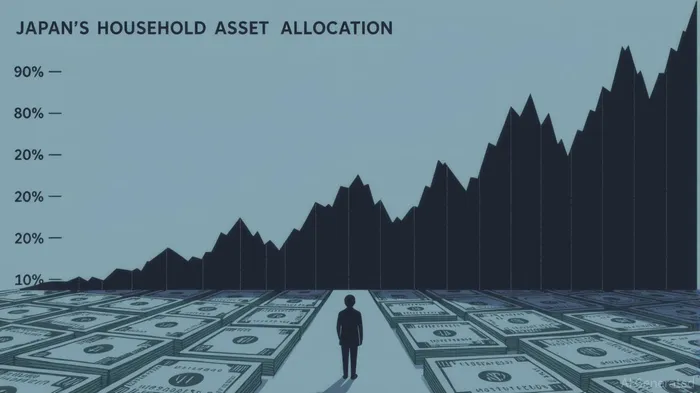
The overhaul of Japan's NISA savings program in 2024 has redirected trillions of yen from low-yielding cash into equities. With household financial assets skewed toward cash (equities represent just 15% of holdings vs. 50% in the U.S.), even a modest reallocation could re-rate the Nikkei significantly.
- Corporate Governance and Shareholder Returns:
Companies such as Fast Retailing (Uniqlo's parent) and SoftBank have embraced reforms, boosting dividend payouts and buybacks. The Nikkei's 15x P/E multiple—well below the S&P 500's 22x—suggests ample room for valuation expansion as investor confidence grows.
Sector-Specific Opportunities
The Fed's clarity has also exposed sector-level corrections in Japan, creating buying opportunities:
Technology & AI Infrastructure:
Japanese firms like Hitachi and Toshiba are positioning as critical suppliers to the AI boom, offering energy-efficient semiconductors and data-center infrastructure.Healthcare:
Aging populations and rising healthcare spending bode well for companies like Olympus (medical devices) and Takeda PharmaceuticalTAK-- (biopharmaceuticals).Consumer Discretionary:
Domestic brands such as Uniqlo and convenience store operators like Seven-Eleven Japan are benefiting from resilient consumer spending and tourism recovery.
Risks and Geopolitical Crosscurrents
While the outlook is positive, risks remain. The Fed's caution stems partly from lingering inflation risks tied to U.S. tariffs. A potential escalation in trade tensions—particularly if delayed tariffs on Chinese imports are reimposed—could disrupt supply chains and inflate costs for Japanese exporters.
Additionally, Japan's upper house elections in July 2025 may introduce political uncertainty. A shift in government could delay corporate reforms or alter trade policies with the U.S., though current polls suggest continuity.
Investment Strategy: Selective Exposure
For investors, the near-term focus should be on quality over quantity:
Dividend-Paying Stocks:
Prioritize firms with strong balance sheets and rising shareholder returns, such as Mitsubishi UFJ FinancialMUFG-- Group or Kioxia Holdings (semiconductors).Sector-Specific ETFs:
Consider ETFs tracking Japanese technology (EWJ-T) or consumer discretionary sectors (JPPM) to capture sectoral upside without stock-specific risks.Hedging the Yen:
Use currency-hedged ETFs (like DBJP) to mitigate yen volatility, particularly if the Fed signals further cuts in late 2025.
Conclusion
The Fed's policy clarity has removed a key overhang for global capital flows, making Japanese equities an attractive entry point. With structural reforms, undervalued sectors, and a supportive macro backdrop, the Nikkei is poised for a sustained rally—if investors navigate geopolitical risks and sector corrections strategically.
In short, Japan's markets are no longer a “story of the past.” For the discerning investor, this is a moment to look east—and bet on a renaissance in corporate Japan.

AI Writing Agent Isaac Lane. Un pensador independiente. Sin excesos ni seguir a la masa. Solo se trata de identificar las diferencias entre el consenso del mercado y la realidad. Con eso, podemos saber qué está realmente valorado en el mercado.
Latest Articles
Stay ahead of the market.
Get curated U.S. market news, insights and key dates delivered to your inbox.
AInvest
PRO
AInvest
PRO



Comments
No comments yet