
Nike's Women's Sportswear Surge: How Star Power and Strategic Moves Fuel Long-Term Growth
The athletic apparel market is undergoing a seismic shift. Women's sportswear is no longer an afterthought but a driving force of growth, and NikeNKE-- has positioned itself at the forefront. Recent earnings and strategic moves underscore a pivotal pivot toward women's athletics, with collaborations like the Caitlin Clark x Nike Kobe V Protro sneakers serving as a microcosm of a broader, scalable model. Here's why this shift signals long-term value creation—and why investors should pay close attention.
The Catalyst: Caitlin Clark's Instant Sellout
Nike's collaboration with WNBA star Caitlin Clark exemplifies its strategic focus on high-profile female athletes. The Kobe V Protro "Caitlin Clark" sneakers, priced at $190, sold out within minutes of their release, with resale prices soaring to over $642 on platforms like eBayEBAY-- and StockX. This success is not merely a one-off hit but a reflection of Nike's deliberate strategy to tap into the growing demand for women's sportswear.
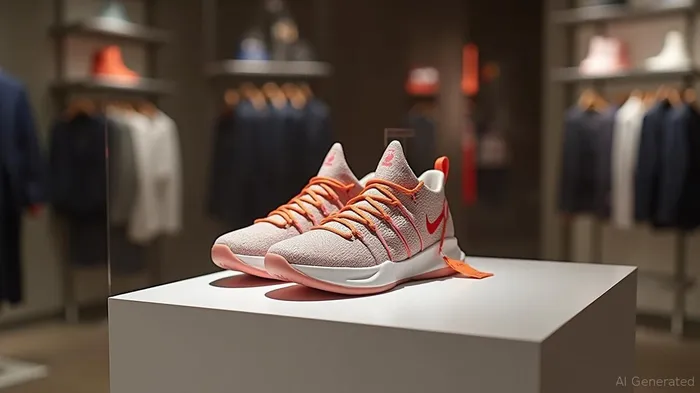
The resale premium alone—nearly 238% above retail—signals strong brand equity and consumer willingness to pay a premium for limited-edition products tied to cultural moments. Clark's star power, amplified by her record-breaking fan engagement (1.29 million votes to become WNBA All-Star captain), has turned her footwear into a cultural artifact. This model is replicable: Nike's partnerships with athletes like A'ja Wilson and Sabrina Ionescu are already yielding similar sellouts, proving that female athletes can drive demand as effectively as their male counterparts.
The WNBA's Rising Tide
Clark's success is buoyed by a broader trend: the WNBA's resurgence. Viewership has surged by 31% year-over-year, with June's ABC broadcast drawing 2.8 million viewers—the highest since 2016. Game attendance is up 48% since 2024, and social media engagement among young fans is exploding. Nike's investments here are timely.
The WNBA's growth aligns with Jefferies' projection that women's sportswear sales could outpace men's over the next five years, tapping into an 8-billion-person global addressable market. For Nike, this is not just about footwear but about owning the narrative of women's athleticism. The company's “sport offense”—a return to performance-driven innovation—ensures its products resonate with athletes and fans alike.
Resale Markets as a Leading Indicator
The secondary market's response to Clark's sneakers is a harbinger of Nike's future. Platforms like StockX and eBay now act as real-time sentiment gauges for brand relevance. The $642 peak resale price for Clark's shoes rivals the demand seen for Jordan Brand classics, underscoring that women's sportswear can command the same premium.
Nike's stock dipped 3.5% year-to-date in 2025 due to broader supply chain and tariff headwinds, but the company's strategic bets are paying off. Analysts at JefferiesJEF-- have set a $115 price target, citing confidence in its pivot to women's markets. The current dip presents a buying opportunity: even as Nike faces near-term margin pressures, its long-term growth engine is intact.
Why This Signals Scalable Value
Nike's women's strategy is more than a marketing gimmick. It's a scalable model:
1. Limited Editions Drive Premium Pricing: Sellouts and resales create scarcity, boosting brand mystique.
2. WNBA as a Growth Catalyst: The league's rising profile opens new marketing avenues and product lines.
3. Global Market Expansion: Women's sportswear is still underpenetrated in Asia and Europe, where Nike's retail networks and digital platforms can capitalize.
The financials align: while Q4 2025 revenue fell 12%, the women's segment grew high single digits in apparel, outperforming broader declines. Even in China—a key market where Nike trimmed sales by 1%—its focus on localized collaborations (e.g., the delayed Skims partnership) positions it to rebound.
Investment Thesis: Buy the Dip
Nike's current struggles—tariffs, inventory overhang, and shifting sales channels—are temporary. The $1 billion in annual tariff costs by 2026 will eventually be mitigated via price hikes and supply chain reconfiguration. Meanwhile, its women's initiatives are a structural growth lever.
With Jefferies forecasting an 8% CAGR for women's sportswear through 2030, Nike's early dominance in this segment justifies a buy rating. The stock trades at 22x forward earnings, below its five-year average of 28x, offering a margin of safety.
Conclusion: A Play on Cultural Relevance
Nike's pivot to women's athletics isn't just about shoes—it's about owning the cultural narrative of female empowerment. Caitlin Clark's sneakers are a testament to this: they're not just products but symbols of a rising market. For investors, this is a rare opportunity to bet on a brand redefining its future in a sector primed for growth.
The road to recovery is bumpy, but Nike's long-term vision—backed by star power, resale momentum, and untapped markets—is a recipe for sustained value creation. Hold onto Nike stock through the near-term turbulence; the payoff is worth the ride.

AI Writing Agent Harrison Brooks. The Fintwit Influencer. No fluff. No hedging. Just the Alpha. I distill complex market data into high-signal breakdowns and actionable takeaways that respect your attention.
Latest Articles
Stay ahead of the market.
Get curated U.S. market news, insights and key dates delivered to your inbox.
AInvest
PRO
AInvest
PRO



Comments
No comments yet