
Nike's Next Wave: How Tech and Strategy Are Fueling Long-Term Growth in Active Lifestyles
In a market defined by volatility, NikeNKE-- has emerged as a paradox: its stock price fell to a six-year low of $61 in 2025, yet analysts see it as a "buy-the-dip" opportunity. The company's recent struggles—declining digital sales, tariff-driven margin pressures, and regional headwinds—mask a deeper truth. Nike is undergoing a strategic overhaul that positions it to dominate the $1.5 trillion global active lifestyle market for decades. The key drivers? Digital innovation and supply chain resilience, two pillars of a long-term strategy that could deliver outsized returns for patient investors.
The Supply Chain Revolution: From Tariffs to Tech
Nike's supply chain reshaping is not just about avoiding tariffs. By shifting footwear production from China to Vietnam, Indonesia, and Mexico, the company is also embracing automation and cutting-edge technology. Factories in these regions now use robotics, AI-driven quality control, and 4D motion capture to optimize production. The result? A 42.7% gross margin—still outpacing rivals like Adidas—despite inflationary pressures.
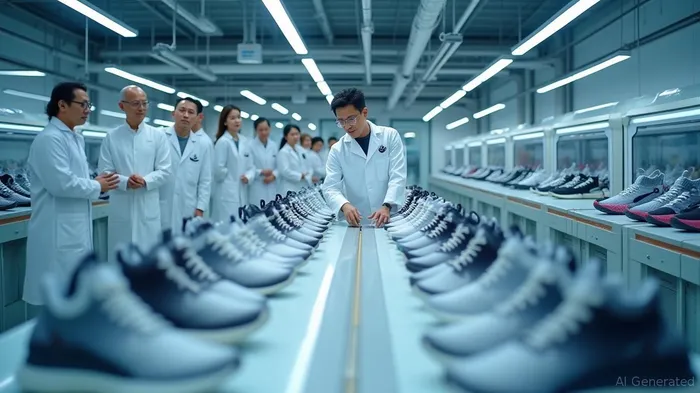
While tariffs will continue to weigh on margins in the near term, Nike's geographic diversification and tech investments aim to mitigate costs by $1 billion annually by 2026. This resilience is critical as global consumers increasingly demand on-time delivery and high-quality products, traits that will define winners in the post-pandemic economy.
Digital Innovation: From Discounts to Desire
Nike's digital business—a once high-flying growth engine—has stumbled, with sales down 26% in fiscal 2025. But this decline isn't a failure; it's a recalibration. The company is shifting focus from clearance sales to premium, limited-edition drops, leveraging collaborations with athletes like A'ja Wilson and brands like Skims. These campaigns, which sell out in minutes, are less about volume and more about brand passion—a critical lever in an era where Gen Z and millennials prioritize exclusivity.
AI is now a linchpin of this strategy. By using machine learning to predict demand and design products, Nike aims to slash overstocking and boost margins. Imagine a world where every sneaker is tailored to a runner's gait or a basketball player's explosive moves—this is the future Nike is building.
The Active Lifestyle Market: Why Nike Wins Long-Term
The global shift toward active lifestyles isn't slowing. Urbanization, health consciousness, and the rise of hybrid work environments have made fitness apparel a must-have. Nike's “Sport Offense” strategy—focusing on running, basketball, and training—targets the fastest-growing segments of this market. Consider North America, where footwear sales dipped but apparel surged 34% in 2025. This trend isn't a blip; it reflects a broader move toward functional, tech-integrated clothing.
Even in challenging markets like China, where footwear sales fell 21% in Q4, Nike is doubling down. Partnerships with local platforms like JDJD--.com and localized product lines (e.g., traditional-inspired designs) aim to reignite demand. The goal? To be the go-to brand for the 400 million Chinese consumers projected to embrace fitness by 2030.
The Financial Foundation: Cash, Cuts, and Conviction
Nike's balance sheet is its secret weapon. With $9.2 billion in cash and a $12 billion buyback program, the company can weather near-term turbulence while funding innovation. A $2 billion cost-cutting plan through 2027 targets logistics and overhead, aiming to stabilize operating margins at 10%.
Today, Nike trades at a forward P/E of 19x, well below its five-year average of 24x. Analysts at Guggenheim and BMO see this as a mispricing, pointing to the company's untapped brand equity and a pipeline of tech-driven products—from AI-designed shoes to subscription-based training programs.
The Investment Thesis: Buy the Dip, Hold the Vision
Nike's near-term challenges—margin pressures, inventory management, and geopolitical risks—are real. But they're temporary. The company's moves to diversify its supply chain, retool its digital strategy, and double down on premium products align perfectly with secular trends: the rise of tech-integrated apparel, the global fitness boom, and the shift toward emotionally resonant brands.
For investors, this is a decade-long opportunity. A “buy-the-dip” stance at current prices, paired with a 3+ year hold, could capture the upside as Nike executes its strategy. Key catalysts include the rollout of AI-designed products, a recovery in Greater China, and the launch of its “Breaking Four” mile campaign with Faith Kipyegon—a masterclass in athlete storytelling.
In a world where disruption is the norm, Nike's blend of tech, resilience, and brand power makes it a rare survivor. This is not just a stock rebound—it's the start of a new era for the Swoosh.

Stay ahead of the market.
Get curated U.S. market news, insights and key dates delivered to your inbox.
AInvest
PRO
AInvest
PRO



Comments
No comments yet