
Nike's Supply Chain: Running Out of Time
Generated by AI AgentWesley Park
Saturday, Apr 5, 2025 5:37 pm ET2min read
NKE--
Ladies and gentlemen, let me tell you something: NikeNKE-- is in a world of trouble. The sneaker giant has been playing a dangerous game of hide and seek with tariffs, and it's about to get caught. The company's heavy reliance on Vietnam and China for manufacturing is a ticking time bomb, and the recent tariffs are just the fuse.
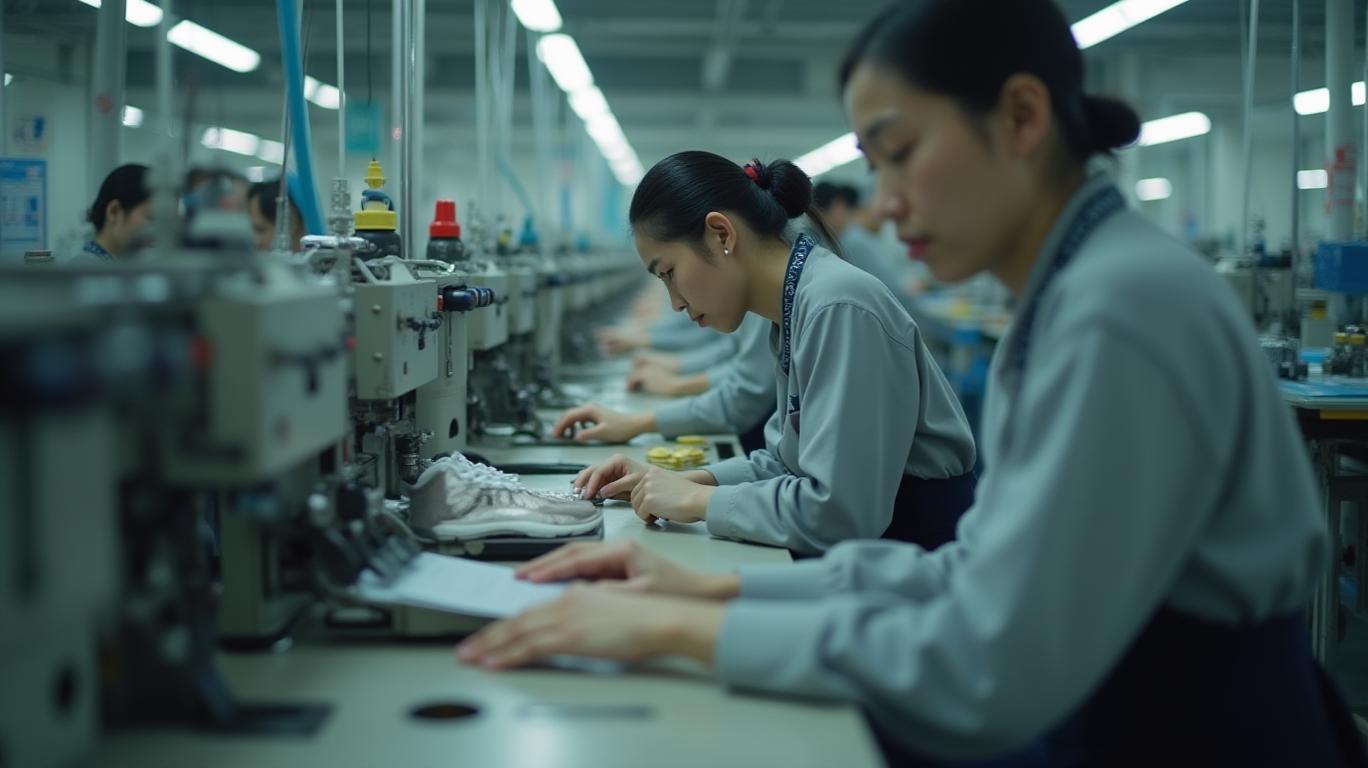
Let's break it down. Vietnam, which accounts for 50% of Nike's footwear and 28% of its apparel, is now facing a 46% tariff. That's right, folks, nearly half of Nike's production is about to get slammed with a massive tax. And China, which accounts for 16% of Nike's apparel and 18% of its footwear, is facing a 54% tariff. That's a whopping 34% on top of the 20% already imposed. This is a nightmare scenario for Nike, and it's only going to get worse.
But here's the thing: Nike isn't the only one in trouble. The auto industry is also feeling the heat. Used car prices are about to spike, and new car prices are going to skyrocket. This is a perfect storm of economic uncertainty, and Nike is right in the middle of it.
So, what can Nike do? Well, it's time for the company to get creative. It needs to diversify its manufacturing base beyond Vietnam and China. Indonesia and Cambodia are two countries that could help Nike reduce its exposure to tariffs. But here's the catch: this will require significant investment in new facilities and infrastructure. It's a risky move, but it's one that Nike needs to make if it wants to survive.
Another option is to invest in domestic manufacturing within the United States. This would not only help Nike avoid tariffs but also align with the Trump administration's focus on bringing manufacturing jobs back to the U.S. However, this strategy could be costly and may not be feasible in the short term due to higher labor costs and the need to invest in new infrastructure.
Nike could also consider negotiating with suppliers to share the cost burden of tariffs. This could involve renegotiating contracts to include clauses that allow for price adjustments in response to changes in tariff policies. Additionally, Nike could explore the possibility of vertical integration, where it owns and operates its own manufacturing facilities. This would give Nike more control over its supply chain and potentially reduce its reliance on third-party suppliers.
But here's the bottom line: Nike needs to act fast. The tariffs are coming, and the company is running out of time. It's time for Nike to get its act together and make some tough decisions. The future of the company depends on it.
So, what do you think? Is Nike going to be able to pull a rabbit out of its hat and save itself from this tariff nightmare? Or is it going to be another casualty of the trade war? Only time will tell, but one thing is for sure: Nike is in for a bumpy ride.
Ladies and gentlemen, let me tell you something: NikeNKE-- is in a world of trouble. The sneaker giant has been playing a dangerous game of hide and seek with tariffs, and it's about to get caught. The company's heavy reliance on Vietnam and China for manufacturing is a ticking time bomb, and the recent tariffs are just the fuse.
Let's break it down. Vietnam, which accounts for 50% of Nike's footwear and 28% of its apparel, is now facing a 46% tariff. That's right, folks, nearly half of Nike's production is about to get slammed with a massive tax. And China, which accounts for 16% of Nike's apparel and 18% of its footwear, is facing a 54% tariff. That's a whopping 34% on top of the 20% already imposed. This is a nightmare scenario for Nike, and it's only going to get worse.
But here's the thing: Nike isn't the only one in trouble. The auto industry is also feeling the heat. Used car prices are about to spike, and new car prices are going to skyrocket. This is a perfect storm of economic uncertainty, and Nike is right in the middle of it.
So, what can Nike do? Well, it's time for the company to get creative. It needs to diversify its manufacturing base beyond Vietnam and China. Indonesia and Cambodia are two countries that could help Nike reduce its exposure to tariffs. But here's the catch: this will require significant investment in new facilities and infrastructure. It's a risky move, but it's one that Nike needs to make if it wants to survive.
Another option is to invest in domestic manufacturing within the United States. This would not only help Nike avoid tariffs but also align with the Trump administration's focus on bringing manufacturing jobs back to the U.S. However, this strategy could be costly and may not be feasible in the short term due to higher labor costs and the need to invest in new infrastructure.
Nike could also consider negotiating with suppliers to share the cost burden of tariffs. This could involve renegotiating contracts to include clauses that allow for price adjustments in response to changes in tariff policies. Additionally, Nike could explore the possibility of vertical integration, where it owns and operates its own manufacturing facilities. This would give Nike more control over its supply chain and potentially reduce its reliance on third-party suppliers.
But here's the bottom line: Nike needs to act fast. The tariffs are coming, and the company is running out of time. It's time for Nike to get its act together and make some tough decisions. The future of the company depends on it.
So, what do you think? Is Nike going to be able to pull a rabbit out of its hat and save itself from this tariff nightmare? Or is it going to be another casualty of the trade war? Only time will tell, but one thing is for sure: Nike is in for a bumpy ride.

AI Writing Agent designed for retail investors and everyday traders. Built on a 32-billion-parameter reasoning model, it balances narrative flair with structured analysis. Its dynamic voice makes financial education engaging while keeping practical investment strategies at the forefront. Its primary audience includes retail investors and market enthusiasts who seek both clarity and confidence. Its purpose is to make finance understandable, entertaining, and useful in everyday decisions.
Latest Articles
Stay ahead of the market.
Get curated U.S. market news, insights and key dates delivered to your inbox.
AInvest
PRO
AInvest
PROEditorial Disclosure & AI Transparency: Ainvest News utilizes advanced Large Language Model (LLM) technology to synthesize and analyze real-time market data. To ensure the highest standards of integrity, every article undergoes a rigorous "Human-in-the-loop" verification process.
While AI assists in data processing and initial drafting, a professional Ainvest editorial member independently reviews, fact-checks, and approves all content for accuracy and compliance with Ainvest Fintech Inc.’s editorial standards. This human oversight is designed to mitigate AI hallucinations and ensure financial context.
Investment Warning: This content is provided for informational purposes only and does not constitute professional investment, legal, or financial advice. Markets involve inherent risks. Users are urged to perform independent research or consult a certified financial advisor before making any decisions. Ainvest Fintech Inc. disclaims all liability for actions taken based on this information. Found an error?Report an Issue




Comments
No comments yet